
It’s no secret that many businesses and individuals have felt the effects of supply chain disruptions since the pandemic began in 2020, and while we may have entered into a new year, inflation and supply chain disruptions are expected to continue well into 2023. Inflation is at its highest level the US has seen in 40 years, and no industry has been untouched. The Consumer Price Index rose 9.1% over the year ending June 2022 — the largest 12-month increase since late 1981 [1]. For us to move forward, we need to understand what factors have impacted inflation and what we can expect for the future.
Inflation refers to the broad rise in the prices of goods and services, eroding purchasing power for both consumers and businesses. Often, people believe the solution to solving everyone’s problems is to print more money, but that idea is contradictory to the basic principles of economics. Economics is based on the idea of supply and demand. When we print money, there is a temporary elevation of purchasing power for those who hold the new money, typically governments and corporations. With new money in hand, spending rises which spikes demand, and as new demand outpaces production, prices increase. Simply put, printing money leads to higher prices for goods and services.

Annual inflation of about two percentage points is considered a signal of pricing stability in a healthy economy, but when inflation starts to surpass wage growth, it can become a warning sign of a struggling economy and affect consumers directly.

Occurs when the demand for goods and services exceeds the economy’s ability to produce them.
*Example:
The demand for new cars recovered more quickly than expected, and the semiconductor shortage made it hard for companies to keep up with demand resulting in price increases.
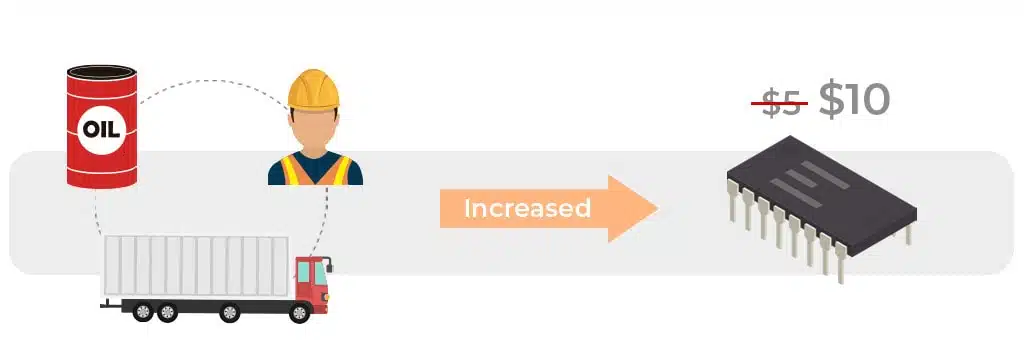
Occurs when the cost of production (wages, raw materials, etc.) increases the overall price of goods and services.
*Example:
When global policies, war, or natural disasters drastically reduce the oil supply, gasoline prices rise because demand remains relatively stable even as supply shrinks.
To measure inflation, agencies first need to determine the consumer price index (CPI) by identifying the current value of a “basket” of various goods and services consumed by households. In the U.S., that basket and the resulting index are maintained by the Bureau of Labor Statistics, which publishes the CPI monthly [2]. To calculate inflation, agencies compare the CPI over a period of time, such as month to month or year to year to produce inflation rates.
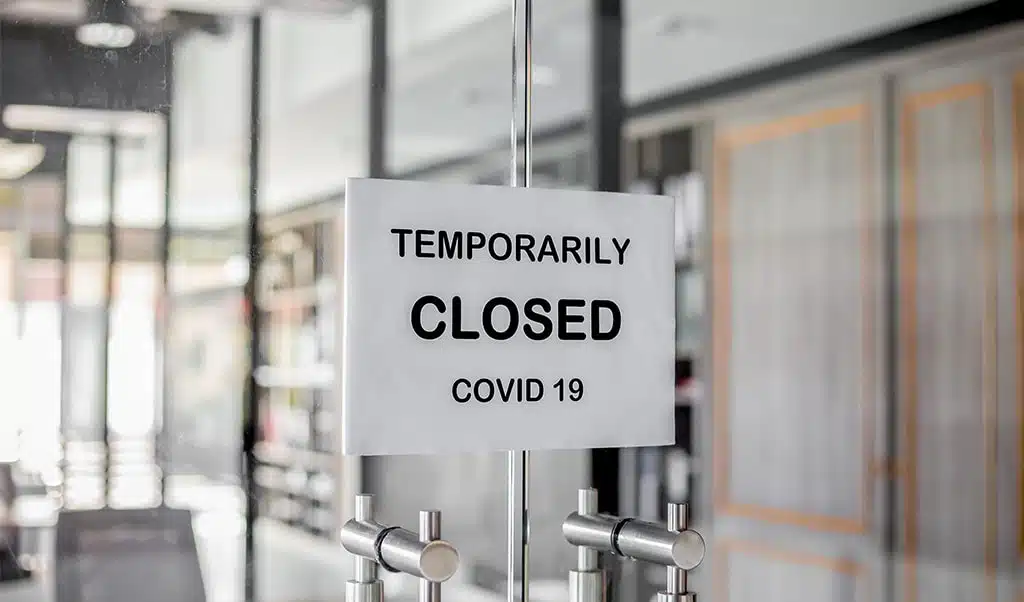
When the pandemic emerged in early 2020, governments forced many businesses to temporarily close to limit the spread of the virus. At the same time, emergency government policies, like the CARES Act and the Paycheck Protection Program, provided financial relief to businesses and consumers to help them through the pandemic’s economic challenges.
With consumers unable to use their money towards services and leisure activities (travel, gym memberships, restaurants), they spent their money on goods such as gym equipment, DIY projects, and Nintendo Switches. The surge in demand outpaced production, creating supply chain constraints, port congestions, increased shipping rates, etc.

Between 2021-2022, prices for raw materials such as lumber, and oil skyrocketed. For several months, Americans were paying higher prices for gas compared to a couple years ago, and although the cost of gas has decreased, supply still remains an issue.
Another prominent issue involves the chip shortage. Semiconductors are critical to automobile production, and the lack of available chips caused a drop in vehicle production and price increases.

The lack of production activity in China due to its COVID-19 “Zero Tolerance” policy kept many workers from producing materials used by global manufacturers. As restrictions have eased, the question remains if it can regain normal economic activity to help alleviate global supply chain issues.
Global inflation is impacting multiple sectors, including the electronic components industry. For months now, manufacturers have struggled with shortages and extreme cost fluctuations for various noble gases, palladium, nickel, platinum, and aluminum due to the Russia-Ukraine conflict. These are core semiconductor inputs: neon gas runs the lasers used in lithography — the U.S. historically sourced as much as 90% of its semiconductor-grade neon from Ukraine — while Russia supplies a large share of the world’s palladium and platinum, which are used in chip plating, sensors, and memory [3]. With both countries central to these supply chains, the war fed directly into component shortages and pricing.
China’s “zero tolerance” policy is another factor that pushed up electronic component prices. IC production fell by double digits because many chip manufacturers are located in regions impacted by quarantine mandates.
Fed officials expect inflation to slow down in 2023, but it will take a few years before we reach the central bank’s target annual inflation of 2 percent over time. As for the electronic components industry, logic, linear, discrete, advanced analog, and passive component prices are climbing and will continue to climb until conditions improve.
Update: Written in early 2023, this outlook has largely played out — U.S. inflation cooled from its 2022 peak toward the Fed’s target over the following years, though component pricing has since been reshaped by new forces, including tariffs and AI-driven demand for memory and advanced chips. See our more recent coverage for the current picture.
If you are having a difficult time securing orders, reach out to us today.
We are experts at helping companies source EOL and hard-to-find components.
References
[1] U.S. Bureau of Labor Statistics. “Consumer prices up 9.1 percent over the year ended June 2022, largest increase in 40 years” Available at: https://www.bls.gov/opub/ted/2022/consumer-prices-up-9-1-percent-over-the-year-ended-june-2022-largest-increase-in-40-years.htm
[2] U.S. Bureau of Labor Statistics. “Consumer Price Index” Available at: https://www.bls.gov/cpi/
[3] MIT Sloan Management Review. “The Crisis in Ukraine Spells More Trouble for Semiconductor Supply” Available at: https://sloanreview.mit.edu/article/russias-invasion-spells-more-trouble-for-semiconductor-supply/