
When it comes to the electronic components you choose for your designs, quality plays a significant role. For OEMs, CMs, and engineers alike, the selection of components directly influences both the performance and lifespan of the final products. That’s why it’s essential to collaborate with an electronic component distributor that emphasizes quality and possesses the necessary certifications. These certifications are a clear indicator of their dedication to excellence and provide the confidence you need when sourcing your components. In this blog post, we’ll explore the importance of quality certifications, such as the globally recognized ISO 9001:2015, and discuss how partnering with a certified distributor like Suntsu Electronics can offer you a competitive advantage.
What is the Purpose of Quality Certifications?
Quality certifications act as an independent confirmation of an organization’s compliance with established quality management systems (QMS). These certifications affirm that a company has effectively implemented processes and procedures to consistently provide products and services that align with customer and regulatory expectations. They offer reassurance to customers regarding the organization’s commitment to quality, ongoing improvement, and customer satisfaction. In the electronic components sector, quality certifications are especially important due to the critical nature of these components and the serious implications of failures. They aid in risk reduction, defect minimization, and the overall enhancement of reliability for electronic products.
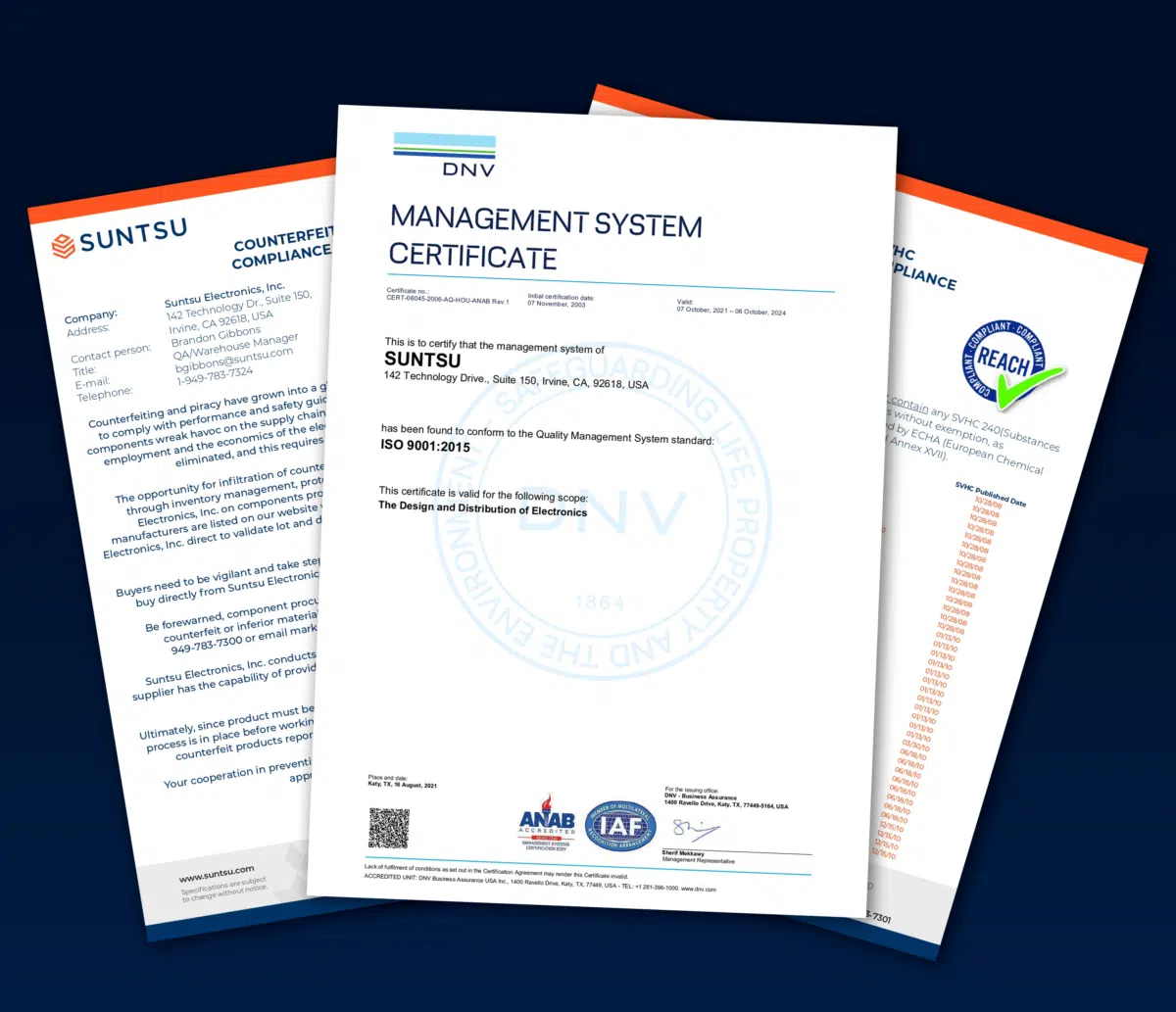
What is an ISO Certification?
ISO (International Organization for Standardization) certifications are internationally acknowledged standards that reflect a company’s dedication to quality management. Obtaining an ISO certification indicates that an organization has established and upholds a comprehensive quality management system (QMS) that complies with the specific ISO standard’s criteria. This encompasses various aspects, including product design, development, manufacturing, distribution, and customer service. Achieving and retaining an ISO certification is an ongoing process rather than a one-time achievement. It necessitates regular audits, continuous improvement initiatives, and a steadfast commitment to maintaining the standards. For an electronic components distributor, being ISO certified highlights their commitment to delivering dependable, high-quality products and services. It underscores their focus on consistency, traceability, and customer satisfaction.
What is ISO 9001:2015?
ISO 9001:2015 is the most recognized standard for quality management globally. It outlines the criteria that organizations must follow to establish, implement, maintain, and continuously enhance a quality management system. The standard prioritizes customer satisfaction, urging organizations to understand and address customer needs and expectations through effective processes. A key aspect of ISO 9001:2015 is its risk-based approach, which promotes the identification and mitigation of potential quality risks. Additionally, it mandates that organizations strive for ongoing improvements in their quality management system, ensuring it remains effective and applicable.

In the electronics sector, ISO 9001:2015 certification is particularly critical due to the intricate nature of electronic components and the strict quality standards required by end-users. Achieving this certification signals an organization’s commitment to fulfilling these standards and enhancing customer satisfaction. For example, ISO 9001:2015 includes essential components like managing nonconforming products, implementing corrective measures, and executing preventive actions, all vital for upholding quality within the electronic components supply chain. This certification serves as a strong testament to an organization’s dedication to quality and reliability.
What is AS9100D
AS9100D is the recognized quality management standard for the aerospace, space, and defense sector, published in 2016 as the current revision. Although it is not an ISO certification on its own, AS9100D is built directly on ISO 9001:2015 and incorporates all of its requirements.
These extra requirements cover crucial areas such as configuration management, risk management, and special processes, addressing the demanding nature of aerospace applications. Attaining AS9100D certification showcases an organization’s dedication to upholding the high-quality standards expected in the aerospace field, signaling their capability to deliver products and services that ensure exceptional safety and performance.
Standards Built for Distributors and Counterfeit Avoidance
ISO 9001 and AS9100 govern quality management broadly, but a separate family of SAE standards was written specifically for the risks that arise in component distribution — particularly counterfeit parts. These matter most when sourcing outside fully authorized channels.
AS6081 is the counterfeit-avoidance standard written specifically for distributors. It defines the processes a distributor must have in place to avoid, detect, mitigate, and dispose of fraudulent parts: supplier vetting, procurement controls, inspection requirements, personnel training, and documented handling of suspect components. It exists as a separate document from AS5553 (which covers OEMs and contract manufacturers) precisely because distribution carries distinct risks [1].
AS6171 is the companion test-methods standard. It standardizes the specific techniques used to evaluate suspect parts — external visual inspection, X-ray, acoustic microscopy, XRF, decapsulation, and electrical test — within a risk-based framework that scales the depth of testing to the application’s risk tolerance [1].
For buyers in aerospace, defense, medical, and other high-reliability fields, a distributor’s participation in industry reporting programs — such as ERAI and GIDEP — is a further signal that the distributor actively tracks and reports suspect and nonconforming parts rather than simply passing them along.
Benefits of Working with a Certified Electronics Distributor
Collaborating with a certified electronic component distributor provides numerous advantages, such as:
Enhanced Quality Assurance
Working with a distributor that possesses a quality assurance certification, like ISO 9001:2015, instills confidence in the quality of the components you obtain. These certifications indicate that the distributor has established a strong Quality Management System (QMS) and complies with rigorous standards, reducing the likelihood of defects and ensuring reliable quality.
Reduced Risk of Counterfeit Components
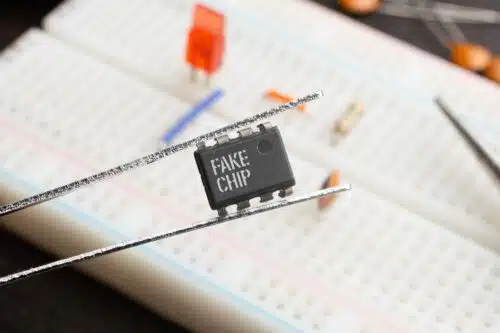
Certified distributors implement layered measures to detect and mitigate the risk of counterfeit components entering the supply chain — from visual inspection through to lab-based forensic testing such as X-ray, acoustic microscopy, and XRF analysis under standards like AS6171.
Improved Supply Chain Reliability
They prioritize effective processes and dependable supply chains, putting into place systematic methods for sourcing, managing inventory, and handling logistics. This helps ensure you obtain the necessary components reliably, reducing the risk of interruptions.
Continuous Improvement
Distributors are dedicated to ongoing enhancement, always looking for opportunities to improve their processes and services. This commitment guarantees that you collaborate with a partner who is consistently aiming to surpass your expectations.
Increased Traceability
Distributors with certifications keep comprehensive records of their products, which enhances traceability across the supply chain. This is essential for pinpointing the origin of any problems and for managing recalls or replacements when needed.
Stronger Partnerships
Typically, distributors prioritize fostering lasting relationships with their clients. They dedicate themselves to delivering outstanding service, tailored support, and ongoing enhancements, positioning themselves as valuable partners within your supply chain.
Reduced Costs
Partnering with a certified distributor can result in substantial cost savings by reducing defects, enhancing efficiency, and avoiding supply chain interruptions. This approach leads to less rework, fewer returns, and greater product reliability, ultimately lowering the overall cost of ownership.
Mitigation of Obsolete Component Challenges
Certified distributors typically have strong systems in place for handling obsolescence and end-of-Life (EOL) components, making it easier for you to source older parts effectively.
Competitive Advantage
Collaborating with a certified distributor can bolster your reputation for quality and dependability. This can provide a noteworthy competitive edge in the market, particularly when pursuing contracts or aiming to gain customer approvals.
Access to Expertise
Distributors employ a team of specialists who can offer important technical assistance and advice. They can aid in choosing the appropriate components for your application, suggest design alternatives, and help resolve any problems that might occur.
Key Takeaways
In the electronics industry, maintaining high quality is essential. Certifications such as ISO 9001:2015 serve as important indicators that a distributor adheres to top standards. Collaborating with a certified electronics distributor presents a range of advantages, including minimized risks and delays, greater reliability, and better access to quality products. Opting for a certified partner helps protect your projects, improve product quality, and establish a robust, trustworthy supply chain.
Suntsu Electronics is proudly ISO 9001:2015 and AS9100D certified by NQA, demonstrating our commitment to continuously enhancing our quality systems for our customers. We recognize the critical role that quality plays in the electronic components industry and are dedicated to delivering top-notch products and services. Our goal is to be a reliable partner for engineers and purchasing managers, helping them navigate supply chain challenges and ensure they acquire the high-quality electronics essential for bringing their designs to fruition.
Ready to experience the Suntsu difference? Explore our comprehensive range of high-quality electronic components and discover how our commitment to excellence can empower your projects. Let us be your trusted partner in bringing your designs to life. Contact us today to learn more.
References
[1] Richman, Azarian, Das & Pecht. “Analysis of Standards-Based Counterfeit Microelectronics Detection Methods” Available at: https://doaj.org/article/f5a0958fe13743378b769610e101bcb4