


The Effect on Your BOM
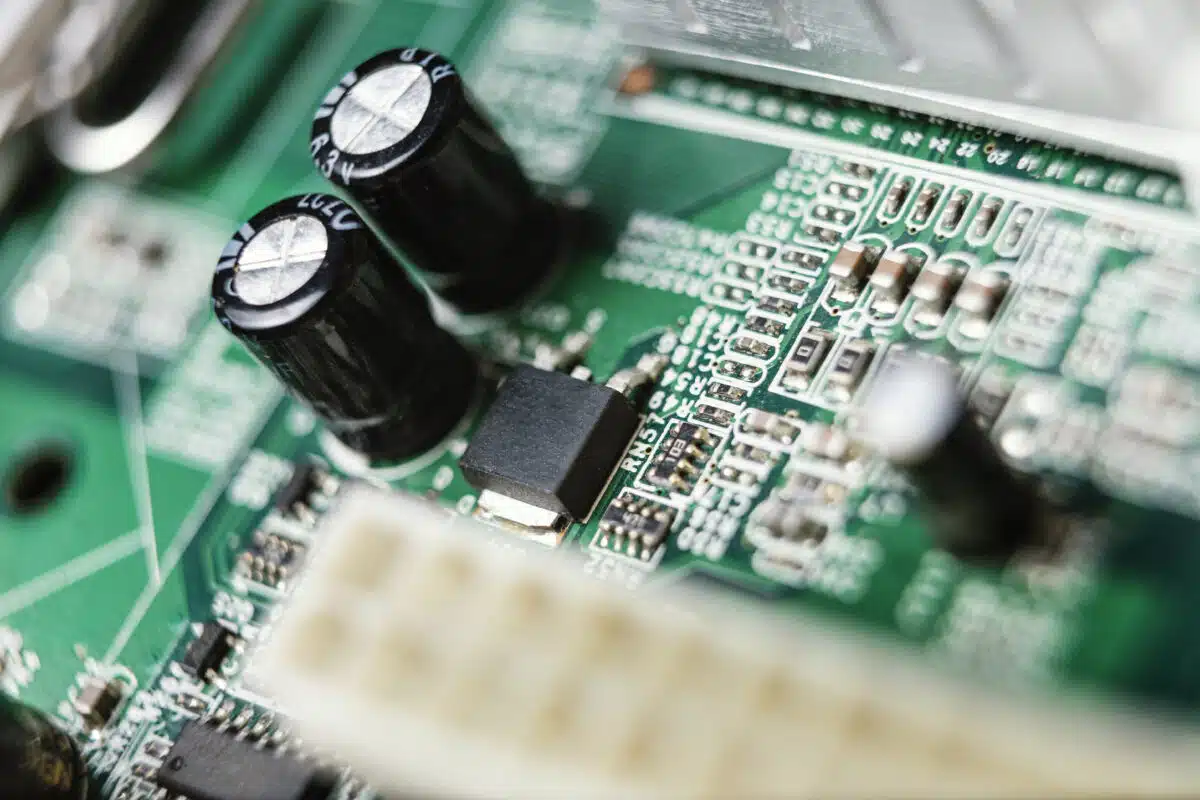
The pressure extends beyond silicon. The physical infrastructure needed to support AI technologies and facilitate electric vehicles is leading to shortages in essential passive and electromechanical components crucial for industrial designs.

AI servers demand a significant amount of power regulation, resulting in a shortage of high-performance power inductors. This situation has left industrial power supply designers in a difficult position, struggling to find the necessary components. To mitigate these gaps, we leverage our authorized partnerships with manufacturers like Samsung, Viking, and Walsin to provide high-quality, reliable alternatives when standard parts are unavailable.
An electric vehicle may need more than 10,000 multi-layer ceramic capacitors (MLCCs). This demand creates challenges for other industries, making it tough to consistently source high-capacitance, high-voltage ceramic capacitors. This isn't isolated — AI-server demand drove the server market up 30.4% year over year in early 2026, and the largest MLCC supplier has confirmed that demand is tightening high-specification ceramic capacitor supply industry-wide [2]. By utilizing the robust product portfolios of Samsung, Viking, and Walsin, we help customers secure the inventory needed to maintain production continuity despite market constraints.
With data centers transitioning to 400G and 800G speeds, the demand for precise connectors is increasingly being taken up by the telecom industry. Specialized manufacturers like Formerica are critical in this space, offering high-speed optical interconnect solutions that meet these rigorous bandwidth requirements.
The agony is particularly intense when a multi-million dollar assembly project comes to a halt due to the absence of a single connector. This is known as the “Golden Screw” dilemma: a project’s entire revenue is jeopardized by a low-cost part.
To address this issue, astute buyers are seeking alternatives to conventional supply channels. Suntsu’s Independent Distribution and Shortage Mitigation services are tailored to find these vital “golden screws” when traditional franchised channels are no longer available, thereby avoiding severe line-down situations.
Logistics as a Defense Weapon
In a market focused on allocation, “just-in-time” delivery frequently turns into “just-too-late.” Purchasing managers face significant pressure to lower the overall cost of the Bill of Materials (BOM) while ensuring timely delivery. These objectives often conflict, especially in a market characterized by shortages.
The best way to protect yourself from market fluctuations is to change your perspective from “buying parts” to “managing programs.” This can be accomplished by utilizing Vendor Managed Inventory (VMI) and Bonded Inventory programs.
By bonding inventory, you effectively reserve a 12-month supply of critical components. Suntsu holds the stock in our warehouse and releases it according to your production schedule.

Price Stability
You lock in pricing today, insulating your budget from the weekly price swings caused by market scarcity.

Cash Flow Optimization
You only pay for the parts when they ship to your dock, keeping your cash flow healthy while eliminating the risk of shortages.

Peace of Mind
You eliminate the “line down” anxiety, allowing your team to focus on strategic improvements rather than firefighting daily shortages.
Additionally, a thorough analysis of the Bill of Materials (BOM) and cost-saving measures can pinpoint high-risk components that may jeopardize a project. This enables you to secure inventory for the most unpredictable items on your list.
Navigating the Gray Market
We need to recognize a difficult reality: at times, even with thorough planning, an essential part can become obsolete or unavailable, making the only option to source it from the open market.
For medical and industrial original equipment manufacturers (OEMs), this situation is a worst-case scenario. The anxiety surrounding counterfeit components—and the associated liabilities—is overwhelming. However, completely avoiding the open market can jeopardize an entire product line.
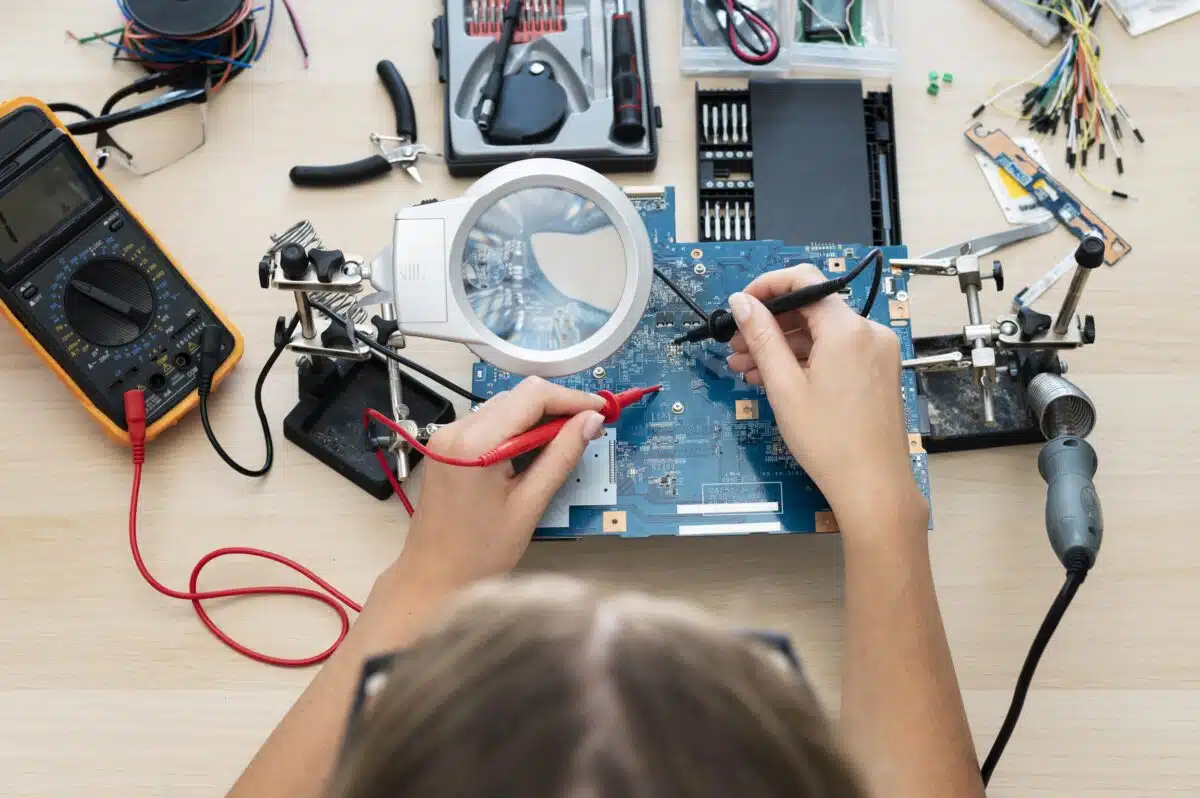
You have the option to source independently, but it’s essential to team up with a partner that has the necessary infrastructure to verify authenticity. That’s where Suntsu’s dedication to quality acts as your safety net. We go beyond merely “checking the labels.” Our comprehensive Quality Assurance Process includes rigorous testing at a forensic level to guarantee that the part you receive matches the design you created.
Our lab capabilities include:
- X-Ray Fluorescence (XRF) Material Analysis: To confirm the elemental composition of the terminations and packaging, making sure it aligns with the manufacturer’s datasheet and complies with RoHS standards.
- Decapsulation: We use a chemical process to strip away the outer layer of the component, allowing us to examine the internal die. This method helps verify the manufacturer’s logo and part number directly on the silicon, which prevents “blacktopping,” a tactic used by counterfeiters who erase original markings and replace them with new ones.
- Solderability and Functional Testing: Verifying that the parts will actually perform as intended on your board.
Through thorough testing of our components, we enable you to obtain the essential supplies from the independent market while safeguarding your company from the dangers linked to unverified brokers. For more information, you can check out our certifications and standards in our Quality Policies.
Future-Proofing Your Industrial Design
The “AI Boom” is not just a fleeting moment; it signifies a lasting increase in the demand for electronic components. The shift in capacity has become the new standard.
You cannot control global foundry capacity, but you can control your strategy.
- Diversify your AVL: Move away from single-source reliance on legacy brands. Utilize Engineering Design Services to validate high-performance alternatives based on specifications rather than logos.
- Bond your inventory: Insulate your production lines from market swings and price volatility by leveraging Vendor Managed Inventory programs that secure stock for 12 months or more.
- Partner with a hybrid distributor: align with a partner who can navigate both authorized channels and the open market, backed by forensic Quality Policies to ensure authenticity.
Don’t let the AI revolution hold your production line hostage. Contact Suntsu today to build a supply chain that is as innovative as your products.
FAQs
Receiving a Product Discontinuation Notice (PDN) is stressful, but acting quickly can mitigate the risk.
-
Assess Total Demand: Immediately calculate exactly how many parts you need to support production until your product’s own end-of-life or until a redesign is possible.
-
Secure a Last Time Buy (LTB): Place an order for that total quantity immediately.
-
Check Independent Stock: If you missed the LTB window, contact a partner with Global Sourcing capabilities to sweep the market for remaining stock.
-
Validate an Alternative: Use Engineering Design Services to find a “drop-in” replacement or a close match that requires minimal redesign.
A Franchised (or Authorized) Distributor has a direct contractual agreement with the component manufacturer. They buy new parts directly from the factory and are authorized to sell them, offering a complete paper trail of traceability. This is the safest route for supply but is often limited by the manufacturer’s stock levels and lead times.
An Independent Distributor does not have a direct contract with the manufacturer. Instead, they source components from the open market, which can include other authorized distributors, OEMs with excess inventory, or global stockists. This allows them to find parts that are otherwise sold out or obsolete.
Predicting allocation requires monitoring several key “early warning” indicators in the supply chain. You should watch for:
-
Steadily Increasing Lead Times: If a standard 12-week lead time creeps up to 18 or 24 weeks, a shortage is often imminent.
-
Price Increases: Manufacturers often raise prices to curb demand before officially placing parts on allocation.
-
Raw Material Shortages: News about shortages in copper, neon gas, or silicon wafers often precedes component shortages by months. Copper is a prime example, having climbed toward record highs on combined AI-data-center and EV demand [3].
However, most internal teams don’t have the time to track global commodities daily. This is why partnering with a distributor who provides market intelligence is critical. We monitor these trends globally and can alert you to bond inventory before a shortage impacts your production line.
A Vendor Managed Inventory (VMI) program is a logistics strategy where your distributor takes responsibility for holding and managing your component stock.
In a typical Suntsu VMI setup:
-
We Bond the Stock: Based on your forecast, we purchase and store a 6-to-12-month supply of components in our warehouse.
-
You “Pull” as Needed: When you are ready to manufacture, you request the specific quantity you need.
-
You Pay on Release: You typically only pay for the parts when they leave our dock (or yours, depending on the setup).
This improves your cash flow because you aren’t tying up capital in warehouse inventory, and it guarantees that the parts are available exactly when you need them, eliminating lead time anxiety.
Not necessarily. While “shortage buying” usually commands a premium because supply is low and demand is high, the open market also offers cost-saving opportunities.
-
Shortage Markets: Yes, if a part is on global allocation, market prices will likely be higher than standard franchised pricing (PPV).
-
Cost Savings (PPV): Conversely, independent distributors can often source parts below standard cost by purchasing Excess Inventory from other OEMs who over-purchased. We can often find stock sitting on shelves in other regions where demand is lower, allowing for arbitrage that saves you money.
Therefore, the open market should be viewed as a dynamic tool for both solving shortages and reducing BOM costs, depending on the specific market conditions for that part.
Related Content
References
[1] SEMI. “SEMI Projects Double-Digit Growth in Global 300mm Fab Equipment Spending for 2026 and 2027” Available at: https://www.semi.org/en/semi-press-release/semi-projects-double-digit-growth-in-global-300mm-fab-equipment-spending-for-2026-and-2027
[2] Astute Group. “MLCC Price Increases Threaten AI Server Build Costs” Available at: https://www.astutegroup.com/news/general/mlcc-price-increases-threaten-ai-server-build-costs/
[3] Investing.com. “Copper’s Quiet Bull Run: The Metal Powering the AI Data Center Boom” Available at: https://www.investing.com/analysis/coppers-quiet-bull-run-the-metal-powering-the-ai-data-center-boom-200679954