

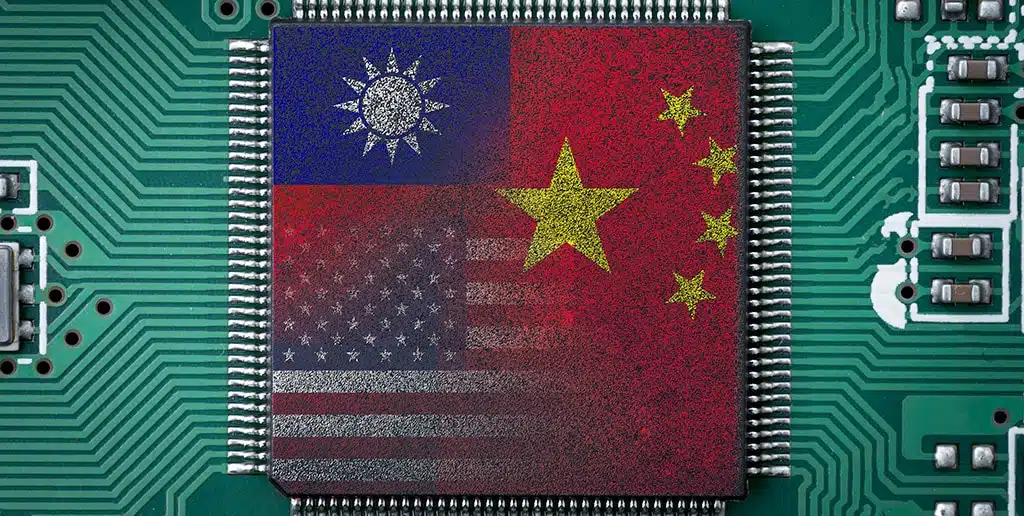
If you’ve been keeping up with the news, you should already be familiar with the tensions occurring between China and Taiwan. While this conflict has been ongoing for years, many are keeping a closer eye on it, mainly due to the current global supply chain disruptions and because Taiwan is the top global manufacturer of advanced chips and semiconductors.
Taiwan has been governed independently from China since 1949, but China and Taiwan have differing views on the island’s status. Taiwan claims it is separate from China while Beijing claims it is still a renegade province and part of the mainland.
In 2016, when Taiwanese president Tsai Ing-wen was elected, tensions between Taiwan and China escalated. Tsai refused to allow for increased cross-strait ties that her predecessor endorsed, causing Beijing to take aggressive actions near the island. A couple years after Tsai Ing-wen was reelected, US House Speaker, Nancy Pelosi, visited Taiwan amid heightened US-China tensions. Since the visit, Beijing has increased their presence around the island, conducting military exercises in designated zones. Three of these military zones were within the island’s territorial waters, forcing ships to alter their routes. These actions are a statement to Taiwan, showing the power China can exert over the island to reach their goals of reunifying them as “one country, two systems.”
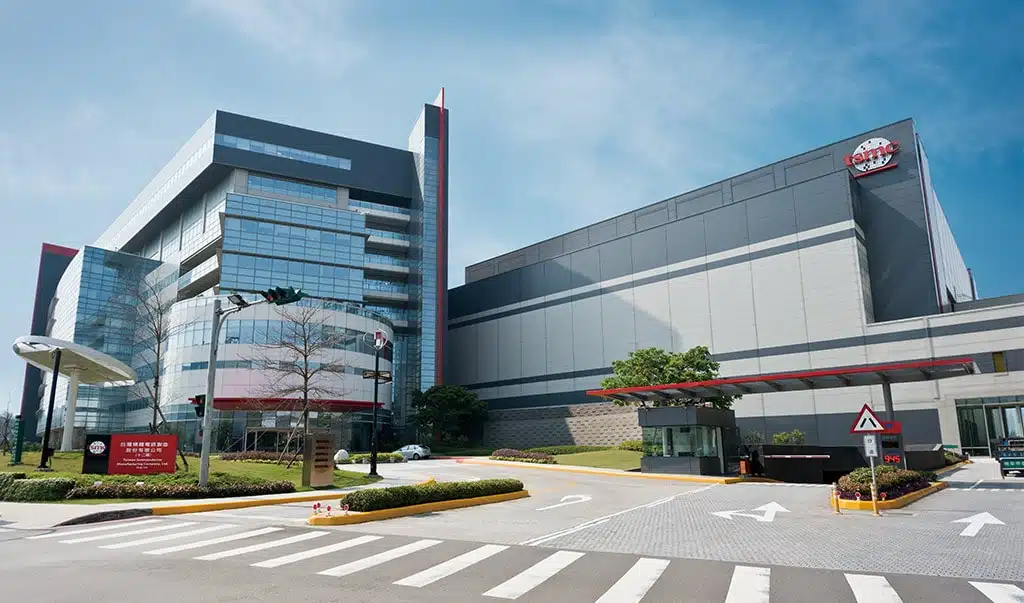
TSMC Semiconductor Fab / Image courtesy of Taiwan Semiconductor Manufacturing Company Limited.
The measures taken by China have also impacted the global supply chain. Trade restrictions have been placed on China to dissuade them of further action in Taiwan and and in October 2022 the United States, through the Commerce Department’s Bureau of Industry and Security, imposed sweeping new controls on the export of advanced chips and chip-making equipment to China [3].
While the export bans put in place by the US aim to slow China’s semiconductor processing, they may impact Taiwan’s production as well. Taiwan produces roughly 20% of the world’s semiconductors overall — but its real chokehold is at the leading edge, where about 90% of the most advanced chips are made, overwhelmingly by Taiwan Semiconductor
Manufacturing Company (TSMC) [1]. TSMC is the world’s largest contract chipmaker and one of only two foundries (alongside Samsung) capable of producing the smallest, most advanced nodes.
In order to strengthen the semiconductor chip industry in the US, the president signed into law the bipartisan CHIPS and Science Act of 2022. The act dedicates $52.7 billion specifically to American semiconductor research, development, and manufacturing (within roughly $280 billion in total authorized funding) [2]. America invented the semiconductor, but today we only produce about 10% of the world’s supply. The CHIPS and Science Act will make sure the United States advances its scientific and technological edge while creating opportunities for those who have been historically left out.
Update: Since this 2022 post, the CHIPS Act catalyzed over $450 billion in announced private semiconductor investment, and TSMC expanded its US commitment to roughly $165 billion across multiple Arizona fabs — even as Taiwan’s advanced-chip dominance, and the strategic risk it represents, remains largely intact.
At Suntsu, we help tech companies secure hard-to-find parts using our skilled global sourcing team. If you have questions or concerns about semiconductor availability or lead times, reach out to one of our specialists. We’d be happy to assist you with whatever your needs may be.
References
[1] Congressional Research Service. “Taiwan’s Role in Global Semiconductor Supply Chains” Available at: https://www.congress.gov/crs-product/IG10073
[2] The White House (archived). “FACT SHEET: CHIPS and Science Act Will Lower Costs, Create Jobs, Strengthen Supply Chains, and Counter China” Available at: https://bidenwhitehouse.archives.gov/briefing-room/statements-releases/2022/08/09/fact-sheet-chips-and-science-act-will-lower-costs-create-jobs-strengthen-supply-chains-and-counter-china/
[3] U.S. Government Accountability Office. “Export Controls: Commerce Implemented Advanced Semiconductor Rules and Took Steps to Address Compliance Challenges” Available at: https://www.gao.gov/products/gao-25-107386