
Dual-Channel Memory Guide: Architecture & Performance

In today’s fast-paced electronic design environment, engineering teams continually push for greater speed and efficiency. Whether working on advanced industrial automation controllers or vital medical devices, it’s crucial to ensure products meet all technical specs with low failure rates. Teams aim to develop a durable design free from supply chain delays, pinpointing components that meet exact technical needs. Meanwhile, procurement professionals focus on avoiding “line-down” risks caused by component shortages and ensuring timely delivery of essential parts.

At the core of these high-performance features are specialized Integrated Circuits that handle large data processing and routing. However, even the most advanced processor remains idle if data cannot be transmitted quickly enough. Therefore, understanding memory architecture—particularly dual-channel memory—is vital for hardware engineers and supply chain managers. As outlined in our prior guide, Memory IC essentials: selecting the right components for your project, choosing the correct memory setup is just as crucial as selecting the CPU.

This comprehensive guide covers how dual-channel memory works, its effect on system performance, and how choosing the right distributor can help you obtain these essential components in a volatile market.

In today’s fast-paced electronic design environment, engineering teams continually push for greater speed and efficiency. Whether working on advanced industrial automation controllers or vital medical devices, it’s crucial to ensure products meet all technical specs with low failure rates. Teams aim to develop a durable design free from supply chain delays, pinpointing components that meet exact technical needs. Meanwhile, procurement professionals focus on avoiding “line-down” risks caused by component shortages and ensuring timely delivery of essential parts.

At the core of these high-performance features are specialized Integrated Circuits that handle large data processing and routing. However, even the most advanced processor remains idle if data cannot be transmitted quickly enough. Therefore, understanding memory architecture—particularly dual-channel memory—is vital for hardware engineers and supply chain managers. As outlined in our prior guide, Memory IC essentials: selecting the right components for your project, choosing the correct memory setup is just as crucial as selecting the CPU.

This comprehensive guide covers how dual-channel memory works, its effect on system performance, and how choosing the right distributor can help you obtain these essential components in a volatile market.

Find the Right Memory IC for Your Next Build

Don’t let extended lead times dictate your design. Explore our extensive inventory of high-quality, traceable memory components to find the perfect fit for your board and keep your project on schedule.

What is Dual-Channel Memory?

To understand dual-channel memory, it’s important to examine the communication pathways on a motherboard. In a computer, the CPU interacts with the RAM through a memory controller. The physical connection linking the memory controller to the RAM modules is called a “channel.”

Dual-channel memory is an architecture that uses two separate data channels to communicate with memory modules at the same time. By increasing the number of communication lanes between the memory controller and RAM, it effectively doubles the potential data transfer rate, resulting in significantly faster data processing speeds.

Single-Channel vs. Dual-Channel Memory

When assessing What is Dynamic Random Access Memory and How do I Pick the Correct Type, the choice between single and dual-channel configurations is a key architectural decision for engineers. The main differences relate to how data queues and moves across the motherboard:

Single-Channel Architecture

In this configuration, the memory controller connects to the RAM via a single 64-bit data bus. All read and write operations must queue and pass through this one pathway. If the CPU requests a large volume of data at once, it might need to wait for the memory to retrieve and transfer it through that single lane, causing system latency.

Dual-Channel Architecture

This setup uses two distinct 64-bit data buses to form a combined 128-bit data path. Rather than a single lane, it features two parallel channels. When you install two identical memory modules into the appropriate dual-channel slots on a compatible motherboard, the memory controller can access both modules simultaneously.

Single-Channel Architecture

In this configuration, the memory controller connects to the RAM via a single 64-bit data bus. All read and write operations must queue and pass through this one pathway. If the CPU requests a large volume of data at once, it might need to wait for the memory to retrieve and transfer it through that single lane, causing system latency.

Dual-Channel Architecture

This setup uses two distinct 64-bit data buses to form a combined 128-bit data path. Rather than a single lane, it features two parallel channels. When you install two identical memory modules into the appropriate dual-channel slots on a compatible motherboard, the memory controller can access both modules simultaneously.

How Much Does Dual-Channel Memory Impact System Performance?

The effect of dual-channel memory on performance largely varies with the application. For basic, low-demand tasks, a 128-bit data bus may make little difference. However, for compute-heavy, data-intensive industrial applications—especially those utilizing high-speed, power-efficient ICs like the SK Hynix LPDDR4x Memory Modules—the impact is profound. By doubling the theoretical memory bandwidth, dual channel architecture prevents the CPU from bottlenecking.

Here are the primary ways dual-channel memory impacts system performance:

  • Increased Theoretical Bandwidth: Expanding the data path from 64 bits to 128 bits allows the system to transfer twice as much data to the CPU each clock cycle, significantly enhancing load times and data access for large files.
  • Reduced CPU Wait Times: The CPU reduces idle time waiting for data, enabling quicker instruction execution and enhancing system responsiveness.
  • Enhanced Integrated Graphics Performance: In systems with integrated graphics, where the GPU uses shared system RAM instead of dedicated VRAM, dual-channel memory can significantly boost performance.
  • Improved Frame Pacing: For tasks that involve real-time physical simulations, processing complex telemetry data, or heavy multitasking, dual-channel setups ensure smooth and consistent data flow without stuttering or hanging.

Engineers aiming to enhance these pathways should consider utilizing expert Engineering Design Services to ensure their PCB layouts optimize bandwidth while preventing electromagnetic interference (EMI) and signal integrity problems.

Dual-Channel vs. Dual-Rank Memory

Many technical buyers and engineers often confuse memory channels with memory ranks. Although the terms sound alike, they represent completely different physical and architectural ideas:

  • Memory Channel: This describes the motherboard and CPU architecture, specifically the physical data pathways connecting the memory controller to the RAM slots.
  • Memory Rank: This describes the physical structure of the RAM module. A “rank” is a block of 64 bits of data formed by the memory chips soldered onto the stick.
    • A single-rank memory module has one block of 64-bit data chips.
    • A dual-rank module has two 64-bit blocks of chips on the same stick.

Importantly, the memory controller can access only one rank per channel at a time. While dual-rank memory enables the controller to write to one rank during the other’s refresh cycle—thus enhancing efficiency—it does not double the bandwidth like dual-channel architecture. You can have single-rank memory operating in dual-channel mode or dual-rank memory running in single-channel mode.
Understanding Memory Interleaving

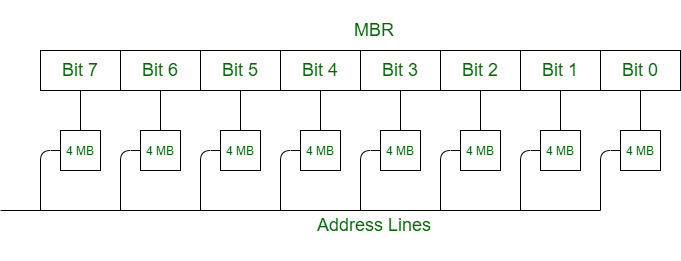
To further enhance the efficiency of dual-channel architecture, modern memory controllers use a process known as memory interleaving.

Memory interleaving involves distributing contiguous memory blocks across multiple modules or banks. Rather than filling one RAM module completely

before moving to the next, the memory controller alternates data storage between them.

When data is spread across two modules operating in dual-channel mode, the memory controller can send a read or write command to the first module. While that module processes the command and encounters its inherent latency, the controller can instantly issue the next command to the second module. This overlapping of operations hides the internal delay of the DRAM chips, enabling a smooth, high-speed flow of data to the CPU.

Understanding Memory Interleaving

To further enhance the efficiency of dual-channel architecture, modern memory controllers use a process known as memory interleaving.

Memory interleaving involves distributing contiguous memory blocks across multiple modules or banks. Rather than filling one RAM module completely before moving to the next, the memory controller alternates data storage between them.

When data is spread across two modules operating in dual-channel mode, the memory controller can send a read or write command to the first module. While that module processes the command and encounters its inherent latency, the controller can instantly issue the next command to the second module. This overlapping of operations hides the internal delay of the DRAM chips, enabling a smooth, high-speed flow of data to the CPU.

Industrial Applications for Dual-Channel Memory

Dual-channel configurations are crucial in many advanced industrial sectors due to the need for high bandwidth and low latency:

Medical Devices

Modern medical imaging devices produce large, high-resolution datasets in real-time. Dual-channel memory allows these sizable files to be buffered and processed smoothly, enhancing speed and diagnostic accuracy. For more information, see our guide on Designing High-Reliability Electronics with Custom Components.

Edge AI and IoT

As artificial intelligence transitions from cloud-based to local devices, the need for fast local memory has greatly increased. If you’re working in this area, have you thought about incorporating Edge AI into your product designs? AI inference models require rapid memory access to process sensor data instantly.

Industrial Automation

Robotics and automated assembly lines operate using Real-Time Operating Systems (RTOS) that require minimal latency. Dual-channel memory guarantees smooth processing of motor control algorithms and machine vision data, facilitating faster decision-making and improved operational efficiency.

Medical Devices

Modern medical imaging devices produce large, high-resolution datasets in real-time. Dual-channel memory allows these sizable files to be buffered and processed smoothly, enhancing speed and diagnostic accuracy. For more information, see our guide on Designing High-Reliability Electronics with Custom Components.

Edge AI and IoT

As artificial intelligence transitions from cloud-based to local devices, the need for fast local memory has greatly increased. If you’re working in this area, have you thought about incorporating Edge AI into your product designs? AI inference models require rapid memory access to process sensor data instantly.

Industrial Automation

Robotics and automated assembly lines operate using Real-Time Operating Systems (RTOS) that require minimal latency. Dual-channel memory guarantees smooth processing of motor control algorithms and machine vision data, facilitating faster decision-making and improved operational efficiency.

Overcoming Memory Sourcing Challenges with Suntsu

Choosing the ideal dual-channel memory setup is only part of the challenge; securing the actual hardware components presents a separate difficulty. The memory semiconductor market is highly unpredictable. When a key component is allocated by a major manufacturer, lead times can extend beyond 60 weeks. Additionally, if a critical memory IC used in an active project is marked End-of-Life (EOL), engineers often must undergo a lengthy and costly re-qualification process. The demand for a drop-in replacement that avoids full re-qualification is extremely high.

Suntsu Electronics specializes in this area. We function as a hybrid distributor, providing exceptional support for sourcing hard-to-find, highly allocated, and EOL memory chips. Here’s how we bolster your supply chain:

  • Global Sourcing: We utilize a large, carefully vetted global network to find authorized, traceable memory components that ensure your production lines continue to run smoothly.
  • Shortage Mitigation: When you encounter major supply chain disruptions or 52-week lead times, our shortage experts source the necessary stock from the open market, carefully vetting suppliers to avoid counterfeits.
  • Obsolescence Management: If your needed memory module has been discontinued, our engineering team offers comprehensive support to find form-fit-function alternatives that reduce the need for significant redesigns.
  • Inventory Management Solutions: We assist clients in proactively managing risk through the creation of dedicated buffer stocks and vendor-managed inventory programs, which provide purchasing teams with full visibility and control over their component supplies.
  • Excess Inventory Management: If a project cancellation results in excess memory ICs, tying up your cash flow and warehouse space, our programs can assist in recovering capital and streamlining your operations.

Creating a product with optimal dual-channel memory performance demands technical accuracy, but successfully launching it requires strong supply chain resilience. Suntsu Electronics is ready to support your engineering and purchasing teams in tackling these challenges. Reach out to us today to review your BOM, consider alternative designs, and secure the memory components necessary for your next major project.

Overcoming Memory Sourcing Challenges with Suntsu

Choosing the ideal dual-channel memory setup is only part of the challenge; securing the actual hardware components presents a separate difficulty. The memory semiconductor market is highly unpredictable. When a key component is allocated by a major manufacturer, lead times can extend beyond 60 weeks. Additionally, if a critical memory IC used in an active project is marked End-of-Life (EOL), engineers often must undergo a lengthy and costly re-qualification process. The demand for a drop-in replacement that avoids full re-qualification is extremely high.

Suntsu Electronics specializes in this area. We function as a hybrid distributor, providing exceptional support for sourcing hard-to-find, highly allocated, and EOL memory chips. Here’s how we bolster your supply chain:

  • Global Sourcing: We utilize a large, carefully vetted global network to find authorized, traceable memory components that ensure your production lines continue to run smoothly.
  • Shortage Mitigation: When you encounter major supply chain disruptions or 52-week lead times, our shortage experts source the necessary stock from the open market, carefully vetting suppliers to avoid counterfeits.
  • Obsolescence Management: If your needed memory module has been discontinued, our engineering team offers comprehensive support to find form-fit-function alternatives that reduce the need for significant redesigns.
  • Inventory Management Solutions: We assist clients in proactively managing risk through the creation of dedicated buffer stocks and vendor-managed inventory programs, which provide purchasing teams with full visibility and control over their component supplies.
  • Excess Inventory Management: If a project cancellation results in excess memory ICs, tying up your cash flow and warehouse space, our programs can assist in recovering capital and streamlining your operations.

Creating a product with optimal dual-channel memory performance demands technical accuracy, but successfully launching it requires strong supply chain resilience. Suntsu Electronics is ready to support your engineering and purchasing teams in tackling these challenges. Reach out to us today to review your BOM, consider alternative designs, and secure the memory components necessary for your next major project.

Don’t let component shortages or extended lead times derail your next high-performance design. Request a quote today to leverage Suntsu’s global sourcing expertise and secure the critical memory ICs your production lines rely on.

FAQs

Can you mix different RAM speeds in a dual-channel configuration?

Yes, but it is not optimal for performance. If the clock speeds or latencies of the two memory modules differ, the motherboard will automatically underclock the faster module to match the speed and latency of the slower module. For maximum efficiency and stability in your designs, sourcing correctly matched memory ICs is highly recommended.

Do memory modules need to be from the same brand for dual-channel?

Theoretically, as long as the memory modules match in capacity, speed, and timings, and the motherboard supports dual-channel architecture, they should work together regardless of the manufacturer. However, to avoid unexpected signal integrity or timing issues in mission-critical hardware, engineering and procurement teams should strive to source identical modules, which are often binned and sold as matched kits.

Is 32GB of single-channel memory better than 16GB of dual-channel memory?

It depends entirely on the workload. For applications that simply need to hold a massive amount of static data without requiring immediate, rapid access, a larger single-channel capacity might suffice. However, for demanding industrial applications that require rapid, continuous data access, the doubled data transfer rate of the 16GB dual-channel configuration will likely provide a smoother and more responsive computing experience.

Can any computer or industrial controller use dual-channel memory?

Not every computer or PCB design supports dual-channel memory. To utilize this technology, the motherboard’s memory controller must be designed with two memory channels, and the board must have at least two memory slots wired to support the configuration.

Does enabling dual-channel memory improve multitasking capabilities?

Yes, utilizing a dual-channel configuration significantly improves a system’s multitasking performance. With two memory channels, the system can efficiently handle multiple complex tasks simultaneously, allowing for seamless switching between resource-intensive applications without noticeable slowdowns or hangs.

keyboard_arrow_up