NAND vs NOR Flash: Key Differences and Best Use Cases

The modern electronics industry depends on non-volatile memory to operate everything from advanced medical devices to high-speed industrial automation systems. For hardware engineers developing new products, and for purchasing managers and product directors responsible for project timelines and budgets, a clear understanding of memory architecture is essential.

Non-volatile storage mainly relies on two key memory technologies: NAND and NOR flash. Although both are designed to store data without power, they differ significantly in their internal structures, performance, and best use cases. When it

comes to choosing the right Memory IC for your application, picking the wrong one during design can result in slow device operation, reduced margins, or even a costly redesign due to unexpected component obsolescence.

This comprehensive guide explains the main differences between NAND and NOR flash, highlights their ideal applications, and offers advice on navigating the volatile electronic components market to secure the necessary memory ICs for your production lines.

The modern electronics industry depends on non-volatile memory to operate everything from advanced medical devices to high-speed industrial automation systems. For hardware engineers developing new products, and for purchasing managers and product directors responsible for project timelines and budgets, a clear understanding of memory architecture is essential.

Non-volatile storage mainly relies on two key memory technologies: NAND and NOR flash. Although both are designed to store data without power, they differ significantly in their internal structures, performance, and best use cases. When it comes to choosing the right Memory IC for your application, picking the wrong one during design can result in slow device operation, reduced margins, or even a costly redesign due to unexpected component obsolescence.

This comprehensive guide explains the main differences between NAND and NOR flash, highlights their ideal applications, and offers advice on navigating the volatile electronic components market to secure the necessary memory ICs for your production lines.

Find the Perfect Memory Solution for Your Design

Selecting the wrong memory IC can lead to slow device performance or unexpected component obsolescence. Browse our extensive portfolio of NAND and NOR flash solutions to ensure your next project is built on reliable, high-performance architecture.

What is NAND Flash?
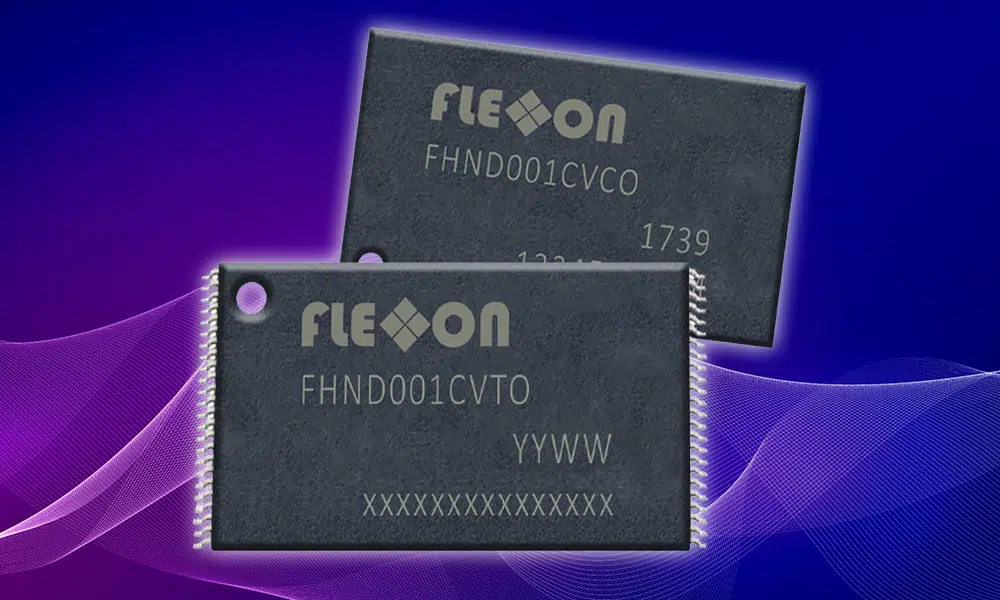
NAND flash is a non-volatile memory storage technology named after the NAND gate (NOT-AND) at its core. Its memory cells are arranged in series within a chip, which means data is read, written, and erased in large blocks or pages instead of single bytes.

This serial layout enables NAND flash to attain extremely high storage densities within a compact size, making large-scale manufacturing highly economical. NAND flash typically serves as the core technology for mass

storage devices, USB drives, smartphones, and SSDs. For industrial and high-reliability applications, brands like Flexxon offer specialized NAND flash products designed to meet demanding performance and durability standards.

Similarly, as memory requirements evolve for increasingly compact and efficient devices, NAND proves highly adaptable for low-power applications. Jeju Semiconductor (JSC) is a key partner and supplier for our memory component offerings, excelling in this space by providing highly efficient NAND solutions tailored specifically for IoT and mobile devices. You can learn more about how their product lines are driving innovation in our post, Tiny Chips, Big Impact: The Rise of JSC in the Memory Semiconductor Market.

Advances like 3D NAND, which stacks flash memory cells vertically rather than expanding them across a flat plane, have pushed memory capacity even further while keeping the lower cost per bit that makes NAND attractive at scale. If your project demands extensive data retention and rapid sequential writes, NAND is usually the preferred choice. For a detailed explanation of how NAND supports modern storage solutions, refer to our SSD Deep Dive: NVMe, NAND Flash, and Performance blog post.

NAND flash is a non-volatile memory storage technology named after the NAND gate (NOT-AND) at its core. Its memory cells are arranged in series within a chip, which means data is read, written, and erased in large blocks or pages instead of single bytes.

This serial layout enables NAND flash to attain extremely high storage densities within a compact size, making large-scale manufacturing highly economical. NAND flash typically serves as the core technology for mass storage devices, USB drives, smartphones, and SSDs. For industrial and high-reliability applications, brands like Flexxon offer specialized NAND flash products designed to meet demanding performance and durability standards.

Similarly, as memory requirements evolve for increasingly compact and efficient devices, NAND proves highly adaptable for low-power applications. Jeju Semiconductor (JSC) is a key partner and supplier for our memory component offerings, excelling in this space by providing highly efficient NAND solutions tailored specifically for IoT and mobile devices. You can learn more about how their product lines are driving innovation in our post, Tiny Chips, Big Impact: The Rise of JSC in the Memory Semiconductor Market.

Advances like 3D NAND, which stacks flash memory cells vertically rather than expanding them across a flat plane, have pushed memory capacity even further while keeping the lower cost per bit that makes NAND attractive at scale. If your project demands extensive data retention and rapid sequential writes, NAND is usually the preferred choice. For a detailed explanation of how NAND supports modern storage solutions, refer to our SSD Deep Dive: NVMe, NAND Flash, and Performance blog post.

What is NOR Flash?

NOR flash, named after the NOR (NOT-OR) logic gate, uses a distinct approach. In a NOR flash architecture, memory cells are connected in parallel to the bit lines, unlike NAND, where cells are connected in series. This setup enables the microprocessor to access any specific byte of memory directly and at random, similar to dynamic random-access memory (DRAM).

This byte-level random access makes NOR flash highly fast for data reading.

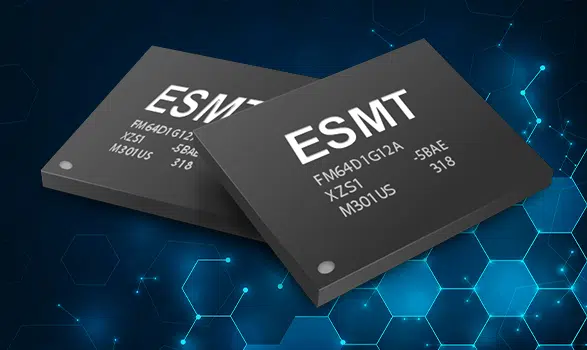
Importantly, it supports eXecute In Place (XIP), allowing a microcontroller to perform code execution directly from NOR flash without copying it to RAM first. Manufacturers like ESMT provide robust NOR flash solutions that excel in these scenarios. Flash memory for embedded systems often relies on this capability, particularly in embedded system designs where boot time and deterministic startup are critical. As a result, NOR is the top choice for storing boot code, firmware, and OS kernels.

Both serial NOR flash and parallel NOR flash variants exist to serve different interface requirements. Serial NOR flash uses fewer pins and suits space-constrained boards, while parallel NOR flash offers higher throughput for applications where bus bandwidth matters. However, this parallel wiring demands more physical space, leading to lower storage densities and a higher cost per gigabyte compared to NAND. For a more in-depth view of NOR architecture and market prospects, see our NOR Flash Guide 2026.

NOR flash, named after the NOR (NOT-OR) logic gate, uses a distinct approach. In a NOR flash architecture, memory cells are connected in parallel to the bit lines, unlike NAND, where cells are connected in series. This setup enables the microprocessor to access any specific byte of memory directly and at random, similar to dynamic random-access memory (DRAM).

This byte-level random access makes NOR flash highly fast for data reading. Importantly, it supports eXecute In Place (XIP), allowing a microcontroller to perform code execution directly from NOR flash without copying it to RAM first. Manufacturers like ESMT provide robust NOR flash solutions that excel in these scenarios. Flash memory for embedded systems often relies on this capability, particularly in embedded system designs where boot time and deterministic startup are critical. As a result, NOR is the top choice for storing boot code, firmware, and OS kernels.

Both serial NOR flash and parallel NOR flash variants exist to serve different interface requirements. Serial NOR flash uses fewer pins and suits space-constrained boards, while parallel NOR flash offers higher throughput for applications where bus bandwidth matters. However, this parallel wiring demands more physical space, leading to lower storage densities and a higher cost per gigabyte compared to NAND. For a more in-depth view of NOR architecture and market prospects, see our NOR Flash Guide 2026.

NAND vs NOR: Key Differences

To make well-informed choices for your Bill of Materials (BOM), you need to understand how these two types of memory compare in three key areas: speed, cost, and reliability.

loader-icon

When assessing performance, it is essential to consider read, write, and erase speeds separately.

  • Read Speeds: NOR flash is the best choice for random read operations due to its parallel architecture, which enables a processor to retrieve individual bytes almost instantly. In contrast, NAND flash is slower at random reads because it requires loading an entire block or page of data to access a single byte.
  • Write & Erase Speeds: NAND flash technology excels in write and erase tasks, handling large blocks to enable fast sequential data transfers. In contrast, NOR flash is known for slower erase and write speeds due to its byte-level design, which introduces considerable overhead when updating large files.
  • Density: NAND cells are much smaller than NOR cells, allowing manufacturers to store gigabytes or even terabytes of data on a single NAND chip. In contrast, NOR flash has difficulty scaling beyond the low-gigabit range.
  • Cost: Due to its higher density and smaller die size, NAND is significantly cheaper per gigabyte compared to NOR flash. If you need to store large localized data, such as high-resolution videos or extensive logs, NAND is the only cost-effective choice.
  • Bad Blocks & Error Correction: NAND flash is produced with a specific number of "bad blocks" (defective memory cells) identified during manufacturing. Throughout its lifespan, more bad blocks can develop. Therefore, NAND relies on efficient Error Correction Code (ECC) and wear-leveling algorithms, overseen by a controller.
  • Data Integrity: NOR flash is extremely dependable, usually shipped with perfectly functioning bites, and seldom forms bad blocks over time. Its minimal need for error correction makes it highly stable for critical boot processes. At Suntsu, we recognize that reliability is essential for medical and industrial uses, which is why our rigorous Quality Policies guarantee the authenticity of every component we deliver.

When to Use NAND vs NOR

Knowing the technical specifications is just part of the process; properly applying them to your product design is crucial to avoiding delays and cost overruns.

Data Storage

Whether you’re developing a smart industrial sensor that collects extensive environmental data every day or a portable medical device that maintains patient records and images, NAND flash memory is the ideal choice. This technology offers affordable, high-capacity, sequential storage. Despite the additional complexities of error correction codes (ECC) and wear-leveling, the cost-effectiveness and density of NAND make it the go-to option for large-scale storage needs. To discover a range of high-capacity memory solutions, take a look at our Integrated Circuits portfolio.

Firmware & Boot Code

When creating the control board for a robotic assembly line or an advanced IoT gateway, it’s crucial that the device powers up and initializes quickly and reliably. NOR flash memory is vital for storing the BIOS, firmware, and other essential system code. Its floating gate transistor architecture, combined with XIP support, guarantees that your device will boot flawlessly every time, significantly reducing the chances of encountering a “bricked” product in the field.

Floating gate transistors remain the standard in NOR flash architecture. While high-density NAND has largely shifted to Charge Trap Flash (CTF) to support 3D stacking, NOR flash operates at lower densities and rarely requires that transition, keeping the floating gate design intact and well-suited for the reliable, byte-level access that firmware storage demands.

Choosing the Right Flash Memory

For senior electrical engineers and product directors, choosing the right memory device goes beyond just reviewing the datasheet; it involves considering the business implications. Integrating a technically flawless component that is difficult to source can lead to significant business setbacks.

When deciding between NAND and NOR flash memory, it’s essential to consider the complete lifecycle of your product, typically spanning 7 to 10 years. Ask yourself if the specific density and package size will still be available in five years. Additionally, check if the manufacturer has plans for an End-of-Life (EOL) notice regarding this component line. For a detailed overview of how to align technical specifications with the realities of the supply chain, take a look at our article Memory IC Essentials: Selecting the Right Components for Your Project. If you encounter any technical challenges during the design process, remember that our Engineering Design Services are available to provide expert advice on component qualification and alternative architectures.

Sourcing Flash Memory (Avoiding EOL Risks)

The memory semiconductor market is known for its volatility. Prices can fluctuate unexpectedly, allocation periods can extend to 52 weeks, and components can become obsolete without warning. For purchasing managers and OEM directors, these disruptions in the supply chain can jeopardize project timelines, diminish profit margins, and even halt production lines altogether.

Suntsu Electronics employs a hybrid business model that merges the advantages of authorized product lines with the flexibility of an independent distributor. We deliver the essential solutions to ensure your manufacturing lines operate smoothly.

Obsolete Parts

When an engineering team discovers that a crucial NOR flash chip in a legacy product has become obsolete, it often leads to a costly and lengthy requalification process. We specialize in alleviating this challenge. Our Obsolescence Management programs enable us to locate hard-to-find end-of-life memory components available in the open market, or our engineering team can assist in finding a dependable drop-in replacement that doesn’t necessitate a complete board redesign. If your company has obsolete memory from discontinued projects, our Excess Inventory Management services can help you recover that locked-up capital.

Long-Term Availability

Building genuine supply chain resilience involves proactive future planning rather than merely reacting to shortages. To safeguard your product’s profitability and accelerate time-to-market, consistent pricing and reliable availability are essential. Our adaptable Vendor Managed Inventory (VMI) solutions offer comprehensive visibility and control over your component inventory. We maintain the NAND or NOR flash stock you need and deliver it exactly when your contract manufacturer needs it, reducing the risk of line-down emergencies.

The memory semiconductor market is known for its volatility. Prices can fluctuate unexpectedly, allocation periods can extend to 52 weeks, and components can become obsolete without warning. For purchasing managers and OEM directors, these disruptions in the supply chain can jeopardize project timelines, diminish profit margins, and even halt production lines altogether.

Suntsu Electronics employs a hybrid business model that merges the advantages of authorized product lines with the flexibility of an independent distributor. We deliver the essential solutions to ensure your manufacturing lines operate smoothly.

Obsolete Parts

When an engineering team discovers that a crucial NOR flash chip in a legacy product has become obsolete, it often leads to a costly and lengthy requalification process. We specialize in alleviating this challenge. Our Obsolescence Management programs enable us to locate hard-to-find end-of-life memory components available in the open market, or our engineering team can assist in finding a dependable drop-in replacement that doesn’t necessitate a complete board redesign. If your company has obsolete memory from discontinued projects, our Excess Inventory Management services can help you recover that locked-up capital.

Long-Term Availability

Building genuine supply chain resilience involves proactive future planning rather than merely reacting to shortages. To safeguard your product’s profitability and accelerate time-to-market, consistent pricing and reliable availability are essential. Our adaptable Vendor Managed Inventory (VMI) solutions offer comprehensive visibility and control over your component inventory. We maintain the NAND or NOR flash stock you need and deliver it exactly when your contract manufacturer needs it, reducing the risk of line-down emergencies.

Conclusion

The selection between NAND and NOR flash memory significantly influences the essential functions of your electronic device. NAND offers high-density and cost-effective storage, making it ideal for extensive data logging, whereas NOR provides rapid and dependable random access, which is crucial for executing vital code.

Finding the right memory chip is just the beginning. Ensuring a consistent and reliable supply of that chip is crucial for your product’s success in the market. With our extensive network for global sourcing, Suntsu provides a distinct advantage through independent distribution combined with exceptional engineering support. Whether you’re in search of a hard-to-find EOL component, looking to optimize a BOM for better profit margins, or need to secure long-term inventory for an upcoming launch, we stand as your strategic partner in making your designs a reality.

Stop worrying about EOL risks and supply chain volatility. Let us secure the long-term NAND or NOR flash inventory you need to keep your production lines moving without interruption.

FAQs

Can NAND and NOR flash be used together in the same embedded system?

Yes, and this is a common practice in many complex designs. Designers often pair the two technologies to leverage their respective strengths: NOR flash is used to store the boot code and firmware to enable rapid, deterministic startup , while NAND flash is used as high-capacity, cost-effective storage for large data logs, images, or media files.

Why is NOR flash generally preferred for 'Execute In Place' (XIP) applications?

XIP allows a processor to execute code directly from the flash memory without needing to first copy it into RAM. Because NOR flash supports byte-level random access—functioning similarly to standard RAM—the microprocessor can fetch instructions directly from it with very low latency. NAND flash, by contrast, requires reading an entire page or block of data to access a single byte, which introduces too much latency for efficient direct code execution.

What is the fundamental difference in how NAND and NOR cells are wired?

The distinction lies in their physical architecture. NAND flash cells are connected in series, which minimizes the number of connections and allows for high storage density. NOR flash cells are connected in parallel to the bit lines, which necessitates more complex wiring and more physical space, but provides the individual, direct access required for high-speed read operations.

Why does NAND flash require more robust Error Correction Code (ECC)?

NAND flash is manufactured with a certain percentage of “bad blocks” and is prone to developing more defects throughout its operational lifespan. To maintain data integrity, NAND requires a controller to manage wear-leveling and sophisticated ECC algorithms. NOR flash, however, is highly reliable and is typically shipped with perfectly functioning bits, meaning it rarely develops bad blocks and requires minimal error correction.

Does the choice between NAND and NOR impact the device's boot time?

Yes, it has a significant impact. Because NOR flash allows for fast, random access and supports XIP, it is the industry standard for storing system boot code and OS kernels, ensuring the device initializes quickly and reliably. Using NAND for boot code would be inefficient, as the processor would have to load entire blocks of data into RAM before the device could even begin the initialization process, significantly increasing boot time.

keyboard_arrow_up