
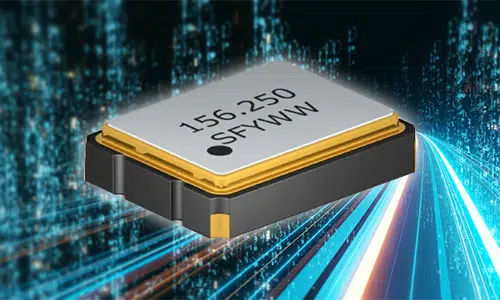
Crystal Oscillator Quality: How Frequency Stability Affects System-Level Performance

In modern electronics, precision is essential, not optional. Whether in high-speed telecommunications or life-saving medical devices, every synchronized electronic system depends on an accurate timing signal to operate correctly. This crucial timing is typically provided by a quartz crystal oscillator.

Although an oscillator may seem like a straightforward item on a Bill of Materials (BOM), its true significance is much more intricate. The quality of this component directly influences the system’s reliability, performance, and lifespan. Hardware

engineers continuously strive to design systems that maximize performance and reliability. To do so effectively, it is essential to understand the subtleties of oscillator performance metrics.

Suntsu Electronics recognizes the challenges engineers and procurement teams encounter when developing reliable designs. We are dedicated to supplying the key Frequency Control components necessary for these innovations, guaranteeing that supply chain issues do not undermine technical quality.

In modern electronics, precision is essential, not optional. Whether in high-speed telecommunications or life-saving medical devices, every synchronized electronic system depends on an accurate timing signal to operate correctly. This crucial timing is typically provided by a quartz crystal oscillator.

Although an oscillator may seem like a straightforward item on a Bill of Materials (BOM), its true significance is much more intricate. The quality of this component directly influences the system’s reliability, performance, and lifespan. Hardware engineers continuously strive to design systems that maximize performance and reliability. To do so effectively, it is essential to understand the subtleties of oscillator performance metrics.

Suntsu Electronics recognizes the challenges engineers and procurement teams encounter when developing reliable designs. We are dedicated to supplying the key Frequency Control components necessary for these innovations, guaranteeing that supply chain issues do not undermine technical quality.

Ensure Timing Precision in Your Next Design

Even the most innovative hardware is only as reliable as its clock signal. Our team provides the expert guidance and high-quality components you need to eliminate system-level timing failures.
The Fundamental Distinction: Tolerance versus Stability

When reviewing an oscillator datasheet, two specifications frequently lead to confusion: tolerance and stability. Although both relate to the component’s accuracy, they assess different aspects of its operation.

Frequency tolerance indicates the initial precision of an oscillator when manufactured. Measured at standard room temperature (usually 25°C), it reflects manufacturing variation. For example, an oscillator with a nominal

frequency of 25 MHz and a tolerance of ±10 ppm will operate within that small range at room temperature.

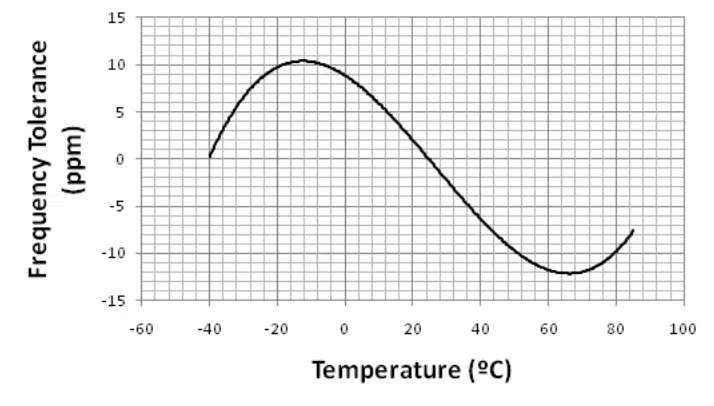
However, electronic systems seldom function in perfectly controlled, static environments. In such cases, the frequency stability of crystal oscillators becomes a crucial metric. Stability indicates the maximum permissible deviation from the nominal frequency across a range of operating conditions, primarily temperature fluctuations, but also voltage variations and output load changes throughout the component’s lifespan.

A component may start with excellent initial tolerance, but if its frequency stability is inadequate across an industrial temperature range of -40°C to +85°C, the system’s timing performance will significantly decline in real-world conditions. For more detailed information on the fundamental parameters of these components, consult our Quick Guide to Oscillators.

The Fundamental Distinction: Tolerance versus Stability

When reviewing an oscillator datasheet, two specifications frequently lead to confusion: tolerance and stability. Although both relate to the component’s accuracy, they assess different aspects of its operation.

Frequency tolerance indicates the initial precision of an oscillator when manufactured. Measured at standard room temperature (usually 25°C), it reflects manufacturing variation. For example, an oscillator with a nominal frequency of 25 MHz and a tolerance of ±10 ppm will operate within that small range at room temperature.

However, electronic systems seldom function in perfectly controlled, static environments. In such cases, the frequency stability of crystal oscillators becomes a crucial metric. Stability indicates the maximum permissible deviation from the nominal frequency across a range of operating conditions, primarily temperature fluctuations, but also voltage variations and output load changes throughout the component’s lifespan.

A component may start with excellent initial tolerance, but if its frequency stability is inadequate across an industrial temperature range of -40°C to +85°C, the system’s timing performance will significantly decline in real-world conditions. For more detailed information on the fundamental parameters of these components, consult our Quick Guide to Oscillators.

Unpacking the Noise: Phase Noise, Jitter, and Stability

A common misconception in hardware design is to treat phase noise, jitter, and frequency stability as the same. Although they all refer to issues in the clock signal, they are actually distinct measurements of timing irregularities.

  • Frequency Stability: As discussed, this is a broad, long-term metric. It assesses how the fundamental frequency fluctuates over minutes, days, or years because of environmental variations.
  • Phase Noise: This metric is a microscopic, short-term measurement in the frequency domain that gauges the quick, random variations in the waveform’s phase. In RF and wireless contexts, phase noise is vital because it can interfere with nearby channels or decrease a receiver’s sensitivity.
  • Jitter: Jitter and phase noise both describe timing irregularities but measure different things. Phase noise measures random phase fluctuations in the frequency domain, while jitter measures the deviation of clock edges in the time domain. RMS jitter can be calculated from integrated phase noise over a defined offset frequency range.

To grasp the mathematics and measurement methods underlying these time-domain fluctuations, refer to Clock Jitter Explained: Guide to System Timing Precision.

To summarize these crucial distinctions, consider the following comparison:

MetricDomainDescriptionPrimary System Impact
Frequency StabilityMacroscopic / Long-TermDeviation from nominal frequency over temperature and time.Loss of synchronization between separate systems.
Phase NoiseFrequency Domain (Short-Term)Random phase fluctuations represented as a noise skirt around the carrier.Degraded RF signal-to-noise ratio; adjacent channel interference.
JitterTime Domain (Short-Term)Variations in the precise timing of the clock edges.Misaligned data sampling; bit errors in digital processors.

When your design demands extreme time-domain accuracy, consider Eliminate Jitter with Suntsu’s Ultra-Low Jitter Oscillators to maintain data integrity across intricate PCB traces.
The Impact of Environmental Stressors: Shock, Vibration, and Drift

Quartz crystals serve as electromechanical resonators that utilize the piezoelectric effect, where they physically vibrate to produce an electrical frequency. Due to their mechanical nature, they are highly vulnerable to environmental stressors that involve movement or vibration.

When an oscillator experiences vibration—such as when mounted near a motor, in automotive assemblies, or aerospace equipment—the mechanical stress influences the crystal’s resonant frequency. This causes sidebands or

“spikes” in the phase noise profile, known as vibration-induced phase noise. The oscillator’s sensitivity to this effect is called g-sensitivity, usually measured in ppb/g.

Mechanical shock, involving a sudden, severe impact, presents a distinct risk. A hard drop may lead to immediate changes in the baseline frequency because of micro-fractures in the quartz blank or modifications in the mounting structure. In severe cases, shock can cause the crystal to fracture completely, resulting in catastrophic system failure. Using highly ruggedized Oscillators is crucial for operation in harsh environments.

Moreover, physical stressors combined with extended exposure to high temperatures speed up frequency drift. Drift, also known as aging, is the permanent, gradual change in a component’s frequency throughout its lifespan. It results from stress relaxation in the crystal mounting and mass transfer processes such as outgassing or contamination within the hermetically sealed package. Overlooking these factors during the design phase is a key aspect of The Hidden Costs of Low Quality Components, which can cause premature failures in the field.

The Impact of Environmental Stressors: Shock, Vibration, and Drift

Quartz crystals serve as electromechanical resonators that utilize the piezoelectric effect, where they physically vibrate to produce an electrical frequency. Due to their mechanical nature, they are highly vulnerable to environmental stressors that involve movement or vibration.

When an oscillator experiences vibration—such as when mounted near a motor, in automotive assemblies, or aerospace equipment—the mechanical stress influences the crystal’s resonant frequency. This causes sidebands or “spikes” in the phase noise profile, known as vibration-induced phase noise. The oscillator’s sensitivity to this effect is called g-sensitivity, usually measured in ppb/g.

Mechanical shock, involving a sudden, severe impact, presents a distinct risk. A hard drop may lead to immediate changes in the baseline frequency because of micro-fractures in the quartz blank or modifications in the mounting structure. In severe cases, shock can cause the crystal to fracture completely, resulting in catastrophic system failure. Using highly ruggedized Oscillators is crucial for operation in harsh environments.

Moreover, physical stressors combined with extended exposure to high temperatures speed up frequency drift. Drift, also known as aging, is the permanent, gradual change in a component’s frequency throughout its lifespan. It results from stress relaxation in the crystal mounting and mass transfer processes such as outgassing or contamination within the hermetically sealed package. Overlooking these factors during the design phase is a key aspect of The Hidden Costs of Low Quality Components, which can cause premature failures in the field.

System-Level Consequences: Data Loss in High-Speed Networks

Poor timing components can have effects that go beyond a single PCB, potentially damaging entire communication systems. But what is the exact way an unstable oscillator leads to data loss?

In high-speed, synchronous data networks, receivers depend on a locally generated clock to precisely sample the incoming data stream of zeros and ones. This data creates an “eye diagram,” which helps visualize signal stability. The receiver must trigger its sampling exactly at the widest and most stable part of this “eye.”

If the local oscillator has poor stability or too much jitter, the sampling window can shift. As a result, the receiver may sample during a voltage transition, such as when the signal changes from 0 to 1, rather than capturing the data bit securely at the eye’s center.

  • Bit Error Rate (BER) Spikes: Misaligned sampling causes the receiver to misinterpret the data, drastically increasing the BER.
  • Packet Drops: When the BER exceeds the threshold of the system’s forward error correction (FEC) algorithms, entire data packets are deemed corrupted and are subsequently dropped.
  • Network Congestion: Dropped packets force the system to request re-transmissions. This consumes valuable bandwidth, increases latency, and degrades the overall throughput of the network.

This level of precision is particularly vital in telecommunications, where handling Frequency Control in the 5G Era demands extraordinary synchronization to avoid data collisions and dropped calls in dense cell networks.
Mitigating Risk Through Strategic Component Selection

The success of launching a new product heavily depends on the integrity of its BOM. Hardware engineers need to develop elegant solutions to complex issues without being constrained by component availability or subpar quality. Opting for a cheaper timing component might reduce initial costs, but it can lead to significant long-term lifecycle risks.

When a key component fails in the field or becomes unexpectedly obsolete, engineering and procurement teams must undertake a lengthy and costly

re-qualification process to validate a replacement. To prevent this, proactive lifecycle management is essential. Collaborating with a supplier who comprehensively understands the technical implications of component behavior can help connect design principles with manufacturing realities.

Utilizing expert Component Engineering services early in the design phase helps teams pinpoint precise stability, jitter, and packaging needs, ensuring durable and manufacturable solutions. When off-the-shelf components fall short of strict environmental or space constraints, considering Designing High-Reliability Electronics with Custom Components offers a valuable strategic edge.

Mitigating Risk Through Strategic Component Selection

The success of launching a new product heavily depends on the integrity of its BOM. Hardware engineers need to develop elegant solutions to complex issues without being constrained by component availability or subpar quality. Opting for a cheaper timing component might reduce initial costs, but it can lead to significant long-term lifecycle risks.

When a key component fails in the field or becomes unexpectedly obsolete, engineering and procurement teams must undertake a lengthy and costly re-qualification process to validate a replacement. To prevent this, proactive lifecycle management is essential. Collaborating with a supplier who comprehensively understands the technical implications of component behavior can help connect design principles with manufacturing realities.

Utilizing expert Component Engineering services early in the design phase helps teams pinpoint precise stability, jitter, and packaging needs, ensuring durable and manufacturable solutions. When off-the-shelf components fall short of strict environmental or space constraints, considering Designing High-Reliability Electronics with Custom Components offers a valuable strategic edge.

Elevate Your Designs with Suntsu’s Engineering Expertise

At Suntsu Electronics, our role extends beyond just fulfilling orders; we support your innovation. Navigating technical challenges and ensuring a dependable supply chain calls for a strategic partner who grasps both the micro-level physics of frequency control and the broader needs of global manufacturing.

Our dedicated engineering team offers support with design options, obsolescence management, and custom component development to make sure your designs are practical, durable, and free from delays. If you’re having trouble meeting timing requirements or dealing with supply chain issues, check out our Engineering Design Services to see how we can assist in building better products and securing the necessary parts for success.

Our engineering team is ready to help you overcome your toughest timing challenges with design alternatives and custom component solutions. Contact us today to ensure your next project achieves maximum reliability and performance.

FAQs

How does the choice of oscillator package size affect its frequency stability?

Smaller packages often face greater manufacturing constraints and can be more susceptible to thermal gradients. While modern silicon technology has improved performance in miniature formats, larger packages generally offer more room for the crystal blank, which can provide better physical stability against environmental stressors.

Is there a 'standard' temperature range I should specify for my project?

The choice depends entirely on your product’s deployment environment. Consumer electronics often use 0°C to +70°C, while industrial or automotive applications typically require an industrial range of -40°C to +85°C to ensure system reliability.

What is the shelf-life of a crystal oscillator, and how does storage affect stability?

Oscillators are subject to aging even when not in use. Proper storage in a controlled environment—avoiding extreme humidity and temperature—is critical to preventing contamination or stress-induced frequency drift before the component is even soldered onto a board.

How often should I perform recalibration for long-term reliability?

For most commercial or industrial applications, “recalibration” is not practical in the field. The best strategy is to select an oscillator with an aging specification that meets your total project lifecycle requirements, such as a 10-year stability guarantee.

Can I use a TCXO as a drop-in replacement for a standard crystal to improve stability?

Not always. A TCXO (Temperature Compensated Crystal Oscillator) requires a power supply to run its internal compensation circuitry, whereas a standard quartz crystal is a passive component. You must check your PCB design to ensure power is routed to the clock pin before attempting a replacement.

keyboard_arrow_up