
Source Driver vs. Gate Driver
While both source drivers and gate drivers are essential components in power electronics, they serve fundamentally different purposes. Understanding this distinction is crucial for selecting the right component for your design.
A gate driver acts as a power amplifier that takes a low-power input signal from a controller and produces a high-current output to drive the gate of a power transistor, such as a MOSFET or IGBT. The primary purpose of a gate driver is to switch the power transistor on and off quickly and efficiently. It provides the necessary charge to the transistor’s gate capacitance, ensuring rapid transitions through its switching region to minimize power loss and heat generation. Gate drivers can operate in high-side, low-side, or half-bridge configurations, and often include features like bootstrap circuitry or charge pumps to provide the required floating voltage. A simple analogy would be to think of a gate driver as a “switch master” that rapidly activates a single, powerful switch (the MOSFET) to control the flow of power to a larger load.
In contrast, a source driver, such as the UTC 62783, is specifically designed to provide or “source” current to a load. Its internal circuitry is configured to push current out of its output pins. While a gate driver’s function is to switch another component, a source driver’s role is to directly power a load. This makes source drivers ideal for applications where multiple loads need to be powered from a single integrated circuit (IC), such as in display systems, where the IC sources current to activate individual segments or pixels. Using a similar analogy, a source driver can be likened to a “current tap” with multiple spigots, each ready to deliver a controlled flow of power to a dedicated load.
Key Features and Technical Advantages of the UTC 62783
The UTC 62783 is a robust and highly capable source driver IC that provides several key features and technical advantages for engineers. It serves as a prime example of a component designed for reliability and seamless integration into various high-voltage applications.

This integrated circuit has a minimum output voltage of VCC=50V and a minimum output current of IOUT=-500mA per channel. This capability makes it suitable for driving demanding loads, such as fluorescent displays, relays, and lamps.
The UTC 62783 is an 8-channel source current transistor array that provides a compact and efficient solution for controlling multiple outputs from a single chip. This feature is particularly useful in applications requiring a large number of discrete drivers.
The device's inputs are compatible with multiple logic types, including TTL and 5V CMOS. This characteristic simplifies the design process, allowing for seamless integration with common microcontrollers and logic circuits without the need for additional level-shifting components.
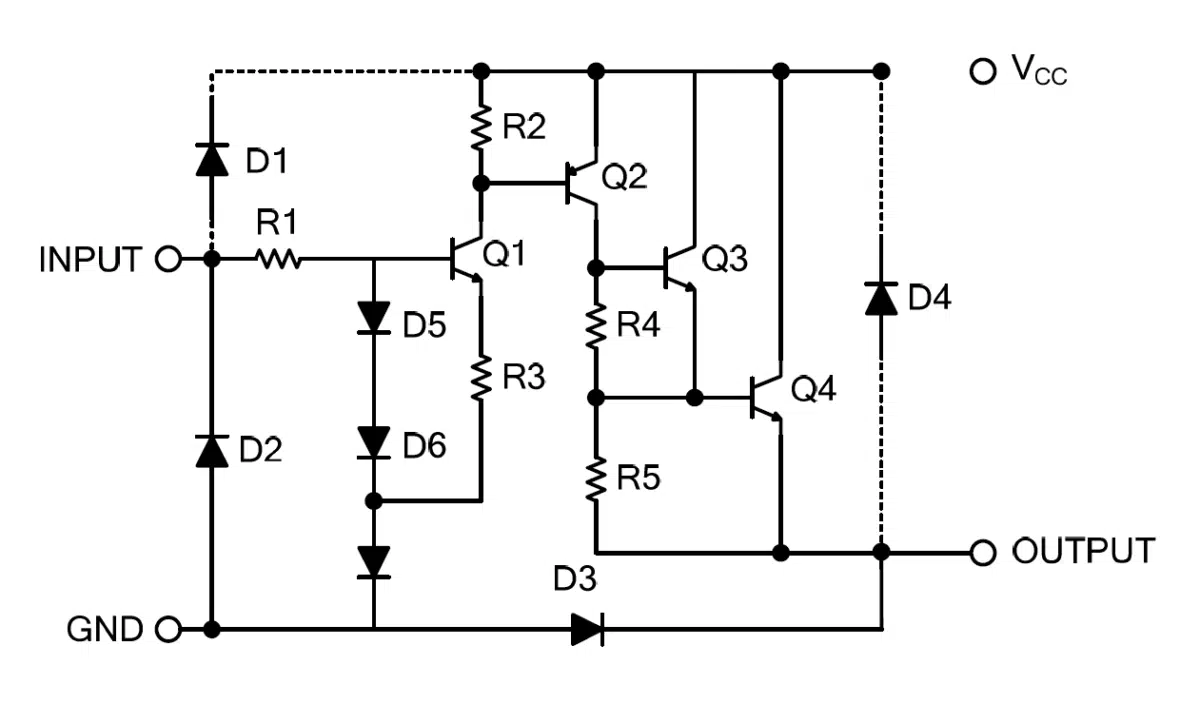
The integrated circuit (IC) includes output clamp diodes and operates on a single supply voltage. These built-in features simplify the external circuitry needed for complete designs. For example, the integrated clamp diodes protect the outputs from voltage spikes that may occur when driving inductive loads, such as relays. They effectively absorb back electromotive force (back-EMF), preventing potential damage to the IC.
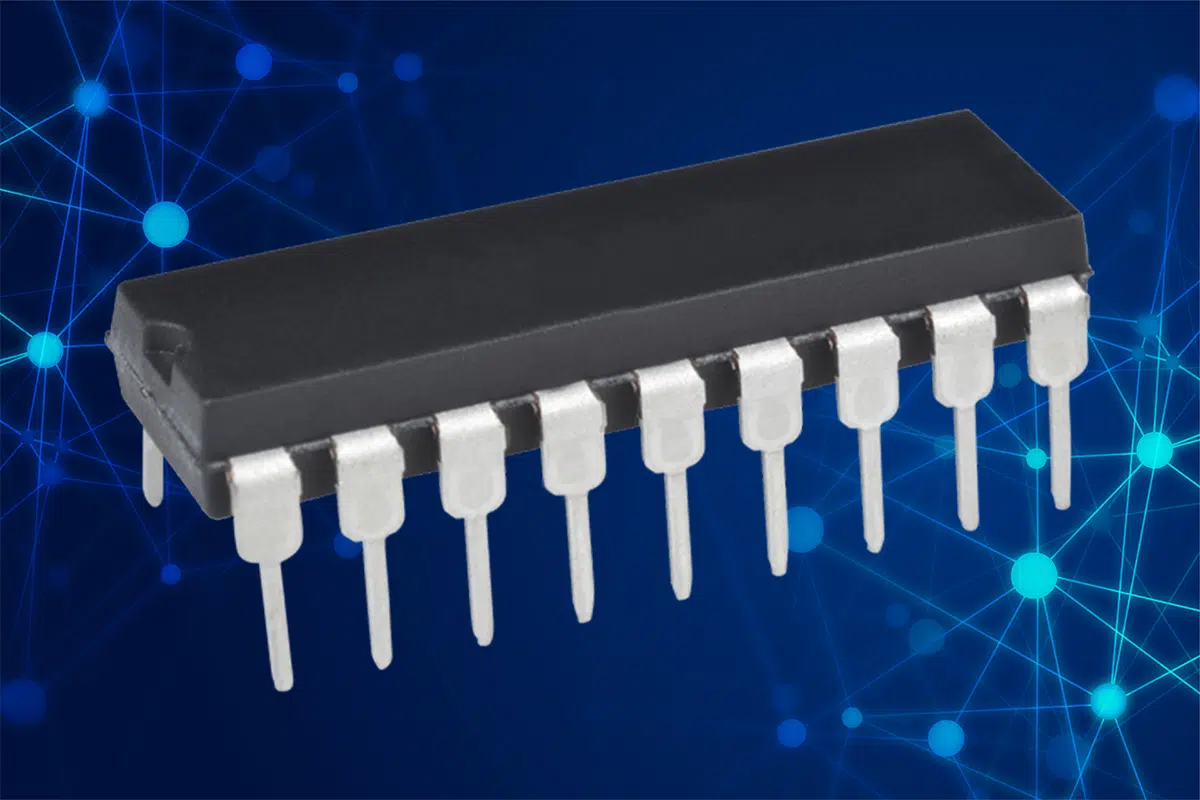
The UTC 62783 is offered in several package types, including DIP-18, SOP-18, SOP-20, and TSSOP-20. This variety provides engineers with the flexibility to select the most suitable form factor for their board layout and manufacturing process, whether they require a through-hole or surface-mount solution.
Engineers looking for a replacement for the discontinued Toshiba TD62783APG will find that the UTC 62783 is an excellent option. It features a compatible pin configuration and similar electrical characteristics, making it a high-quality substitute that can help reduce the need for expensive and time-consuming redesigns.
It’s important to note that the UTC 62783 does not have built-in over-current or over-voltage protection. Engineers must exercise extreme caution when designing the output, VCC, and GND lines to avoid damaging the integrated circuit (IC) due to excessive current or voltage. This is a crucial design consideration for ensuring the long-term reliability of the system.
Suntsu’s Solutions for EOL Components
Dealing with component obsolescence can be a major challenge for engineering teams, particularly when it comes to finding reliable and high-quality replacements. At Suntsu, we specialize in providing solutions for end-of-life (EOL) components, helping engineers avoid expensive redesigns and production delays. We recognize the difficulties in sourcing equivalent parts that maintain the original specifications without sacrificing performance or reliability.
The UTC 62783 is just one example of the high-quality replacement parts we offer. We stock and distribute a wide range of components from reputable manufacturers like UTC, ensuring you have access to the parts necessary for keeping your production lines running smoothly. Our team of experts is ready to assist you in cross-referencing obsolete parts and identifying suitable alternatives that integrate seamlessly into your existing designs. We believe in providing more than just components; we aim to be a partner in overcoming supply chain challenges and maintaining your product’s lifecycle.

Find the perfect replacement for your EOL components and keep your production lines running smoothly. Get a quote for the UTC 62783 or other hard-to-find parts today.
FAQs
A component becomes EOL for several reasons, including changes in manufacturing technology, the rising cost or scarcity of raw materials, or a decline in demand that makes production unprofitable.
Using a single supply voltage simplifies circuit design and reduces the number of components needed by eliminating the requirement for separate positive and negative power rails for different parts of the IC. This feature helps to save board space and makes for a more cost-effective design.
A clamping diode is a component that limits a signal’s voltage to a specific level, protecting the circuit from damaging voltage spikes or transients. In the UTC 62783, the integrated clamping diodes protect the outputs from voltage spikes that can occur when driving inductive loads like relays, effectively absorbing back-EMF and preventing damage to the IC.
IC packages like DIP (Dual In-line Package), SOP (Small Outline Package), and TSSOP (Thin Shrink Small Outline Package) are casing that protect the semiconductor die and enable electrical connections to a circuit board. They are crucial because they determine the physical size of the component, the method of mounting on the board (through-hole vs. surface mount), and its thermal characteristics.
TTL (Transistor-Transistor Logic) and CMOS (Complementary Metal-Oxide-Semiconductor) are two families of digital logic circuits. TTL is known for its speed but has higher power consumption, while CMOS is valued for its low power consumption, making it ideal for battery-powered devices. The inputs of the UTC 62783 are compatible with both TTL and 5V CMOS.
Related Content