
Key Takeaways
- The rise in MLCC prices and longer lead times across the industry are caused by increased demand from AI servers, growth in automotive electronics, and rising raw material costs.
- Multilayer ceramic capacitors act as essential passive components in PCB designs, offering vital functions such as voltage smoothing, noise filtering, and energy decoupling.
- MLCC lead times typically run about 6 to 8 weeks in a normal market[16], but suppliers are now quoting Suntsu 32 to 52 weeks, even for standard parts.
- To identify a suitable drop-in replacement, one must match or surpass the original component’s capacitance, tolerance, voltage rating, dielectric class, DC bias performance, case size, ESR/ESL, and terminal plating.
- Expanding your approved vendor list with trusted independent distribution partners helps reduce line-down risks during allocation shortages from primary channels.
Facing 32- to 52-Week MLCC Lead Times?
Don’t let a single capacitor hold up your build. Suntsu’s global sourcing network can locate available MLCC stock, often in days rather than months.
Why Are MLCC Lead Times and Prices Increasing Across the Industry?
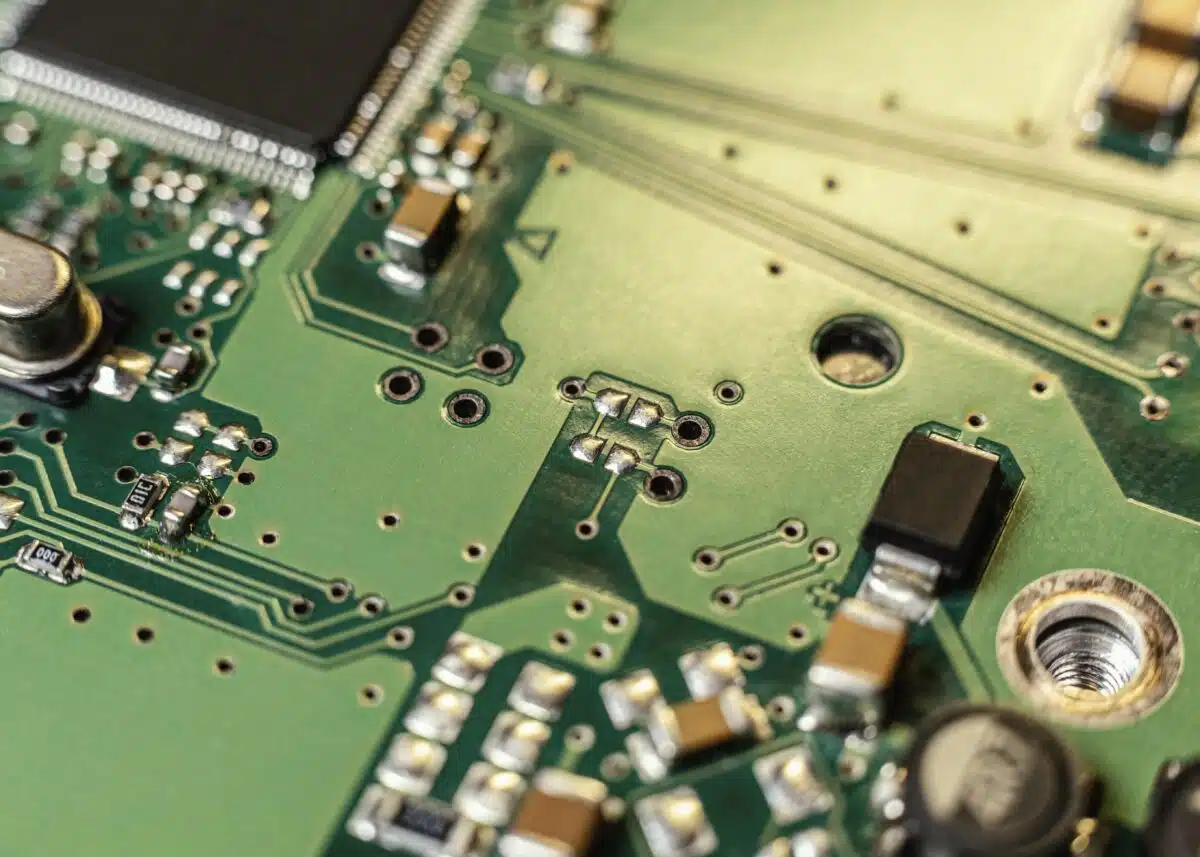
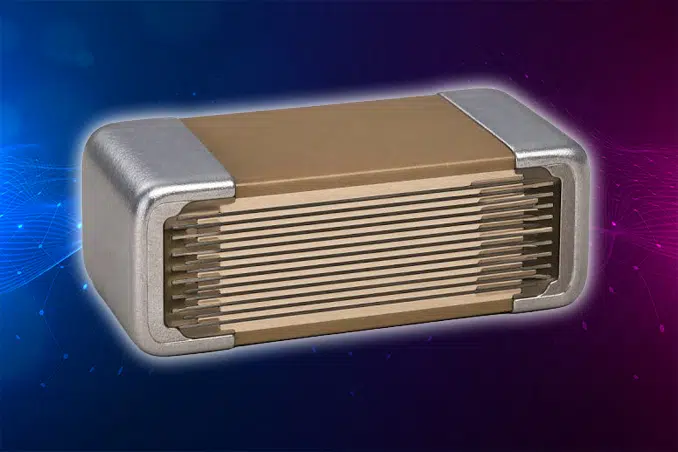
What Is an MLCC and Why Is It Critical to PCB Design?
MLCC Function Primary Circuit Role Common Application Area Technical Impact of Failure Decoupling Supplies localized DC current during transient loads CPU, GPU, and memory power rails Logic errors, system resets, voltage drops Bypass Filtering Shunts high-frequency AC noise to ground plane Analog sensors, audio lines, RF front-ends Signal Distortion, elevated noise floor DC Blocking Passes AC signals while blocking direct current Inter-stage signal amplification Biasing shifts; possible damage to downstream circuitry if the capacitor fails short Snubbing Absorb voltage spikes from inductive switching Power MOSFETs, DC-DC Converters Component breakdown, high EMI emissions
How Long Are Current MLCC Lead Times for High-Demand Case Sizes?
What Technical Specifications Must Be Matched When Cross-Referencing MLCC Drop-In Replacements?
Cross-referencing an alternative MLCC involves accurately matching parameters across electrical, thermal, physical, and reliability factors to ensure that the replacement functions identically on the PCB without the need for board redesigns.
When an engineer or buyer finds an allocated or EOL component, replacing it with an alternative part number requires careful technical assessment. Using an incorrect capacitor might lead to circuit instability, overheating, or non-compliance with standards. When considering options from secondary vendors or independent sources, ensure the following six key parameters are verified.
1. Nominal Capacitance and Tolerance
The replacement should match the precise capacitance value specified in picofarads, nanofarads, or microfarads. Also, verify the tolerance percentage (like ±5%, ±10%, or ±20%). In sensitive filtering or timing circuits, choosing a component with a broader tolerance can cause performance deviations from the design specifications.
2. Rated DC Voltage (VDC)
The replacement should have a rated working voltage equal to or higher than the original specification. Operating a ceramic capacitor close to or above its maximum voltage can speed up dielectric breakdown. Choosing a capacitor with a higher voltage rating is usually safe electrically, as long as physical size limitations are considered.
3. Dielectric Material Class and Temperature Coefficient
Ceramic dielectrics dictate how capacitance changes over operating temperatures:
- Class 1 Dielectrics (e.g., C0G / NP0): These ultra-stable, low-loss capacitors maintain a capacitance drift within 0 ±30 ppm/°C (under ±0.3%) across temperatures from -55°C to +125°C, with no aging[12]. They are essential for high-frequency resonators, RF matching, and precision timing.
- Class 2 Dielectrics (e.g., X7R, X5R, X8R): High dielectric constant materials offer high capacitance in compact sizes. X7R functions from -55°C to +125°C with a capacitance variation of up to ±15%, whereas X5R covers -55°C to +85°C, and X8R extends to +150°C[9]. Replacing X7R with X5R in high-temperature industrial environments may cause system failures.
4. DC Bias Characteristic
Class 2 ceramic capacitors experience a reduction in effective capacitance when subjected to DC voltage, with more pronounced losses in smaller case sizes. For example, an analysis by Analog Devices showed that a 4.7µF, 16V X7R capacitor in an 0805 case provides only about 1.5µF at 12V bias, whereas the same capacitance in a 1210 case retains nearly 90% of its value[9]. Since dielectric codes like X7R specify only temperature characteristics, two X7R capacitors from different manufacturers can behave very differently under bias conditions[9]. Therefore, engineers need to evaluate each alternative’s DC bias curve at the actual operating voltage. This effect is distinct from aging, which involves the gradual loss of capacitance over time experienced by Class 2 dielectrics[10][11].
5. Physical Package Footprint and Termination Plating
The replacement component must have the same surface-mount device (SMD) size standards (like EIA 0402, 0603, 0805) to fit the current PCB solder pads without causing bridging or tombstoning. Additionally, check the terminal plating finishes (such as matte tin over nickel barrier) to ensure they are compatible with lead-free reflow soldering and meet environmental standards like RoHS and REACH.
6. Equivalent Series Resistance (ESR) and Equivalent Series Inductance (ESL)
Low ESR and ESL are essential for high-frequency decoupling and efficient switching power supplies. Using a replacement part with higher internal resistance can produce excess heat during high ripple currents, decreasing circuit efficiency and shortening component lifespan. However, some linear regulators need a minimum ESR in the output capacitor for stable operation; an ultra-low ESR substitute may cause oscillations. Always consult the regulator datasheet[13].
Parameter Primary Impact Rule for Cross-Referencing Alternatives Capacitance Energy storage and signal filtering Must match target value exactly Voltage Rating (VDC) Insulation integrity Must be equal to or higher than original Dielectric Class Temperature stability and loss tangent Must match or exceed (e.g., C0G for C0G, X7R can replace X5R) DC Bias Effect Active capacitance under operating voltage Verify capacitance retention at target operating DC voltage Case Size (EIA) Physical solder pad fit Must match existing PCB layout ESR/ESL High-frequency ripple handling Generally equal to or lower; verify any minimum-ESR requirement for regulator stability
Strategic Sourcing Fixes to Protect Your Assembly Line
When conventional authorized channels have lead times that exceed acceptable production windows, procurement managers should implement proactive inventory strategies instead of waiting for factory allocations to resolve.
Depending on just one line card or a single vendor for sourcing can expose active builds to market disruptions. Achieving a resilient supply chain involves a balanced strategy that includes engineering design support, sourcing components globally, and adopting flexible inventory models.

One of the most effective ways to combat long lead times is qualifying equivalent parts from alternative reputable manufacturers before a production emergency occurs. Many equivalent ceramic capacitors manufactured by trusted global brands share identical footprint parameters and performance curves. Conducting a comprehensive BOM analysis and cost reduction review allows engineering and purchasing teams to pre-approve multiple drop-in alternatives, giving buyers flexibility when primary sources run short.
When franchised channels are quoting 32- to 52-week lead times, established independent distribution partners leverage global networks to locate uncommitted buffer stock, factory excess, and verified open-market inventories. Independent distributors specializing in shortage mitigation can often locate available stock in days rather than months, keeping automated assembly lines running.
Market shortages inevitably attract counterfeit and sub-standard components into secondary channels. To protect critical applications in medical, industrial, and automotive sectors, all components sourced outside standard channels must undergo rigorous inspection. Working with partners who maintain comprehensive quality assurance processes—including visual inspection, solderability testing, and x-ray analysis—ensures that replacement parts match factory datasheets and meet stringent quality standards.
To insulate production from future market swings, OEMs and CMs can establish custom buffer stock programs. Implementing a vendor-managed inventory program places bonded component stock on-site or in local distribution hubs. This provides immediate access to critical passive components during sudden demand surges, protecting your business against unexpected supply chain disruptions.
Secure Your MLCC Supply with Suntsu
Navigating shifting passive component lead times and sudden market allocations requires an experienced supply chain partner with both technical depth and global reach. Suntsu Electronics helps OEMs and contract manufacturers solve complex component shortages through direct manufacturing capabilities, extensive global sourcing channels, and dedicated engineering support.
Whether you need fast drop-in cross-references or custom stocking solutions to protect line continuity, Suntsu helps you secure the components you need on schedule. To verify stock availability or evaluate alternative options for your active BOM, Get a Quote or contact our team today.
FAQs
Most analysts expect tight conditions to continue well into 2027. New MLCC capacity that was originally expected in Q4 2026 has reportedly been pushed into 2027, and analysts expect long lead times for high-spec parts to persist. With capacity growing far more slowly than AI server demand, buyers should plan for extended lead times rather than a near-term recovery [3][16].
Start by estimating how many units you’ll need for the remaining life of the product, including service and repair demand. From there, you can place a last-time buy (LTB) before the final order date, qualify an alternate part, or do both. Starting the alternate qualification early matters, because testing and approval can take months.
Keep MLCCs in their original sealed packaging in a climate-controlled environment, and follow the manufacturer’s storage guidelines. Humidity and long storage times can degrade the solderability of the terminations, so older date codes should get a solderability test before use. Class 2 MLCCs also lose some capacitance with age, but the heat of reflow soldering largely resets this aging.
Sometimes. Polymer tantalum and polymer aluminum capacitors can take over some bulk-capacitance roles, and silicon capacitors are gaining ground in high-performance decoupling. The tradeoffs are significant, though: many alternatives are polarized, differ in ESR, ESL, and voltage derating, and often use different footprints. Substituting a different technology usually means an engineering review and may require layout changes.
With supplier quotes running 32 to 52 weeks, a standard six-month forecast no longer covers replenishment time. Many buyers are extending their planning horizons to 12 months or more for critical MLCCs and sharing longer forecasts with suppliers and distribution partners. Buffer stock programs can help cover the gap while orders are in the pipeline.
Related Content
References
- Trendforce. “Across-the-Board 30% Price Hike: MLCC Price Surge Intensifies” Available at: https://www.trendforce.com/news/2026/08/04/news-across-the-board-30-price-hike-mlcc-price-surge-intensifies/
- TrendForce. AI Demand for High-End MLCCs Drives Japan and Korea Suppliers’ Book-to-Bill Ratios to Post-Pandemic Highs” Available at: https://www.trendforce.com/presscenter/news/20260706-13136.html
- Electronic Times (ETNews). “AI Server Demand Pushes MLCC Lead Times Toward 10 Months” Available at: https://en.etnews.com/20260818200005
- European Passive Components Institute. “MLCCs in the Age of AI: Q2 2026 Market Tightness” Available at: https://passive-components.eu/mlccs-in-the-age-of-ai-q2-2026-market-tightness/
- Murata. “Murata Begins World’s First Mass Production of 47µF Multilayer Ceramic Capacitor in 0402-inch Size” Available at: https://www.murata.com/en-global/news/capacitor/ceramiccapacitor/2025/0710
- DigiTimes. “Murata boosts MLCC capacity in China in its largest investment to target EV, 5G smartphone markets” Available at: https://apps.digitimes.com/news/a20221107VL206/mlcc-murata.html
- Murata. “Automotive MLCCs Balancing Reliability with Miniaturization and High Capacitance in a Closely Intertwined Evolution with the CASE Trend” Available at: https://article.murata.com/article/automotive-mlcc-1
- European Passive Components Institute. “MIL-PRF-32535 QPL SMD BME MLCCs by KEMET Explained” Available at: https://passive-components.eu/mil-prf-32535-qpl-smd-bme-mlccs-by-kemet-explained/
- Analog Devices. “Temperature and Voltage Variation of Ceramic Capacitors, or Why Your 4.7µF Capacitor Becomes a 0.33µF Capacitor” Available at: https://www.analog.com/en/resources/technical-articles/temperature-and-voltage-variation-ceramic-capacitor.html
- Vishay. “Time-Dependent Capacitance Drift of X7R MLCCs Exposed to Constant DC Bias Voltage.” Available at: https://www.vishay.com/docs/45263/timedepcapdrix7rmlccexptoconstdcbiasvolt.pdf
- Würth Elektronik. “Why Does the Capacity of MLCCs Change?” Available at: https://www.we-online.com/components/media/o189880v410 SN011c_EN.pdf
- KYOCERA AVX. “C0G (NP0) Dielectric General Specifications” Available at: https://datasheets.kyocera-avx.com/C0GNP0-Dielectric.pdf
- Texas Instruments. “ESR, Stability, and the LDO Regulator” Available at: https://www.ti.com/lit/an/slva115/slva115.pdf
- European Passive Components Institute. “Wk 36 Electronics Supply Chain Digest” Available at: https://passive-components.eu/wk-36-electronics-supply-chain-digest-3/
- DigiTimes. “Murata to Stop Some MLCC Lines as AI Server Demand Strains Supply” Available at: https://www.digitimes.com/news/a20260910PD236/murata-mlcc-demand-ai-server-2026.html
- Seoul Economic Daily. “U.S. Rolls Out Four MLCC ETFs in a Month as AI Power Demand Surges” Available at: https://en.sedaily.com/finance/2026/09/20/us-lists-four-mlcc-etfs-in-a-month-none-in-korea