
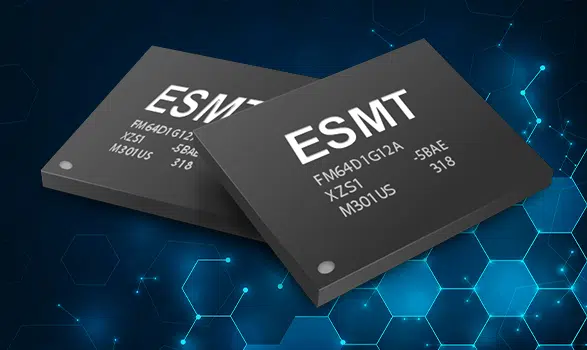
NOR Flash Guide 2026: Architecture, Reliability, & NAND vs NOR

In the fast-changing world of embedded systems, selecting the right non-volatile memory (NVM) is a crucial architectural decision. As we move toward 2026, with edge computing and high-reliability industrial IoT becoming standard, NOR Flash remains the leading option for code storage and system startup.

For both design engineers and program managers, grasping the complexities of NOR Flash—ranging from its internal cell structure to the detailed global supply chain—is crucial for developing robust products. This guide offers an in-depth look

at why NOR is still vital, how to choose the appropriate interface, and ways to protect your production line through strategic sourcing.

In the fast-changing world of embedded systems, selecting the right non-volatile memory (NVM) is a crucial architectural decision. As we move toward 2026, with edge computing and high-reliability industrial IoT becoming standard, NOR Flash remains the leading option for code storage and system startup.

For both design engineers and program managers, grasping the complexities of NOR Flash—ranging from its internal cell structure to the detailed global supply chain—is crucial for developing robust products. This guide offers an in-depth look at why NOR is still vital, how to choose the appropriate interface, and ways to protect your production line through strategic sourcing.

Reliable Supply for Long-Lifecycle Designs

l
ESMT NOR Flash Available Now

Architecture & The Physical Reality: NAND vs. NOR Flash

The core difference in the nand vs nor flash debate is their physical memory cell layout. To most, both are non-volatile storage, but for engineers, they are as distinct as a fast highway and a busy shipping port.

Cell Structure and Connectivity

In NOR Flash, cells are linked in parallel to the bitlines, enabling independent access to each memory cell. In contrast, NAND Flash cells are connected in series, which greatly boosts density but necessitates reading data in “pages” or “blocks.”

Random Access vs. Page Access

The parallel structure of NOR Flash allows for Random Access, enabling an MCU or SoC to directly access any memory location, similar to RAM. This provides extremely low latency for read operations. On the other hand, NAND is a sequential access device; reading a single byte requires reading an entire page, typically 2KB to 16KB, which makes it less ideal for fine-grained code execution.

The Gold Standard for Execute in Place (XiP)

NOR Flash supports random access at speeds similar to some SRAMs, making it the industry standard for Execute in Place (XiP). XiP enables the processor to run code directly from the Flash chip without copying it to volatile RAM first. This minimizes the need for large, costly external DRAM and improves boot times, which is essential for automotive clusters, medical monitors, and industrial controllers that require “instant-on” functionality.

Although our SSD Deep Dive frequently highlights advancements, it is crucial to remember that SSDs (NAND-based) excel in capacity, whereas NOR flash is superior in immediacy and reliability for the kernel.

Strategic Selection: When to Choose NOR Over NAND

Choosing the appropriate memory technology involves more than just considering cost per gigabit; it also depends on the particular needs of the application’s operating environment.

loader-icon

If your application demands a high level of "boot-up certainty," NOR Flash is the best option. Its natural absence of bad blocks at lower densities and its high initial reliability make it a safer choice for BIOS, bootloaders, and essential firmware. Although NAND Flash prices have surged, impacting high-capacity storage markets, NOR Flash remains a stable and reliable choice for code-intensive designs.

In the medical and industrial fields, "good enough" is never sufficient. Systems like patient monitors or factory automation controllers need memory that can endure thermal cycling and preserve data accuracy over decades. NOR Flash is much less susceptible to bit-flips compared to NAND, and generally does not need the complex Error Correction Code (ECC) engines that increase overhead in NAND-based systems.

Typically, if your storage needs are under 512MB, NOR Flash is the most efficient option. For larger storage needs such as operating systems like Linux or Android, or extensive data logging, NAND Flash is preferred. However, for compact, RTOS-based systems common in modern Integrated Circuits, NOR Flash remains the primary architecture.

Interface Analysis: Serial (SPI) vs. Parallel NOR

After deciding to use NOR, the following challenge is selecting the physical interface. This decision directly affects your PCB space and your system’s throughput.

Serial (SPI) NOR Flash

  • The Modern Standard: SPI NOR, including Dual and Quad-SPI (QSPI), has become the dominant interface.
  • Efficiency: By using a 4-pin or 8-pin interface, it dramatically reduces the footprint on the PCB. Modern QSPI and Octal-SPI interfaces have closed the performance gap, offering throughputs that satisfy most XiP requirements.
  • Design Advantage: Smaller packages (like WSON or SOIC) allow for denser board layouts, which is a key focus of our Engineering Services team when helping clients shrink their hardware footprint.

Parallel NOR Flash

  • The Powerhouse: Parallel NOR uses a traditional address and data bus (e.g., 8-bit or 16-bit).
  • Performance: It offers the highest possible read throughput and the lowest latency, making it ideal for high-performance legacy systems or extremely fast boot requirements.
  • The Trade-off: High pin count. A 16-bit parallel interface can easily consume 40+ pins on your controller, complicating BOM Analysis and Cost Reduction efforts due to the need for larger packages and more complex PCB routing.
Longevity and Reliability: The Industrial Mandate

For OEMs in industrial and medical fields, a product’s lifecycle typically spans decades rather than years, requiring a thorough understanding of durability and retention.

Typical Endurance Cycles

Standard NOR Flash generally provides around 100,000 Program/Erase (P/E) cycles. Although this durability is less than that of certain specialized EEPROMs, it far exceeds the endurance of contemporary 3D TLC or QLC NAND flash memory. For firmware that undergoes monthly updates but is frequently read, this cycle count effectively grants an infinite lifespan.

Data Retention

Data retention refers to the memory’s capacity to preserve its charge and stored data without a power supply. Industrial-grade NOR Flash typically provides a data retention period of 20 years at higher temperatures. This requirement is critical for infrastructure devices that might remain unused or function in severe environments without regular upkeep.

As noted in our review of The Future of MLC NAND, increasing NAND density frequently compromises long-term data retention, which is why NOR remains the only reliable “set it and forget it” option for essential system code.

Longevity and Reliability: The Industrial Mandate

For OEMs in industrial and medical fields, a product’s lifecycle typically spans decades rather than years, requiring a thorough understanding of durability and retention.

Typical Endurance Cycles

Standard NOR Flash generally provides around 100,000 Program/Erase (P/E) cycles. Although this durability is less than that of certain specialized EEPROMs, it far exceeds the endurance of contemporary 3D TLC or QLC NAND flash memory. For firmware that undergoes monthly updates but is frequently read, this cycle count effectively grants an infinite lifespan.

Data Retention

Data retention refers to the memory’s capacity to preserve its charge and stored data without a power supply. Industrial-grade NOR Flash typically provides a data retention period of 20 years at higher temperatures. This requirement is critical for infrastructure devices that might remain unused or function in severe environments without regular upkeep.

As noted in our review of The Future of MLC NAND, increasing NAND density frequently compromises long-term data retention, which is why NOR remains the only reliable “set it and forget it” option for essential system code.

Partner Spotlight: ESMT

At Suntsu, we value collaborating with manufacturers committed to stability and high performance. ESMT is a top partner, offering a memory portfolio that closely matches the needs of today’s embedded engineer.

ESMT offers a comprehensive roadmap of NOR Flash products that connect traditional support with cutting-edge innovation. Their product lineup includes:

  • Parallel NOR Flash: Available in densities from 8Mb to 32Mb, providing a reliable path for legacy systems and high-speed parallel boot applications.
  • SPI NOR Flash: A comprehensive range from 1Mb up to 512Mb, covering everything from simple sensor nodes to complex industrial gateways.

By integrating ESMT into your design, you benefit from high-quality silicon that meets rigorous industrial standards, ensuring that your Long-Term Electronic Component Sourcing Strategies are built on a foundation of manufacturer stability.

Partner Spotlight: ESMT Solutions

At Suntsu, we value collaborating with manufacturers committed to stability and high performance. ESMT is a top partner, offering a memory portfolio that closely matches the needs of today’s embedded engineer.

ESMT offers a comprehensive roadmap of NOR Flash products that connect traditional support with cutting-edge innovation. Their product lineup includes:

  • Parallel NOR Flash: Available in densities from 8Mb to 32Mb, providing a reliable path for legacy systems and high-speed parallel boot applications.
  • SPI NOR Flash: A comprehensive range from 1Mb up to 512Mb, covering everything from simple sensor nodes to complex industrial gateways.

By integrating ESMT into your design, you benefit from high-quality silicon that meets rigorous industrial standards, ensuring that your Long-Term Electronic Component Sourcing Strategies are built on a foundation of manufacturer stability.

Sourcing & Risk: Navigating the 2026 Supply Chain

The primary challenge to achieving a perfect design remains a disrupted supply chain. While the global chip shortage of previous years has been overcome, the electronics industry still faces localized shortages and rapid End-of-Life (EOL) cycles.

Obsolescence Management

Memory manufacturers often reduce process nodes to enhance margins, causing older, low-density NOR parts to become quickly obsolete. Our Obsolescence Management program aims to detect EOL notices early, securing bridge buys or suitable drop-in replacements before production halts.

Shortage Mitigation and Independent Distribution

When a Tier-1 manufacturer quotes a 52-week lead time, your project can’t afford to wait. Suntsu’s Independent Distribution model taps into a global network of vetted suppliers to access stock unavailable through traditional channels. Whether you need a specific NOR Flash density or a legacy parallel part, we help you overcome the 52-week wait by offering immediate alternatives and buffer stock.

Sourcing & Risk: Navigating the 2026 Supply Chain

The primary challenge to achieving a perfect design remains a disrupted supply chain. While the global chip shortage of previous years has been overcome, the electronics industry still faces localized shortages and rapid End-of-Life (EOL) cycles.

Obsolescence Management

Memory manufacturers often reduce process nodes to enhance margins, causing older, low-density NOR parts to become quickly obsolete. Our Obsolescence Management program aims to detect EOL notices early, securing bridge buys or suitable drop-in replacements before production halts.

Shortage Mitigation and Independent Distribution

When a Tier-1 manufacturer quotes a 52-week lead time, your project can’t afford to wait. Suntsu’s Independent Distribution model taps into a global network of vetted suppliers to access stock unavailable through traditional channels. Whether you need a specific NOR Flash density or a legacy parallel part, we help you overcome the 52-week wait by offering immediate alternatives and buffer stock.

Engineering for Resilience

The 2026 market demands more than just a functional circuit; it demands a resilient one. Choosing NOR Flash is a strategic decision that prioritizes system integrity and boot-up reliability over raw storage volume. By understanding the architectural differences between NOR and NAND, selecting the optimal interface for your PCB, and partnering with stable suppliers like ESMT, you set your project up for long-term success.

At Suntsu Electronics, we go beyond merely shipping parts. Our Engineering Services team is prepared to support you with a range of services, including circuit board analysis and helping identify design alternatives for elusive components.

Let our experts help you mitigate sourcing risks and optimize your memory architecture for long-term reliability.

FAQs

How does NOR Flash handle frequent firmware updates in the field?

While NOR Flash has slower program/erase times compared to NAND, it allows for granular byte-level or word-level modifications on certain architectures. For industrial and medical equipment, firmware updates are relatively infrequent compared to data logging, so the reliability of the 100k endurance cycles far outweighs the slightly longer write-on-site time.

Does NOR Flash require the same complex Error Correction Code (ECC) as NAND Flash?

Generally, no. Because of its physical cell structure, NOR is inherently more stable and less prone to bit-flips. While some ultra-high-density NOR (above 1Gb) or automotive-grade parts now include internal ECC, most standard designs do not require the controller-level ECC management that is mandatory for NAND.

Why is 'Block Locking' a critical feature for industrial firmware storage?

Block locking allows engineers to write-protect specific sectors of the NOR Flash. This is essential for protecting the bootloader and core kernel from accidental corruption or malicious overwriting during field firmware updates, ensuring the device remains recoverable even if a “flash gone wrong” scenario occurs.

What is the difference between 'Uniform Sector' and 'Boot Block' architectures?

Uniform Sector NOR Flash has identical erase-block sizes throughout the chip (e.g., all 64KB). Boot Block architecture features a few smaller sectors (e.g., 4KB or 8KB) at the top or bottom of the memory map. These smaller blocks are optimized to store parameter data or small bootloaders without wasting the space of a full 64KB block.

Can I use NOR Flash for data logging if I require high-frequency writes?

While possible, it is not recommended for high-frequency logs due to the 100k P/E cycle limit. If you must use NOR, you should implement a “wear-leveling” algorithm in your firmware to distribute writes across the entire memory array, preventing specific sectors from failing prematurely.

keyboard_arrow_up