

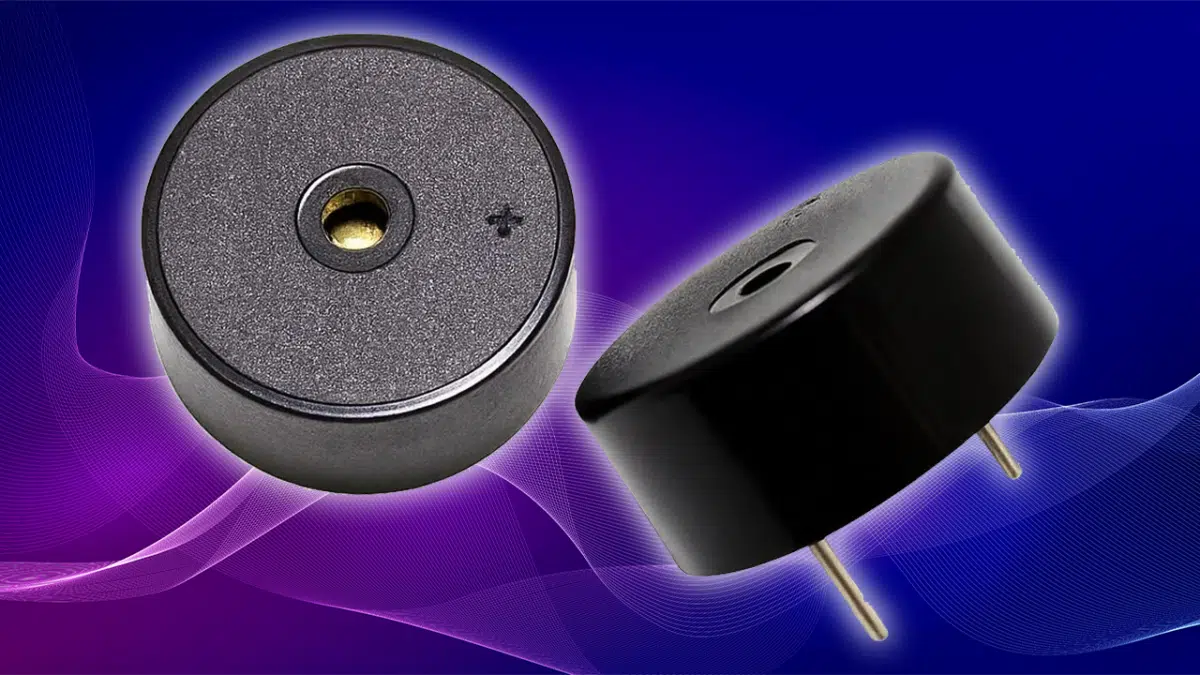

VCC Piezo Buzzers: Your Drop-In Murata Replacements

The electronics industry is accustomed to volatility, with raw material shortages and geopolitical shifts as common challenges. Yet, what truly unsettles procurement managers and hardware engineers is a sudden End-of-Life (EOL) notice from a major tier-one manufacturer.

Murata recently announced it is exiting the sound device business, causing many OEMs to scramble. For decades, Murata has been a key component in bills of materials worldwide, offering dependable audio notification solutions. Their departure leaves a gap, leading engineering teams to feel worried—about redesigns, re-qualification, and the risk of line shutdowns caused by component shortages.

However, there’s no need to panic. This change offers a valuable chance to stabilize your supply chain and potentially enhance your audio components’ quality. As a franchise distributor for VCC (Visual Communications Company), Suntsu is ready to transform this possible crisis into a smooth transition. VCC has expanded its offerings with a strong selection of high-performance audio devices made to serve as direct replacements for the outgoing Murata lines.

We recognize that replacing a critical component, even something as

straightforward as a buzzer, involves more than just changing part numbers. It demands a strategic approach to Obsolescence Management to ensure the new component satisfies the mechanical, electrical, and environmental needs of your application. By implementing proactive Shortage Mitigation strategies, we can assist you in managing this withdrawal smoothly, without disrupting your production schedule.

The electronics industry is accustomed to volatility, with raw material shortages and geopolitical shifts as common challenges. Yet, what truly unsettles procurement managers and hardware engineers is a sudden End-of-Life (EOL) notice from a major tier-one manufacturer.

Murata recently announced it is exiting the sound device business, causing many OEMs to scramble. For decades, Murata has been a key component in bills of materials worldwide, offering dependable audio notification solutions. Their departure leaves a gap, leading engineering teams to feel worried—about redesigns, re-qualification, and the risk of line shutdowns caused by component shortages.

However, there’s no need to panic. This change offers a valuable chance to stabilize your supply chain and potentially enhance your audio components’ quality. As a franchise distributor for VCC (Visual Communications Company), Suntsu is ready to transform this possible crisis into a smooth transition. VCC has expanded its offerings with a strong selection of high-performance audio devices made to serve as direct replacements for the outgoing Murata lines.

We recognize that replacing a critical component, even something as straightforward as a buzzer, involves more than just changing part numbers. It demands a strategic approach to Obsolescence Management to ensure the new component satisfies the mechanical, electrical, and environmental needs of your application. By implementing proactive Shortage Mitigation strategies, we can assist you in managing this withdrawal smoothly, without disrupting your production schedule.

Murata drop-in replacements from VCC

l
Piezo Buzzers Available Now

Technical Deep Dive: The Mechanics of Sound

To see why VCC is the perfect choice for your audio requirements, let’s examine the technology behind it. Although many older devices used magnetic buzzers, the industry increasingly prefers Piezo Buzzer technology due to its better efficiency and dependability.

The Piezoelectric Effect vs. Magnetic Induction

A VCC piezo device’s core component is a ceramic element, usually lead zirconate titanate (PZT). Applying an electrical potential causes the ceramic to deform by expanding and contracting, a phenomenon called the piezoelectric effect. This quick deformation exerts pressure on a diaphragm, generating sound waves that are detected as sound by our ears.

In contrast, magnetic buzzers function similarly to speakers. They generate a

magnetic field with a wire coil that moves a magnet and diaphragm. Although effective, magnetic buzzers consume more power because they depend on the physical movement of a relatively heavy magnet, which requires more current.

Why Piezo Wins on Efficiency

For modern, battery-powered, or portable electronics, managing the power budget is essential. Piezo buzzers operate on voltage rather than current and typically need very little current—usually less than 10mA—compared to magnetic buzzers, which often draw between 30mA and 100mA.

Additionally, piezo technology is a solid-state solution with fewer moving components compared to magnetic options, which makes it more resistant to mechanical shock and vibration. This high-reliability concept is also used in our Frequency Control products. Similar to how a crystal oscillator depends on the accurate vibration of quartz, a piezo buzzer depends on the precise deformation of ceramics. Moving to VCC’s piezo line isn’t merely a substitute; for many older designs, it provides a notable efficiency improvement.

If you’re unsure whether your current driver circuit is optimized for a piezo load, our Component Engineering team can review your schematics to confirm compatibility.

Technical Deep Dive: The Mechanics of Sound

To see why VCC is the perfect choice for your audio requirements, let’s examine the technology behind it. Although many older devices used magnetic buzzers, the industry increasingly prefers Piezo Buzzer technology due to its better efficiency and dependability.

The Piezoelectric Effect vs. Magnetic Induction

A VCC piezo device’s core component is a ceramic element, usually lead zirconate titanate (PZT). Applying an electrical potential causes the ceramic to deform by expanding and contracting, a phenomenon called the piezoelectric effect. This quick deformation exerts pressure on a diaphragm, generating sound waves that are detected as sound by our ears.

In contrast, magnetic buzzers function similarly to speakers. They generate a magnetic field with a wire coil that moves a magnet and diaphragm. Although effective, magnetic buzzers consume more power because they depend on the physical movement of a relatively heavy magnet, which requires more current.

Why Piezo Wins on Efficiency

For modern, battery-powered, or portable electronics, managing the power budget is essential. Piezo buzzers operate on voltage rather than current and typically need very little current—usually less than 10mA—compared to magnetic buzzers, which often draw between 30mA and 100mA.

Additionally, piezo technology is a solid-state solution with fewer moving components compared to magnetic options, which makes it more resistant to mechanical shock and vibration. This high-reliability concept is also used in our Frequency Control products. Similar to how a crystal oscillator depends on the accurate vibration of quartz, a piezo buzzer depends on the precise deformation of ceramics. Moving to VCC’s piezo line isn’t merely a substitute; for many older designs, it provides a notable efficiency improvement.

If you’re unsure whether your current driver circuit is optimized for a piezo load, our Component Engineering team can review your schematics to confirm compatibility.

Integration Guide: Indicators vs. Transducers

A common mistake in component cross-referencing is confusing audio indicators with audio transducers. To untrained observers, they appear similar—black plastic housings with two pins—but using the wrong one can cause the device to fail.

The Self-Drive Indicator

An audio indicator is a simple, plug-and-play device with built-in oscillator circuitry. Applying a DC voltage to its pins generates a specific frequency, making the buzzer sound. It’s ideal for basic alerts requiring a continuous tone, especially when the microcontroller has limited resources.

The External-Drive Transducer

An audio transducer, in contrast, is considered “dumb” because it lacks internal drive circuitry. It needs an external AC signal—typically a square wave—at its resonant frequency to function. Applying just a DC voltage to a transducer will produce only a single click, then silence.

Why This Matters for the Murata Cross

Many Murata parts reaching EOL are specialized transducers. If your board sends a complex PWM signal to play a melody, replace the Murata component with a VCC transducer. Using an indicator instead will cause internal oscillator conflicts, leading to garbled sound or component damage. Conversely, if your board simply toggles a 5V supply, an indicator is appropriate; a transducer will remain silent.

Suntsu’s Engineering Services excel at understanding these nuances. We go beyond matching specifications; we analyze the application to ensure the functional logic stays intact.

Integration Guide: Indicators vs. Transducers

A common mistake in component cross-referencing is confusing audio indicators with audio transducers. To untrained observers, they appear similar—black plastic housings with two pins—but using the wrong one can cause the device to fail.

The Self-Drive Indicator

An audio indicator is a simple, plug-and-play device with built-in oscillator circuitry. Applying a DC voltage to its pins generates a specific frequency, making the buzzer sound. It’s ideal for basic alerts requiring a continuous tone, especially when the microcontroller has limited resources.

The External-Drive Transducer

An audio transducer, in contrast, is considered “dumb” because it lacks internal drive circuitry. It needs an external AC signal—typically a square wave—at its resonant frequency to function. Applying just a DC voltage to a transducer will produce only a single click, then silence.

Why This Matters for the Murata Cross

Many Murata parts reaching EOL are specialized transducers. If your board sends a complex PWM signal to play a melody, replace the Murata component with a VCC transducer. Using an indicator instead will cause internal oscillator conflicts, leading to garbled sound or component damage. Conversely, if your board simply toggles a 5V supply, an indicator is appropriate; a transducer will remain silent.

Suntsu’s Engineering Services excel at understanding these nuances. We go beyond matching specifications; we analyze the application to ensure the functional logic stays intact.

Murata – VCC Cross-Reference Guide

To assist with your immediate transition, our engineering team has compiled a direct cross-reference list for the most popular Murata EOL parts. These VCC equivalents have been vetted for mechanical fit and electrical performance.

Murata SKUVCC SKU
PKB24SPCH3601-B0PI-TH22-1235-RK
PKHPS0013E4000-B0PT-TH14-0540-RK
PKM13EPYH4000-A0PT-TH12-0540-RK
PKM17EPPH4001-B0PT-TH17-0540-RK
PKM22EPPH4001-B0PT-TH22-0540-RK
PKLCS1212E4001-R1PT-SMT12-0340-SK
PKHPS0013E4000-A2PT-TH12-0540-RK
PKM22EPPH4005-B0PT-TH22-0540-RK
PKM22EPPH4007-B0PT-TH22-0540-RK

How to Identify a “Drop-In” Replacement

Sometimes, a direct part number match isn’t possible, or you might be working with a custom Murata component that lacks a standard commercial off-the-shelf (COTS) equivalent. In these cases, finding a suitable “drop-in” replacement involves examining four key parameters.

Mechanical Footprint

The main challenge is physical: for through-hole components, the “pin pitch’—the distance between pins—must match your PCB layout, typically 5mm, 7.5mm, or 10mm. Using a different pitch requires bending leads, which can compromise reliability. For surface mount devices (SMD), proper pad layout is crucial to prevent solder bridging or open circuits.

Voltage Rating and Consumption

Ensure that the replacement Piezo Buzzer is capable of handling your system’s voltage requirements. Using a 12V supply with a buzzer rated only for 5V can cause damage to the ceramic element, potentially leading to failure. Conversely, applying too low a voltage may result in a faint, barely audible sound, reducing the buzzer’s effectiveness.

Mechanical Footprint

The main challenge is physical: for through-hole components, the “pin pitch’—the distance between pins—must match your PCB layout, typically 5mm, 7.5mm, or 10mm. Using a different pitch requires bending leads, which can compromise reliability. For surface mount devices (SMD), proper pad layout is crucial to prevent solder bridging or open circuits.

Voltage Rating and Consumption

Ensure that the replacement Piezo Buzzer is capable of handling your system’s voltage requirements. Using a 12V supply with a buzzer rated only for 5V can cause damage to the ceramic element, potentially leading to failure. Conversely, applying too low a voltage may result in a faint, barely audible sound, reducing the buzzer’s effectiveness.

Navigating these parameters can be time-consuming. That’s why Suntsu provides thorough BOM Analysis and Cost Reduction services. We review your list of EOL parts, compare the datasheets with thousands of available options, and deliver the best technical and commercial matches.
Future-Proofing Your Audio Components

The Murata withdrawal is a notable event in the component industry, highlighting the need for flexible supply chains. Switching to VCC piezo buzzers via Suntsu isn’t merely a quick fix for your inventory gaps; it also signifies a partnership with a franchise distributor committed to lasting stability.

We provide more than just parts. Our Global Sourcing can locate hard-to-find stock during allocation periods, and our Inventory Management

Solutions let you bond stock for up to 12 months, ensuring your production lines stay active.

Don’t let an EOL notification derail your engineering plans. We’ll manage the cross-referencing and qualification steps for you. Feel free to review our Quality Assurance Process to understand how we ensure the integrity of every component we deliver.

Future-Proofing Your Audio Components

The Murata withdrawal is a notable event in the component industry, highlighting the need for flexible supply chains. Switching to VCC piezo buzzers via Suntsu isn’t merely a quick fix for your inventory gaps; it also signifies a partnership with a franchise distributor committed to lasting stability.

We provide more than just parts. Our Global Sourcing can locate hard-to-find stock during allocation periods, and our Inventory Management Solutions let you bond stock for up to 12 months, ensuring your production lines stay active.

Don’t let an EOL notification derail your engineering plans. We’ll manage the cross-referencing and qualification steps for you. Feel free to review our Quality Assurance Process to understand how we ensure the integrity of every component we deliver.

Ready to secure your audio supply chain? Contact Suntsu today for samples, datasheets, or a full BOM review. Together, we can make this transition sound better than ever.

FAQs

How do I know if the VCC replacement is a true 'drop-in' for my application?

While the cross-references provided are mechanically and electrically matched to be direct replacements, “drop-in” can sometimes be subjective based on tight PCB layouts or specific acoustic cavity designs. We always recommend reviewing the VCC datasheet side-by-side with your original Murata specification, paying close attention to the pin pitch and frequency response. Suntsu’s engineering team can perform a side-by-side BOM analysis to confirm compatibility before you sample.

What happens if I can’t find a replacement with the exact same Resonant Frequency?

Piezo buzzers are tuned to be loudest at their resonant frequency. If your software drives the buzzer at 4.0kHz, but the replacement part resonates at 3.5kHz, the sound will be significantly quieter and potentially unstable. If an exact match isn’t available, you may need to update your firmware to adjust the drive frequency to match the new component’s sweet spot.

Why do manufacturers issue End-of-Life (EOL) notices for valid products?

EOL notices are usually driven by the supply chain of raw materials or manufacturing equipment. If the specific ceramic formula or the tooling used to stamp the housing becomes obsolete or too costly to maintain, a manufacturer may decide to discontinue the line. While frustrating, it is a standard part of the component lifecycle, which is why having a distributor with strong obsolescence management is critical.

Can I use a buzzer with a higher voltage rating than my circuit supplies?

Yes, but with caveats. A piezo buzzer rated for 12V can operate at 5V, but the Sound Pressure Level (SPL) will be lower than the datasheet specification. Conversely, you should never exceed the maximum voltage rating, as this can crack the ceramic element or burn out the internal drive circuit. Always test the SPL at your system’s actual operating voltage.

What is the difference between 'Through-Hole' and 'Surface Mount' audio performance?

Historically, through-hole components could achieve higher SPLs due to larger acoustic chambers. However, modern Surface Mount Technology (SMT) buzzers have improved significantly. The main decision factor is usually manufacturing constraints (board space and assembly automation) rather than acoustic performance. SMT allows for faster pick-and-place assembly, while through-hole might be preferred for mechanical rigidity in high-vibration environments.

keyboard_arrow_up