
Industry Alert: The Cost of Mature Silicon
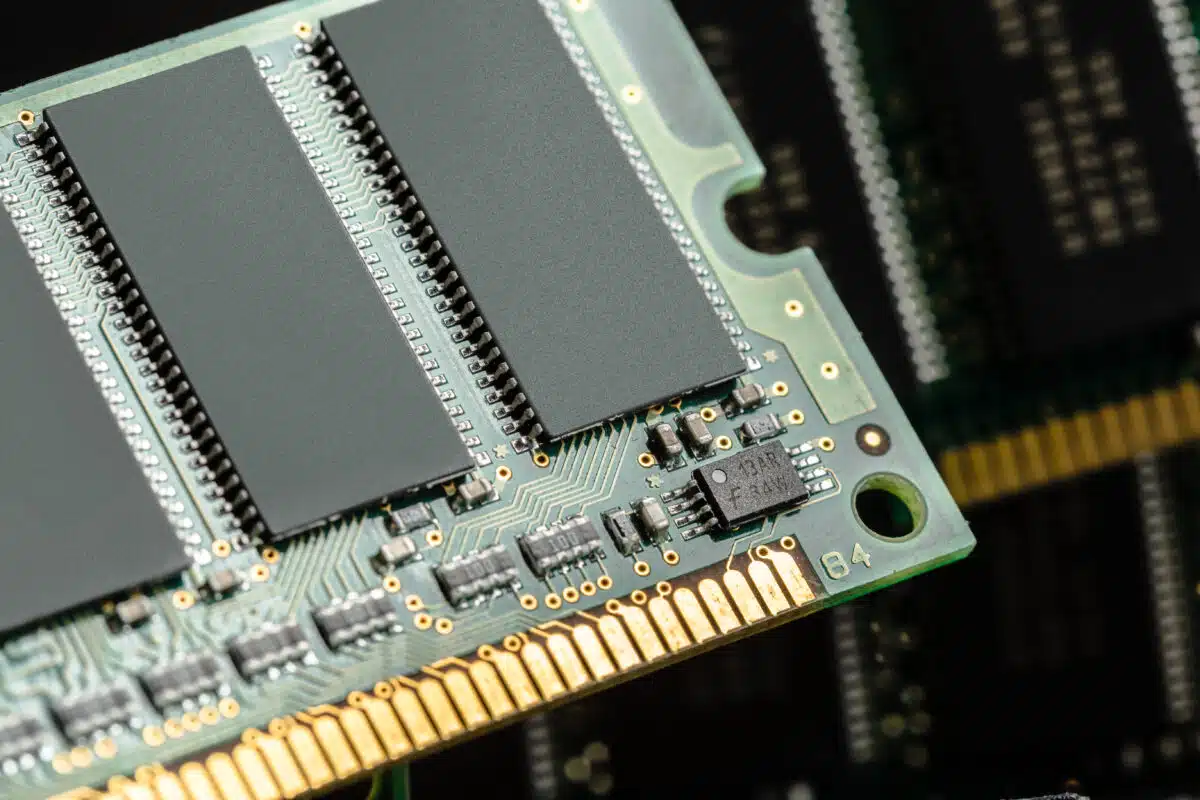
The global DDR2 and DDR3 price indexes have surged by as much as 60% due to aggressive reallocations of foundry capacity toward AI hardware (Source: Tom’s Hardware). What were once stable supply chains are now experiencing ongoing allocation limits similar to the shortages seen in the early 2020s.
Beat the Next Wave of Memory Price Hikes
Contract prices are projected to climb another 35% to 40% next quarter. Don’t wait for your component costs to skyrocket—explore our current inventory and secure your allocation today.
The Mechanics of the Surge: Why AI is Starving Legacy Fabs
To understand why a 256MB DDR2 chip or a 2GB DDR3 component has suddenly become a supply chain bottleneck, it’s essential to examine foundry economics. Silicon fabrication primarily revolves around optimizing yield and profit per square millimeter of wafer.
An advanced HBM stack or a dense server-grade DDR5 die commands a significantly higher price compared to older components. Since global foundry capacity is limited, developing more advanced AI memory necessitates moving away from older manufacturing nodes.
- Wafer Allocation Shifts: Major Tier-1 manufacturers have shifted their production lines from 20nm-class and older nodes to advanced sub-10nm processes, which are essential for AI accelerators and next-generation graphics memory (Source: TNW).
- The Tooling Bottleneck: Foundries are repurposing older cleanrooms and retiring legacy lithography tools to accommodate extreme ultraviolet (EUV) systems, thereby shrinking the physical space available worldwide for older memory architectures.
- Substrate and Packaging Deficits: Advanced packaging methods such as Chip-on-Wafer-on-Substrate (CoWoS) are consuming large quantities of production resources, pushing aside the packaging pipelines for traditional ball grid array (BGA) and thin small-outline packages (TSOP).
This systemic contraction has disrupted pricing patterns. Historical trends indicate that advanced memory prices tend to increase with improvements in computational generations, whereas older architectures stay at stable prices until an artificial supply shortage occurs. In 2026, such a shortage emerged, leading to a significant gap between past pricing baselines and current spot market purchase costs.
To better illustrate how this capacity change has affected the marketplace, examine the structural shifts among the main generations of DRAM currently used in embedded systems.
| Memory Generation | Node Baseline | Primary Application Space | 2026 Market Status | Price Trajectory |
|---|---|---|---|---|
| DDR2 | 90nm – 45nm | Legacy Industrial, Networking, Aerospace | Extreme Scarcity / EOL Wave | Up to 60% Surge |
| DDR3 | 45nm – 20nm | Automotive Telematics, Medical, IoT Gateways | High Volatility / Capacity Caps | 40% to 55% Increase |
| DDR4 | 20nm – 1Xnm | Mainstream Computing, Edge Servers | Moderate Allocation Restrictions | Steady 15% Rise |
| DDR5 / HBM | Sub-10nm | AI Data Centers, Enterprise Servers | Maximum Fab Priority | Premium Pricing Profile |
Analyzing these shifts underscores the need to examine entire system architectures. Organizations aiming to understand the core technology behind these systems can consult our comprehensive technical guide, Memory IC essentials: selecting the right components for your project.
Hardest-Hit Sectors: Embedded Systems Caught in the Crosshairs
Unlike consumer electronics platforms that update their hardware every 12 to 24 months, critical B2B industries develop products intended to function reliably in the field for decades. These long-lasting embedded systems are highly susceptible to component obsolescence and unexpected price changes.
Several critical market segments are currently bearing the brunt of these supply issues:
1. Industrial Automation and Robotics
Modern factory floors are operated by Programmable Logic Controllers (PLCs), human-machine interfaces (HMIs), and machine vision systems. Many of these systems depend on outdated DDR3 or high-reliability DDR2 memory for handling real-time OS tasks. For a factory manager, even a single $2 chip failure can stop the production of a $50,000 control panel.
2. Automotive Telematics and Infotainment
Autonomous driving computers use advanced LPDDR5 memory, whereas typical vehicle systems like dashboards, gateways, and legacy infotainment rely mainly on automotive-grade DDR3. The strict qualification processes, such as AEC-Q100, for automotive parts mean that adopting newer memory generations can take years of expensive validation and testing.
3. Medical Diagnostic Infrastructure
Patient monitors, ultrasound devices, and infusion pumps rely on stable, regulatory-approved hardware foundations. Moving to DDR4 or DDR5 memory architectures isn’t merely an engineering task; it frequently requires re-certification with agencies such as the FDA. Therefore, maintaining the existing supply chain becomes a crucial business necessity.
4. Networking and Telecommunications
Edge routers, optical network terminals (ONTs), and base station subsystems deployed over the past decade heavily rely on mature DRAM nodes. Sourcing these components has become a significant challenge in maintaining telecom hardware. For more on overcoming these issues, refer to our guide on Navigating Edge AI Hardware: Processing, Memory, and Sourcing.
Navigating the Current Supply Landscape: The Role of Independent Distribution

Strategic Mitigations for Purchasing Managers and Engineers
Overcoming the legacy DRAM crisis demands a strategy that combines engineering design decisions with proactive procurement planning. Here are essential steps organizations can take now to safeguard their production timelines.
- Conduct Immediate Bill-of-Materials (BOM) Health Checks: Audit all active product designs to identify mature memory components. Proactively flag parts using DDR2 or early-generation DDR3 to evaluate their long-term availability. For detailed support with this mapping process, visit our dedicated BOM Analysis and Cost Reduction service page.
- Secure Alternative Manufacturers: Avoid depending on just one brand for essential memory chips. Collaborate with a knowledgeable component engineering team to find functionally equivalent, pin-to-pin compatible replacements from other trusted brands. For advice on sourcing these easy-to-implement options, see our detailed guide on Strategies for mitigating electronics components obsolescence.
- Establish Strategic Buffer Inventories: Shift from only-in-time (JIT) inventory management for high-risk legacy components. Maintaining 12 to 18 months of buffer stock can help protect production during times of significant price fluctuations.
- Explore Managed Inventory Solutions: Partnering with an experienced distributor to execute custom stocking initiatives allows organizations to fully control their components without compromising essential operating capital. To learn more about how these programs function, visit our Inventory Management Solutions page.
Pro Procurement Tip
When encountering long factory lead times, engineering teams should consider custom components or specialized board modifications. Making layout adjustments early can help avoid component shortages altogether. Visit the Custom Components page to explore our structural capabilities.
Technical Verification: Protecting Quality Amid Market Scarcity
Looking Ahead: What is the Timeline for Market Relief?

Whether you need to source hard-to-find legacy DRAM or optimize your bill of materials against current market volatility, we have you covered. Connect with our component specialists now to get pricing and availability for your build.
FAQs
Yes, dramatically so. Historically, whenever a sudden supply squeeze hits a critical semiconductor component, independent and secondary market channels see an influx of suspect counterfeit, non-conforming, or aggressively refurbished parts. Procurement teams must screen legacy memory through strict quality management systems (like AS6081 or ISO 9001 testing protocols) to prevent harvested e-waste or remarked chips from entering production lines.
Yes. To support the wave of product redesigns where OEMs are intentionally downgrading to legacy memory architectures, motherboard and board-level component vendors in Asia have had to rapidly spin up legacy production lines. Because these legacy chipsets are also built on older, heavily strained mature manufacturing nodes, the pricing for DDR2/DDR3-compatible boards has seen a parallel spike.
For engineers trapped by the shortage, the main alternatives are either migrating to LPDDR4 (low-power DDR4)—which some fabs like Winbond are actively prioritizing—or completely redesigning the system architecture around modern microcontroller units (MCUs) that feature integrated, on-chip flash and SRAM. However, both paths require extensive engineering hours and costly product re-qualification.
While the primary battle is happening in B2B industrial supply chains, a clear ripple effect has hit hobbyists, retro-gamers, and businesses running older enterprise servers. Refurbished and surplus stock of high-capacity DDR3 and DDR2 dual inline memory modules (DIMMs) that were once treated as literal e-waste have seen their secondary market prices double or triple on platforms like eBay as global supply dries up.
A price inversion occurs when older, technologically inferior generations of memory become more expensive to source than newer, faster generations. Because Tier-1 manufacturers completely choked off the supply pipelines for older generations to focus on AI, we are witnessing a severe inversion where legacy DDR2 contract prices are experiencing sharper quarter-over-quarter percentage leaps than modern DDR5.
Related Content