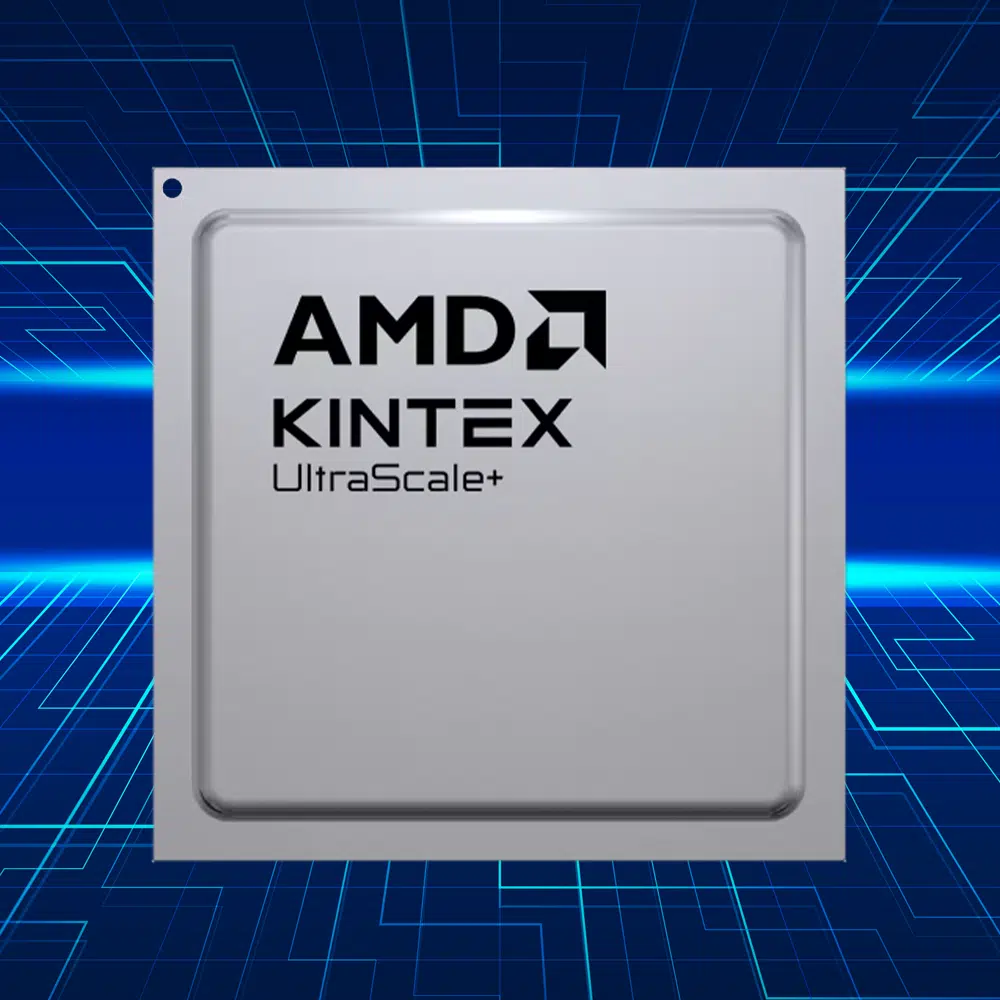
AMD‘s Kintex UltraScale FPGAs are designed for high performance, providing an excellent balance of speed, power efficiency, and cost-effectiveness for demanding applications. By utilizing advanced monolithic and stacked silicon interconnect (SSI) technology, these FPGAs deliver impressive performance and integration. In this blog post, we will explore the key features, capabilities, and target applications of Kintex UltraScale FPGAs. Additionally, we will discuss the XQR variant, which is specifically designed for radiation-tolerant environments. The versatility of these FPGAs makes them suitable for various sectors, including telecommunications, aerospace, and data centers.


Key Features and Capabilities

Kintex UltraScale FPGAs offer a compelling set of features and capabilities that make them suitable for a wide range of high-performance applications.

loader-icon

The Kintex UltraScale FPGAs feature a high density of Digital Signal Processing (DSP) slices and block RAM, making them ideal for applications that require intensive signal processing and data handling. This high ratio enables efficient management of complex computational tasks and data streams, crucial for modern applications.

Equipped with state-of-the-art transceiver technology, these FPGAs facilitate ultra-high-speed serial communication, allowing for faster data transfer rates and meeting demanding bandwidth requirements of contemporary data-centric applications.

Kintex UltraScale FPGAs come in cost-optimized packaging formats, reducing the overall system cost and simplifying implementation, which enables developers to build efficient systems without compromising on performance.

Utilizing innovative monolithic and SSI technology, these FPGAs enable integration of multiple semiconductor dies within a single package, maximizing logic capacity and performance for more complex designs.

These FPGAs offer a robust mix of high-performance peripherals and effective cost strategies, with various power options to ensure tailored systems that maximize efficiency without exceeding budget limits.

Equipped with sophisticated clock management circuitry for clock synthesis, buffering, and intelligent routing, UltraScale devices meet demanding timing and design requirements for high-performance applications.

UltraScale devices feature configurable logic blocks (CLBs) with Look-Up Tables (LUTs) and flip-flops, DSP slices, block RAM, and optional UltraRAM blocks interconnected by a high-performance, low-latency interconnect fabric, enabling versatile signal processing, storage, and logic operations essential for advanced applications across industries.

Kintex Ultrascale XQR FPGAs

The XQR Kintex UltraScale FPGAs are specifically engineered for space applications, featuring radiation-tolerant designs. These FPGAs leverage the high performance of commercial silicon while incorporating specialized ceramic column grid array packaging and rigorous qualification processes. They undergo testing for single-event effects and are capable of operating across the complete M-grade temperature range.

Key Radiation Characteristics of XQR Kintex Ultrascale FPGAs

  • Total Ionizing Dose (TID): XQR Kintex UltraScale FPGAs can tolerate a total ionizing dose (GEO) of up to 120 Krad (Si).
  • Single-Event Latch-Up (SEL) Immunity: These FPGAs exhibit SEL immunity up to 80 MeV-cm²/mg.
  • Single-Event Upset (SEU) Mitigation: XQR Kintex UltraScale FPGAs incorporate innovative configuration memory and block RAM design for SEU mitigation, with optimized SEU design rules and strategic implementation of SEU enhanced cells.
  • Block RAM Error Detection and Correction (EDAC): Block RAM includes embedded EDAC for high-performance SEU mitigation.

4k+

FPGAs
Available

l
Source AMD Parts

FPGAs Ready Now

Applications

On-Board Processing

FPGAs are essential for high-performance computing in space-based systems, enabling real-time data processing and efficient resource management in harsh environments. This functionality is crucial for satellite operations, telecommunications, and scientific research.

Digital Payloads

Kintex UltraScale FPGAs are vital for processing and controlling digital payloads, facilitating signal modulation and demodulation, which ensures high data throughput and signal integrity. This is important for applications like military communications and broadband internet.

Remote Sensing

FPGAs play a key role in data acquisition and processing for Earth observation missions. They manage high data rates from remote sensing instruments, allowing for effective analysis related to environmental monitoring and weather forecasting, enabling timely decision-making.

Benefits

High Performance

Kintex-7 FPGAs offer an excellent balance between high performance and affordability, making them an attractive choice for developers seeking to maximize their budget while leveraging powerful processing capabilities.

Versatility

These FPGAs deliver outstanding processing power with high energy efficiency, enabling significant computational throughput without incurring high power costs. This makes them ideal for applications where energy consumption is critical.

Radiation Tolerance

A key advantage of Kintex-7 FPGAs is their programmable architecture, which enables developers to tailor hardware to fit their applications precisely. This flexibility supports rapid prototyping and adaptation to changing project needs or technological advancements.

Reliability

Kintex-7 FPGAs include high-speed transceivers, PCIe connectivity, and advanced digital signal processing (DSP) capabilities. This feature set allows designers to create sophisticated applications across various industries, from telecommunications to automotive systems.

Conclusion

Kintex UltraScale FPGAs provide a powerful solution for high-performance applications across various industries, enabling efficient implementation of complex algorithms and management of large data sets. The XQR variant is specifically designed for space and radiation-intensive environments, ensuring reliability where traditional components may fail. Ideal for aerospace, defense, and telecommunications, these FPGAs adapt to various workloads, making them essential for engineers and designers pursuing innovation in next-generation technologies.

keyboard_arrow_up