
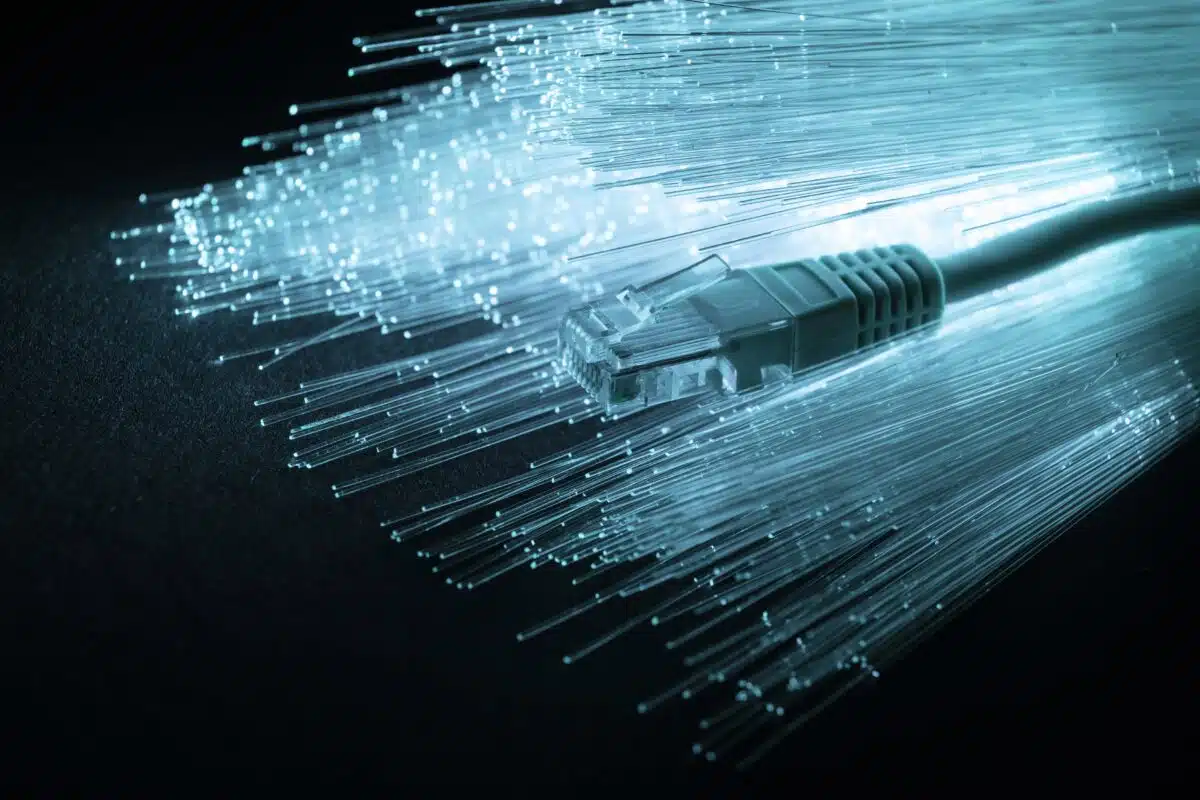
Quick Guide to Fiber Optic Transceiver Modules

The hunger for data continues to escalate. With advancements in AI, cloud computing, 5G, and industrial automation, the need for quicker and more dependable data transmission increases every moment. This data transfer isn’t a magical process—it occurs through light, and the essential element driving this high-speed transformation is the fiber optic transceiver.

For an engineer, it represents the foundation of an efficient design. For a purchasing manager, it’s an essential component on the Bill of Materials (BOM) that can determine the success or failure of a production timeline.

High-speed performance isn’t guaranteed just by using the right module; a transceiver’s effectiveness is dependent on the quality of the signal it receives.

This guide will explore the basics of fiber optic transceivers, including form factors and fiber types, while also uncovering an essential secret at the board level that is vital for maintaining their performance: signal integrity.

The hunger for data continues to escalate. With advancements in AI, cloud computing, 5G, and industrial automation, the need for quicker and more dependable data transmission increases every moment. This data transfer isn’t a magical process—it occurs through light, and the essential element driving this high-speed transformation is the fiber optic transceiver.

For an engineer, it represents the foundation of an efficient design. For a purchasing manager, it’s an essential component on the Bill of Materials (BOM) that can determine the success or failure of a production timeline.

High-speed performance isn’t guaranteed just by using the right module; a transceiver’s effectiveness is dependent on the quality of the signal it receives.

This guide will explore the basics of fiber optic transceivers, including form factors and fiber types, while also uncovering an essential secret at the board level that is vital for maintaining their performance: signal integrity.

The Foundations of Fiber Optic Data Transfer

A fiber optic transceiver is a compact and hot-pluggable device that acts as a bridge between the electrical components of your product’s circuit board and the optical domain of a fiber optic cable. Its name reflects its dual functionality: it serves as both a transmitter and a receiver, all within a single module.

  • The Transmitter (TX): This side receives an electrical signal from a host device, such as a network switch, server, or medical equipment, and employs a light source—usually a laser or LED—to transform it into rapid pulses of light.
  • The Receiver (RX): This side senses incoming light pulses from the fiber optic cable with a photodiode, transforming them back into a corresponding electrical signal that the receiving device can interpret.

This transformation method enables data to move at speeds close to that of light across long distances, far surpassing the constraints of conventional copper cables and offering total resistance to electromagnetic interference (EMI).
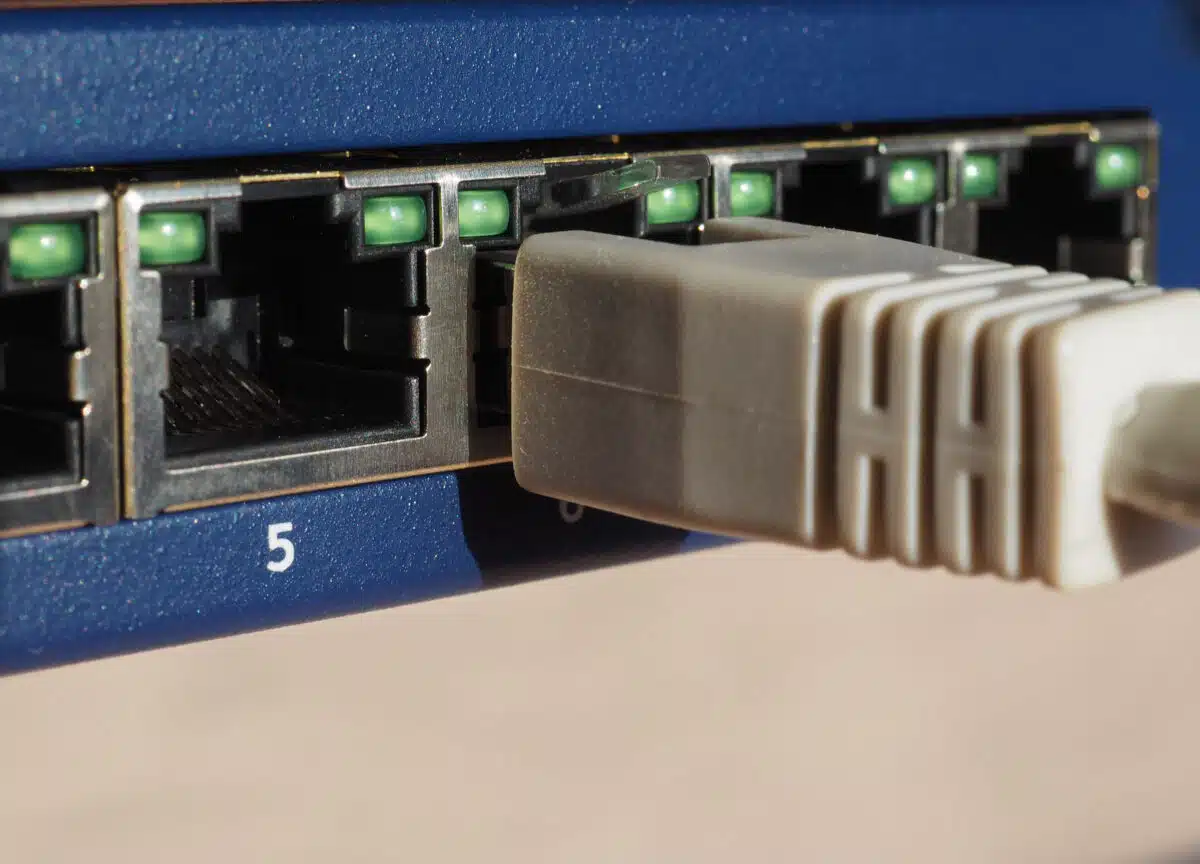
Form Factors and Fiber Types

When sourcing transceivers, you will encounter a variety of acronyms. These specifications define the module’s size, speed, and application, and they are not interchangeable.

Common Form Factors (SFP, SFP+, QSFP)

A module’s form factor determines its physical size, the number of channels it supports, and its maximum data rate.

  • SFP (Small Form-factor Pluggable): The original workhorse. This form factor is typically used for data rates around 1 Gbps (Gigabit per second) and is a staple in networking and communications.
  • SFP+ (Enhanced SFP): Although it is physically the same size as an SFP, the SFP+ has been improved to support speeds of 10 Gbps. This form factor is one of the most widely used today.
  • QSFP (Quad Small Form-factor Pluggable): The “Q” stands for “Quad,” indicating four independent channels. This enables support for higher data densities. For instance, a 40G QSFP+ module typically operates four channels at 10 Gbps each.

  • QSFP28: This modern standard for 100G networking utilizes the same physical footprint as a QSFP+, supporting four channels at 25 Gbps each to achieve 100G speeds in a compact design.

Fiber Types (Single-Mode vs. Multi-Mode)

A transceiver must be paired with the appropriate fiber optic cable type, as the two main types are not interchangeable.

  • Single-Mode Fiber (SMF): It has an exceptionally small core that permits the transmission of a single ray of light. By utilizing a powerful laser as its light source, it can transmit data across great distances (several kilometers) while maintaining high fidelity. This technology is commonly used in telecommunications, metropolitan area networks, and various long-distance applications.
  • Multi-Mode Fiber (MMF): Utilizes a larger core, enabling multiple rays of light to travel at the same time. It typically employs a lower-cost light source, such as an LED or VCSEL, and is designed for short distances, like those found within a data center or a single building, which can reach up to a few hundred meters.

Form Factors and Fiber Types

When sourcing transceivers, you will encounter a variety of acronyms. These specifications define the module’s size, speed, and application, and they are not interchangeable.

Common Form Factors (SFP, SFP+, QSFP)

A module’s form factor determines its physical size, the number of channels it supports, and its maximum data rate.

  • SFP (Small Form-factor Pluggable): The original workhorse. This form factor is typically used for data rates around 1 Gbps (Gigabit per second) and is a staple in networking and communications.
  • SFP+ (Enhanced SFP): Although it is physically the same size as an SFP, the SFP+ has been improved to support speeds of 10 Gbps. This form factor is one of the most widely used today.
  • QSFP (Quad Small Form-factor Pluggable): The “Q” stands for “Quad,” indicating four independent channels. This enables support for higher data densities. For instance, a 40G QSFP+ module typically operates four channels at 10 Gbps each.
  • QSFP28: This modern standard for 100G networking utilizes the same physical footprint as a QSFP+, supporting four channels at 25 Gbps each to achieve 100G speeds in a compact design.

Fiber Types (Single-Mode vs. Multi-Mode)

A transceiver must be paired with the appropriate fiber optic cable type, as the two main types are not interchangeable.

  • Single-Mode Fiber (SMF): It has an exceptionally small core that permits the transmission of a single ray of light. By utilizing a powerful laser as its light source, it can transmit data across great distances (several kilometers) while maintaining high fidelity. This technology is commonly used in telecommunications, metropolitan area networks, and various long-distance applications.
  • Multi-Mode Fiber (MMF): Utilizes a larger core, enabling multiple rays of light to travel at the same time. It typically employs a lower-cost light source, such as an LED or VCSEL, and is designed for short distances, like those found within a data center or a single building, which can reach up to a few hundred meters.

How to Choose the Right Optical Transceiver

Selecting the right module requires balancing performance, distance, and cost. Your decision will be guided by four key questions:

  1. What data rate do I need? (e.g., 1G, 10G, 40G, 100G) This will help narrow your selection of form factors, such as SFP+ for 10G or QSFP28 for 100G.
  2. How far does the signal need to travel? (e.g., 100 meters, 10 kilometers) This distinction determines whether to use a lower-cost Multi-Mode (MMF) module for short distances or a Single-Mode (SMF) module for long-haul applications.
  3. What is the host device? You must ensure that the module is compatible with the switch, server, or device it is connecting to. While Multi-Source Agreements (MSAs) establish industry-wide standards, some OEMs lock their hardware to proprietary modules.
  4. What is the component lifecycle? This is a critical question for both engineering and purchasing: Is this part readily available? Does it have a long lead time? Is it at risk of becoming obsolete? Sourcing hard-to-find modules poses a significant challenge that can halt production, making a robust obsolescence management strategy essential.
A Transceiver is Only as Good as its Signal

You’ve chosen an excellent 100G QSFP28 module. After pairing it with the correct fiber, you plug it in, but the connection is unstable, resulting in high error rates and frequent drops. What could be the issue?

The issue often lies not with the module itself, but with the signal that is being sent to it.

In high-speed systems, timing is crucial. At 25 Gbps, the time window for a single bit of data is incredibly small—just 40 picoseconds. The primary enemy of this timing is jitter.

Jitter refers to the small, unwanted variations or “shakiness” in the timing of a digital signal. It’s similar to trying to read a sentence while someone shakes the page; the receiver struggles to clearly differentiate between a ‘1’ and a ‘0’. This can result in a high Bit Error Rate (BER), leading to data loss and, ultimately, system failure.

The “Heartbeat” of Your System: The Oscillator

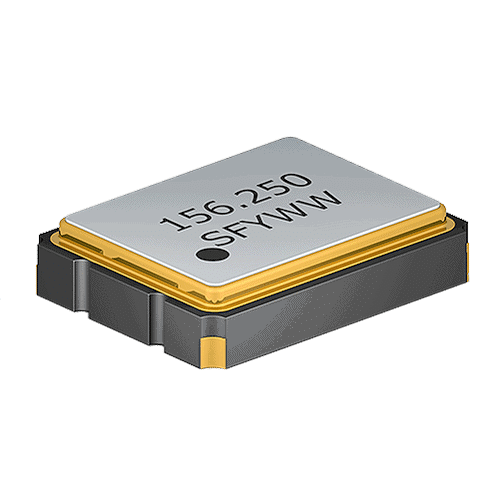
What determines this critical timing? It is the clock signal. This clock acts as the “heartbeat” of your system and originates from a board-level component known as an oscillator. This small component provides the reference timing necessary to synchronize the flow of data to the transceiver.

If your oscillator—the core component of your system—exhibits high jitter, it produces an unstable signal that affects your entire design. Sending this unreliable signal to a high-performance transceiver is akin to using regular gasoline in a Formula 1 car; you won’t achieve the level of performance you invested in.

Unlocking True Performance with Ultra-Low Jitter Oscillators

This is where board-level engineering becomes essential. To achieve clean, error-free transmission from your SFP+ or QSFP28 modules, you must begin with a pristine, stable signal. This necessitates an ultra-low jitter oscillator.

As a leading global manufacturer of frequency control products, Suntsu specializes in addressing critical timing issues. Our extensive portfolio of oscillators—including TCXOs and VCXOs—is designed to meet the stringent demands of high-speed data applications. Our ultra-low jitter oscillators offer a reliable timing reference, ensuring flawless signal integrity for your system. This allows your transceivers to perform at their maximum potential.

A Transceiver is Only as Good as its Signal

You’ve chosen an excellent 100G QSFP28 module. After pairing it with the correct fiber, you plug it in, but the connection is unstable, resulting in high error rates and frequent drops. What could be the issue?

The issue often lies not with the module itself, but with the signal that is being sent to it.

In high-speed systems, timing is crucial. At 25 Gbps, the time window for a single bit of data is incredibly small—just 40 picoseconds. The primary enemy of this timing is jitter.

Jitter refers to the small, unwanted variations or “shakiness” in the timing of a digital signal. It’s similar to trying to read a sentence while someone shakes the page; the receiver struggles to clearly differentiate between a ‘1’ and a ‘0’. This can result in a high Bit Error Rate (BER), leading to data loss and, ultimately, system failure.

The “Heartbeat” of Your System: The Oscillator

What determines this critical timing? It is the clock signal. This clock acts as the “heartbeat” of your system and originates from a board-level component known as an oscillator. This small component provides the reference timing necessary to synchronize the flow of data to the transceiver.

If your oscillator—the core component of your system—exhibits high jitter, it produces an unstable signal that affects your entire design. Sending this unreliable signal to a high-performance transceiver is akin to using regular gasoline in a Formula 1 car; you won’t achieve the level of performance you invested in.

Unlocking True Performance with Ultra-Low Jitter Oscillators

This is where board-level engineering becomes essential. To achieve clean, error-free transmission from your SFP+ or QSFP28 modules, you must begin with a pristine, stable signal. This necessitates an ultra-low jitter oscillator.

As a leading global manufacturer of frequency control products, Suntsu specializes in addressing critical timing issues. Our extensive portfolio of oscillators—including TCXOs and VCXOs—is designed to meet the stringent demands of high-speed data applications. Our ultra-low jitter oscillators offer a reliable timing reference, ensuring flawless signal integrity for your system. This allows your transceivers to perform at their maximum potential.

A Partner for the Module and the Board

Choosing the appropriate fiber optic transceiver is the first step. The next step is to ensure its performance by designing a high-integrity system around it.

This is the unique value that Suntsu provides. We are not just a leading distributor with the global sourcing power to handle shortage mitigation and the engineering services to perform complex BOM analysis and cost reduction.

We are world-class engineers and manufacturers who, through our Suntsu branded products, have a deep understanding of the board-level physics of signal integrity. We can assist you in sourcing difficult-to-find RF and wireless components, and we offer custom components along with frequency control expertise to ensure the performance of your design.

Ensure your supply chain is efficient and avoid jitter affecting your design. Contact the Suntsu team today for your transceiver needs and enhance your design with the appropriate frequency control components.

Don’t let component shortages or signal integrity issues derail your high-speed design. Our experts are ready to help you source the right transceivers and provide the ultra-low jitter oscillators to guarantee performance.

FAQs

What is an MSA (Multi-Source Agreement)?

An MSA defines the standards for form factors and functionality, ensuring that modules from different manufacturers are compatible and interoperable (e.g., they will fit in the same port and work)

What is DOM/DDM (Digital Optical Monitoring / Digital Diagnostics Monitoring)?

This is a feature that allows you to monitor the transceiver’s operating parameters in real-time, such as optical output/input power, temperature, and voltage. It’s critical for troubleshooting and network health monitoring.

What is a BiDi (Bi-Directional) transceiver?

A BiDi module transmits and receives data over a single fiber strand instead of the usual two, effectively doubling the capacity of your fiber plant. It achieves this by using two different wavelengths (one for transmitting, one for receiving).

What is an optical power budget?

This is the calculation engineers use to ensure a fiber link will work. It is the difference between the transmitter’s output power and the receiver’s sensitivity, minus any signal loss (attenuation) from the cable, splices, and connectors.

What's the difference between a ``grey`` transceiver and a ``WDM`` transceiver?

A “grey” or standard transceiver uses one wavelength (like 850nm or 1310nm). WDM (Wavelength-Division Multiplexing) transceivers, such as CWDM or DWDM, use specific, color-coded wavelengths to send multiple signals over a single fiber.


keyboard_arrow_up