
Suntsu’s NFC antenna lineup delivers stable, reliable near-field communication for contactless payment, access control, asset tracking, and device pairing applications. Available in SMD and custom form factors across a range of package sizes, our near field communication antennas and NFC coils are RoHS compliant and Halogen-Free. Browse our catalog or contact our team for custom specifications.
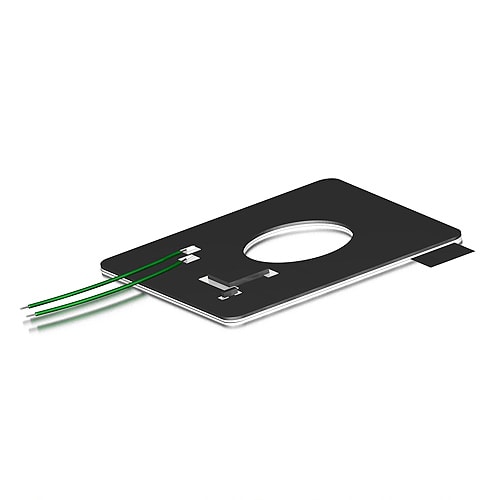
NFC Antennas
| Suntsu Part Number | Images | Package (mm) | Frequency Band (MHz) | Type | Application | Datasheet |
|---|---|---|---|---|---|---|
| SATNF-9F9FH-NFB5 | 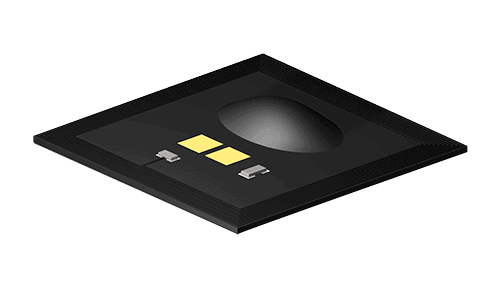 | 9.5mm x 9.5mm x 0.70mm | 14.23 | NFC | NFC/RFID |  |
| SATNF-9I9IB5-NFB1 | 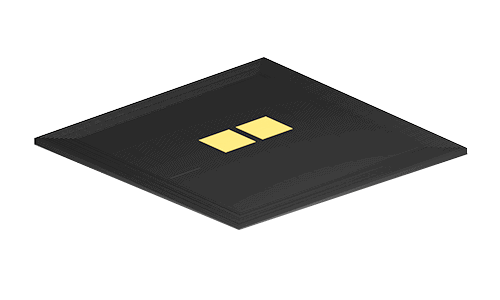 | 9.8mm x 9.8mm x 0.15mm | 13.56 | NFC | NFC/RFID | |
| SATNF-18A11AG5-NFB1 | 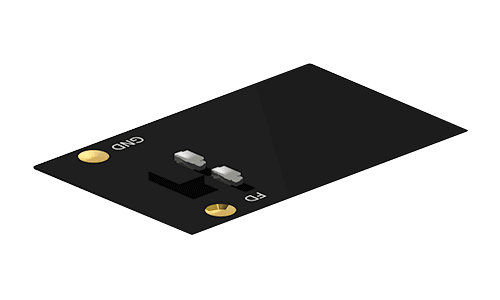 | 18.0mm x 11.0mm x 0.65mm | 13.56 | NFC | NFC/RFID | |
| SATNF-18A16DI5-NFB2 | 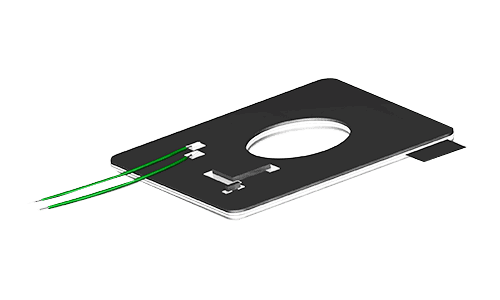 | 18.0mm x 16.3mm x 0.85mm | 13.4 | NFC | NFC/RFID | |
| SATNF-25A16A1D-NFB1 | 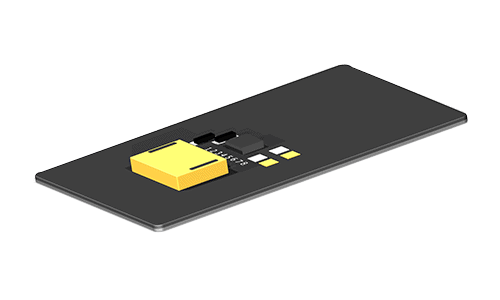 | 25.0mm x 16.0mm x 1.3mm | 13.56 | NFC | NFC/RFID | |
| SATNF-25A20AH5-NFB1 | 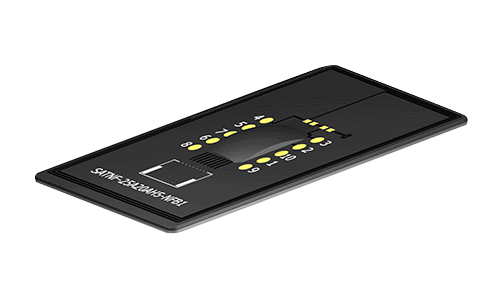 | 25.0mm x 20.0mm x 0.75mm | 14.2 | NFC | NFC/RFID | |
| SATNF-35A25A1D-NFB1 | 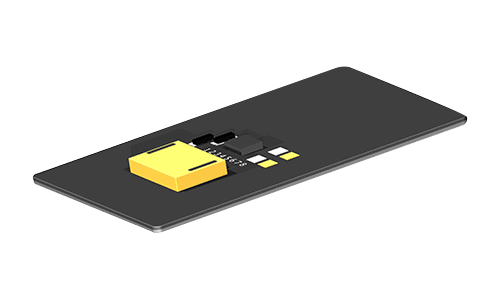 | 35.0mm x 25.0mm x 1.3mm | 13.56 | NFC | NFC/RFID | |
| SATNF-35A25AG5-NFB1 | 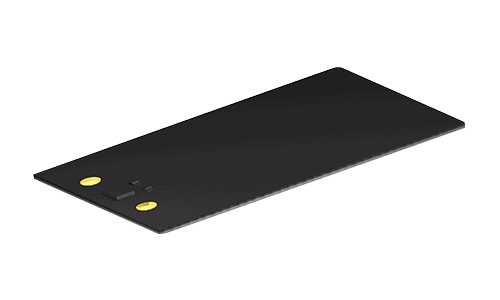 | 35.0mm x 25.0mm x 0.65mm | 13.56 | NFC | NFC/RFID | |
| SATNF-45A40A1E5-NFB3 | 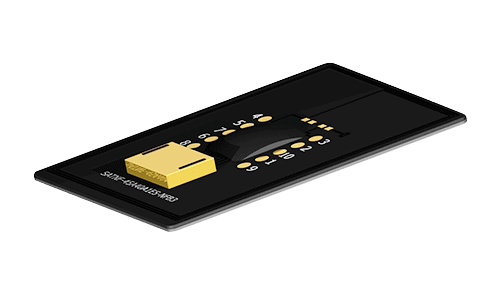 | 45.0mm x 40.0mm x 1.45mm | 14.17 | NFC | NFC/RFID | |
About NFC Antennas
A near field communication antenna is an inductive coil component that generates and couples magnetic fields to enable short-range, two-way wireless communication between NFC-enabled devices and tags. Operating at 13.56 MHz, NFC antennas support read, write, card emulation, and peer-to-peer data exchange within a typical range of 10 cm or less, making them well-suited for secure, proximity-dependent applications.
NFC coils are characterized by their inductance, quality factor (Q), resonant frequency, coil geometry, number of turns, and copper track dimensions. These parameters directly affect communication range, coupling efficiency, and compatibility with NFC reader and tag ICs. Proper inductance matching ensures the antenna circuit resonates at 13.56 MHz and maintains reliable operation across passive and active device configurations.
NFC antennas are specified across contactless payment terminals, smart access control systems, transit cards, medical monitoring devices, industrial asset tracking, IoT product tags, and consumer electronics. Suntsu’s NFC antenna offerings are part of a broader antenna product line that includes chip antennas and PCB antennas for applications requiring different form factors or frequency ranges.
Types of NFC Antennas We Offer
Ferrite-Backed NFC Antennas
NFC antennas mounted on or near metal surfaces require ferrite shielding to prevent the metal from disrupting the magnetic field and degrading communication range. Ferrite-backed NFC antenna assemblies integrate a high-permeability ferrite layer that absorbs and redirects EM fields, enabling reliable NFC operation in metallic environments such as industrial asset tags and device housings.
Flexible NFC Antennas
Flexible NFC antennas are built on thin, conformable substrates that allow mounting on curved or irregular surfaces, including product packaging, wearables, and non-planar enclosures. These are widely used in smart labels, medical patches, and retail product tags where rigid PCB mounting is not practical. Their flexibility enables innovative applications in various industries while maintaining reliable functionality.
SMD NFC Antennas
Surface-mount NFC coils integrate directly onto a PCB with standard automated assembly processes, eliminating the need for external coil winding or manual attachment. These are the most common form factors for consumer electronics, IoT modules, and wearable devices, where board space and assembly efficiency are primary constraints.
Custom NFC Antennas
For designs requiring specific inductance values, coil geometry, package dimensions, or environmental ratings, Suntsu supports custom near field communication antenna configurations. Contact our engineering and sales team with your target frequency, inductance, form factor, and substrate requirements to initiate a custom design.
How to Choose the Right NFC Antenna
Selecting the correct NFC antenna requires matching the coil’s electrical and physical characteristics to your application and host IC:
Inductance and resonant frequency: Confirm the antenna’s inductance value is compatible with your NFC IC’s tuning requirements. The antenna and matching network must resonate together at 13.56 MHz for reliable communication. Inductance is determined by coil geometry, number of turns, track width, and spacing.
Operating mode: passive vs. active: Passive NFC tags harvest power from the reader’s magnetic field and have no onboard power source. Active devices require a supply voltage. Confirm whether your design requires a passive tag antenna or an active reader antenna, as the power handling and coil design requirements differ significantly.
Proximity to metal surfaces: Metal surfaces disrupt NFC magnetic fields and reduce communication range. If the antenna will be mounted on or near metal, select a ferrite-backed design or account for ferrite shielding in the assembly to maintain a reliable coupling distance.
Communication range and environment: Standard NFC antennas operate reliably within 4 to 10 cm. If your application requires an extended range, antenna geometry and load modulation circuitry can be optimized. For applications requiring wireless communication beyond NFC’s range, consider patch antennas or outdoor antennas from Suntsu’s broader antenna portfolio.
Environmental and mechanical requirements: Industrial and automotive RF deployments require components rated for extended temperature ranges, vibration resistance, and sealed or ruggedized connector interfaces. Verify environmental ratings against the deployment conditions before finalizing component selection.
Frequently Asked Questions: NFC Antenna
What is an NFC antenna?
An NFC antenna is an inductive coil component that generates and couples magnetic fields to enable short-range wireless communication between NFC-enabled devices and tags. Operating at 13.56 MHz, a near field communication antenna supports contactless data transfer for payment, access control, device pairing, and asset tracking within a typical proximity of 10 centimeters or less.
What is the range of an NFC antenna?
A standard NFC antenna operates reliably within 4 to 10 centimeters. Custom antenna designs with optimized coil geometry can extend the range to approximately 14 to 15 cm, though signal stability decreases at greater distances. The short range is an intentional security feature, making NFC well-suited for contactless payment and access control applications where proximity confirmation matters.
What frequency does an NFC antenna operate at?
NFC antennas operate at 13.56 MHz as the global standard frequency for near field communication. Some applications, such as short-range transit tickets, may fine-tune slightly outside this range, but the antenna circuit and matching network must be designed to resonate at 13.56 MHz for reliable communication with NFC reader and tag ICs.
What is the difference between NFC and RFID?
NFC and RFID both use RF wireless communication for data transfer, but NFC supports three operating modes: read/write, card emulation, and peer-to-peer. Card emulation allows a device to function as a contactless credit card or payment module. Peer-to-peer mode enables two NFC devices to exchange data directly, a capability that standard RFID does not support. NFC is generally the better solution for applications requiring two-way communication or embedded device connectivity.
What is an NFC ferrite sheet?
An NFC ferrite sheet is a thin layer of high-permeability material combined with a PET film and adhesive backing. It absorbs and redirects EM fields to shield the NFC coil from interference caused by nearby metal components. Using a ferrite sheet allows an NFC antenna to maintain a reliable communication range and coupling efficiency when deployed in metallic enclosures or on metal surfaces.
What types of NFC antennas are available?
The most common types are SMD NFC coils for standard PCB and IoT module designs, flexible NFC antennas for curved or non-planar surfaces such as wearables and smart tags, and ferrite-backed antennas for metallic environments. Custom near-field communication antenna configurations are also available for designs with specific inductance, coil geometry, or form factor requirements.