
SN74ACT8997NT
| Part Description |
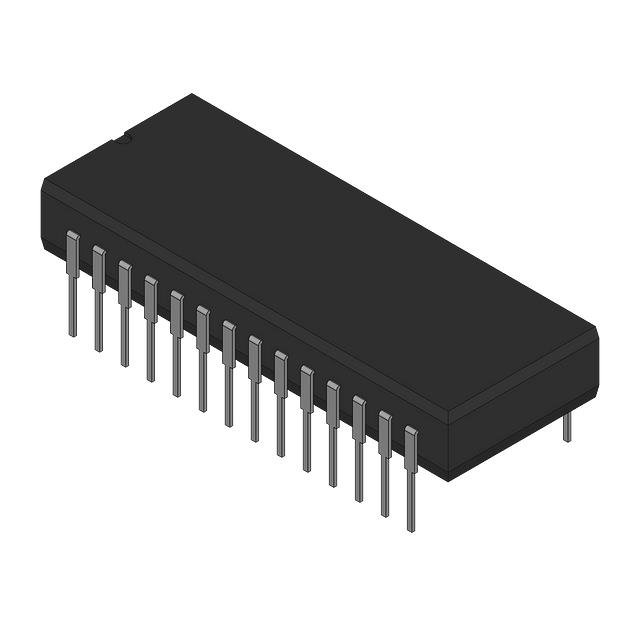
TI Scan-Path Linker IEEE 1149.1 TAP Concatenator 300-mil DIP |
|---|---|
| Quantity | 1,873 Available (as of October 8, 2026) |
| Product Category | Microprocessors |
|---|---|
| Part Series | SN74ACT |
| Manufacturer | Texas Instruments |
| Manufacturing Status | Active |
| Manufacturer Standard Lead Time | 1 Weeks |
| Datasheet |
Specifications & Environmental
| Device Package | 28-PDIP | ECCN | EAR99 | Grade | Commercial | ||
|---|---|---|---|---|---|---|---|
| Graphics Acceleration | No | HTS Code | 8542.39.0001 | Moisture Sensitivity Level | 3 (168 Hours) | ||
| Mounting Method | Through Hole | Operating Temperature | 0 °C – 70 °C (TA) | Package / Case | 28-DIP (0.300", 7.62mm) | ||
| REACH Compliance | REACH Affected | RoHS Compliance | RoHS non-compliant | Speed | 20 MHz | ||
| Voltage – I/O | 5 V |
Overview of SN74ACT8997NT - TI Scan-Path Linker IEEE 1149.1 TAP Concatenator 300-mil DIP
The SN74ACT8997NT is a Scan-Path Linker from Texas Instruments' SCOPE testability family, a device that lets a single primary IEEE 1149.1 scan path manage up to four secondary scan paths. Under scan control it can add any combination of those secondary paths to the primary chain or bypass itself entirely, so a test controller can reconfigure which parts of a board it sees without rewiring. It runs from a 5V supply over 0°C to 70°C and ships in a 300-mil plastic DIP.
Key Features
- Four secondary scan paths - selects any combination of up to four secondary paths for inclusion in the primary 1149.1 chain, or bypasses itself.
- IEEE 1149.1 TAP - a standard JTAG test access port with an 8-bit instruction register and six data registers.
- 4-bit identification bus - a hardwirable ID bus distinguishes subsystems on the board for the test controller.
- Programmable counter - an 8-bit up and down counter supports flexible test sequencing.
- Signal buffering - buffers the test clock, mode, and data signals to the secondary paths, reducing external glue logic.
- 5V ACT logic - a 4.5V to 5.5V supply, 0°C to 70°C range, and TCK up to 20 MHz in a 300-mil DIP (NT).
Typical Applications
- Hierarchical board scan - partitioning a large boundary-scan design into switchable segments.
- Multi-module test - linking per-module scan chains under one controller.
- Test-time reduction - bypassing idle sections to shorten the active scan path.
Unique Advantages
- Reconfigurable scan topology - switching secondary paths in and out lets one controller focus on the section under test, cutting scan length.
- Subsystem identification - the 4-bit ID bus makes it straightforward to recognize which module a path belongs to.
- Through-hole availability - the 300-mil DIP suits sockets, prototypes, and legacy boards that need a leaded package.
- Six-register data path - bypass, control, counter, boundary-scan, ID-bus, and select registers give the test controller fine control over each linked path.
Why Choose SN74ACT8997NT?
The SN74ACT8997NT is the right part when a boundary-scan design needs to split one primary scan path into switchable secondary paths under test control. Its four-path linking, ID bus, and on-chip counter streamline hierarchical test, and the 300-mil DIP keeps it usable in sockets and older through-hole assemblies that continue to rely on it. Buffering the test clock, mode, and data signals to each secondary path also trims the external glue logic a multi-module scan design would otherwise need, and the 20 MHz TCK keeps test times short across large, partitioned boards that would otherwise sit on one long scan chain.
Reach out for pricing, availability, and lead time on the SN74ACT8997NT, and let us know whether you need the DIP or an alternate package.














Date Founded: 1930
Headquarters: Dallas, Texas, USA
Employees: 34,000+
Revenue: $17.52 Billion
Certifications and Memberships: ISO9001:2015, ISO14001:2015, IATF16949:2016


