
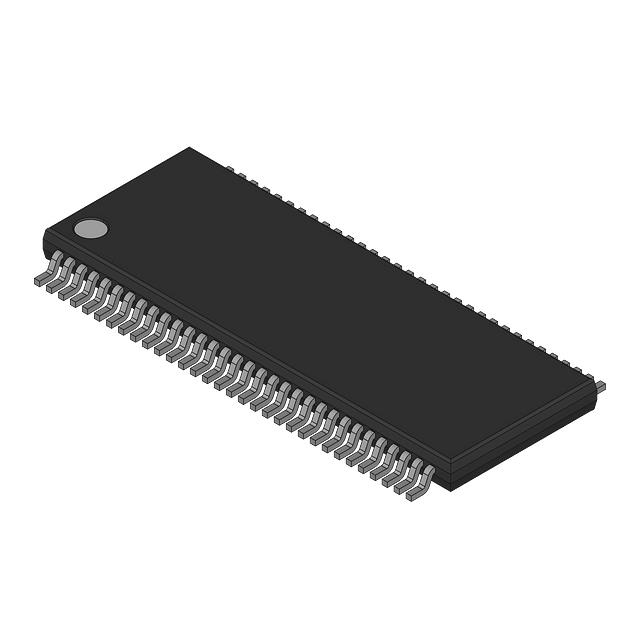
SN74LVT18512DGG
| Part Description |
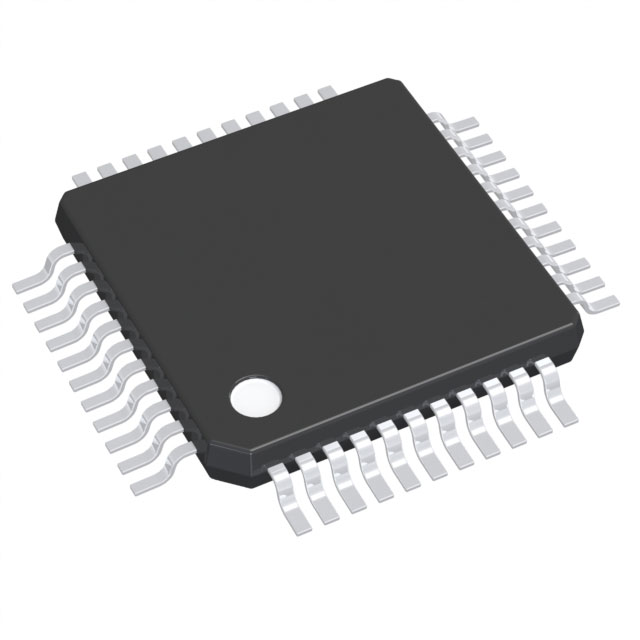
TI 3.3V 18-Bit Universal Bus Transceiver with Boundary Scan 64-TSSOP |
|---|---|
| Quantity | 1,314 Available (as of October 8, 2026) |
| Product Category | Microprocessors |
|---|---|
| Part Series | SN74LVT |
| Manufacturer | Texas Instruments |
| Manufacturing Status | Active |
| Manufacturer Standard Lead Time | 1 Weeks |
| Datasheet |
Specifications & Environmental
| Device Package | 64-TSSOP | ECCN | EAR99 | Grade | Industrial | ||
|---|---|---|---|---|---|---|---|
| Graphics Acceleration | No | HTS Code | 8542.39.0001 | Moisture Sensitivity Level | 3 (168 Hours) | ||
| Mounting Method | Surface Mount | Number of Cores/Bus Width | 1 Core, 18-Bit | Operating Temperature | -40 °C – 85 °C (TA) | ||
| Package / Case | 64-TFSOP (0.240", 6.10mm Width) | REACH Compliance | REACH Affected | RoHS Compliance | RoHS non-compliant | ||
| Speed | 100 MHz | Voltage – I/O | 3.3 V |
Overview of SN74LVT18512DGG - TI 3.3V 18-Bit Universal Bus Transceiver with Boundary Scan 64-TSSOP
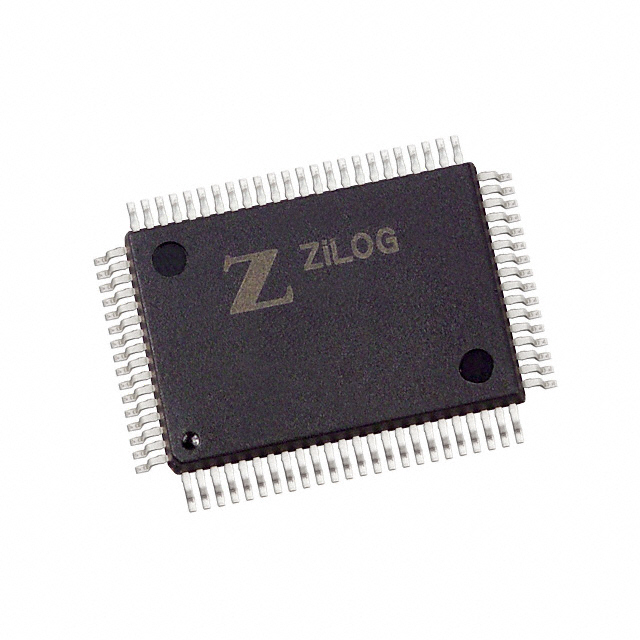
The SN74LVT18512DGG is a 3.3V ABT scan test device from Texas Instruments, an 18-bit universal bus transceiver with on-chip IEEE 1149.1 boundary-scan test logic. It belongs to the SCOPE and Widebus families and can operate as two 9-bit transceivers or one 18-bit transceiver, combining D-type latches and flip-flops for transparent, latched, or clocked data flow. The built-in test circuitry performs boundary scan, pattern generation, and self-test without disturbing normal bus operation. It ships in a 64-pin TSSOP on 0.5mm pitch.
Key Features
- 18-bit universal bus transceiver - configurable as two independent 9-bit transceivers or one 18-bit transceiver.
- Transparent, latched, or clocked - the universal bus transceiver cells support all three data-flow modes under control-pin selection.
- IEEE 1149.1 boundary scan - a 4-wire JTAG TAP with an 8-bit instruction register, 48-bit boundary-scan register, and device ID register.
- SCOPE test instructions - parallel-signature analysis, pseudo-random pattern generation, sample, and self-test in addition to the mandatory 1149.1 instructions.
- 3.3V with 5V-tolerant I/O - a 2.7V to 3.6V supply, operation from -40°C to 85°C, and inputs and outputs that tolerate 5V signals.
- Fast clocking - a test clock up to 50 MHz and a data-path clock up to 100 MHz at 3.3V.
Typical Applications
- Testable backplane interfaces - wide 18-bit bus links that must support in-system boundary-scan test.
- Mixed 3.3V and 5V systems - bridging a 3.3V controller to 5V bus signals thanks to tolerant I/O.
- Built-in self-test designs - boards using PSA and PRPG for at-speed structural test.
- Widebus data paths - wide memory and processor buses that benefit from an 18-bit device in a single package.
Unique Advantages
- Test and transceiver in one - combining a wide bus transceiver with a full SCOPE test controller removes the need for separate test buffers.
- Flexible width - the two-9-bit or one-18-bit configuration adapts the same part to different bus layouts.
- Voltage bridging - 5V-tolerant I/O on a 3.3V core eases the transition between logic generations on one board.
- Full scan register set - a 48-bit boundary-scan register and a 32-bit device identification register give thorough test coverage of the wide interface.
Why Choose SN74LVT18512DGG?
The SN74LVT18512DGG is a strong choice when a wide 3.3V bus interface also has to be fully testable through JTAG. Its 18-bit universal bus transceiver, embedded SCOPE test logic, 5V-tolerant I/O, and fast 50 MHz test clock let one device carry data and support structural test at once, simplifying boards that must meet boundary-scan requirements. Operating as either two 9-bit transceivers or one 18-bit path, with a 100 MHz data-path clock, it adapts to varied bus layouts without a separate part.
Contact us for pricing, availability, and lead time on the SN74LVT18512DGG, and tell us your bus width and voltage so we can confirm fit.













Date Founded: 1930
Headquarters: Dallas, Texas, USA
Employees: 34,000+
Revenue: $17.52 Billion
Certifications and Memberships: ISO9001:2015, ISO14001:2015, IATF16949:2016


