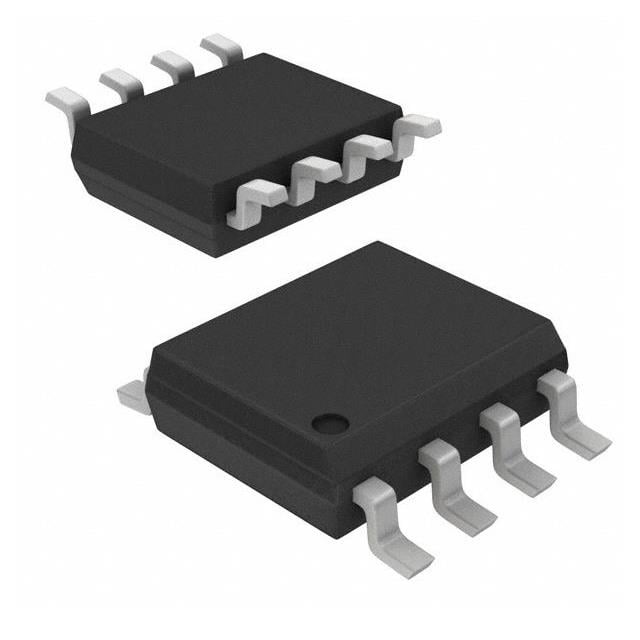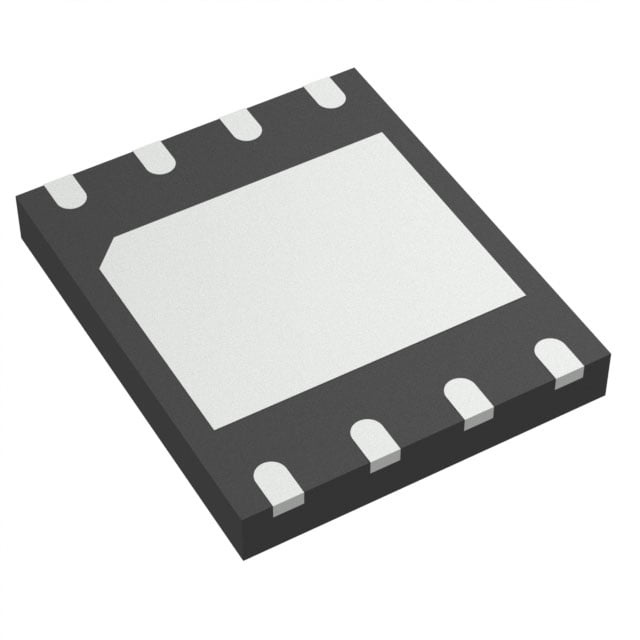
W35T51NWTBIF
| Part Description |
OCTAL FLASH, 1.8V, 512M-BIT |
|---|---|
| Quantity | 301 Available (as of June 15, 2026) |

| Product Category | Memory |
|---|---|
| Manufacturer | Winbond Electronics |
| Manufacturing Status | Active |
| Manufacturer Standard Lead Time | 24 Weeks |
| Datasheet |
Specifications & Environmental
| Device Package | 24-TFBGA (8x6) | Memory Format | FLASH | Technology | FLASH - NAND (SLC) | ||
|---|---|---|---|---|---|---|---|
| Memory Size | 512 Mbit | Access Time | 5 ns | Grade | Industrial | ||
| Clock Frequency | 200 MHz | Voltage | 1.65V ~ 2V | Memory Type | Non-Volatile | ||
| Operating Temperature | -40°C ~ 85°C (TA) | Write Cycle Time Word Page | 1.5 ms | Packaging | 24-TBGA | ||
| Mounting Method | Non-Volatile | Memory Interface | SPI - Octal I/O | Memory Organization | 64M x 8 | ||
| Moisture Sensitivity Level | N/A | RoHS Compliance | ROHS3 Compliant | REACH Compliance | REACH Unknown | ||
| Qualification | N/A | ECCN | N/A | HTS Code | N/A |
Overview of W35T51NWTBIF – OCTAL FLASH, 1.8V, 512M-BIT
The W35T51NWTBIF is a 512 Mbit octal flash memory device from Winbond Electronics designed for high-density, non-volatile storage. It implements an Octal I/O SPI interface with byte-wide DDR operation and on-die ECC for data integrity.
This device targets embedded systems and designs that require high-speed serial flash access and robust data protection. Its low-voltage 1.8V operation, compact 24-TFBGA (8×6 mm) package, and supported features such as Execute-in-Place (XIP), CRC, and interface recovery make it suitable for applications requiring reliable, high-throughput external memory.
Key Features
- Memory & Capacity — 512 Mbit organized as 64M × 8 in SLC NAND flash technology, providing large non-volatile storage in a single device.
- Interface & Performance — Octal SPI (OSPI) I/O with Octal DDR support and a clock frequency up to 200 MHz; byte-wide DDR flash memory architecture and 5 ns access time for high-throughput serial access.
- Data Integrity — On-die Error Code Correction (ECC) plus CRC support, including CRC-at-rest and CRC-in-transit modes, to detect and correct errors and verify data integrity.
- Functional Modes — Supports Execute-in-Place (XIP) mode and multiple SPI command sets (Standard SPI, Octal SPI, DDR OSPI), enabling direct code execution and flexible host interfaces.
- Power & Voltage — Low-voltage operation with a supply range of 1.65 V to 2.0 V, enabling integration in 1.8V system designs.
- Reliability & Recovery — Fail/Safe power-up detection and interface recovery mechanisms along with device registers for configuration and status monitoring.
- Program/Erase Characteristics — Typical word/page write cycle time of 1.5 ms and standard flash program/erase control via status and flag registers.
- Package & Temperature — 24-ball TFBGA (8×6 mm, 5×5 ball array) package; specified operating temperature range −40 °C to +85 °C.
Typical Applications
- Code Storage and XIP — Use for firmware and executable code storage where Execute-in-Place (XIP) reduces external memory copy requirements.
- High‑Bandwidth Serial Flash — Systems requiring fast SPI throughput via Octal DDR and byte-wide DDR access for rapid program or read operations.
- Data Integrity‑Sensitive Designs — Applications that benefit from on-die ECC and CRC verification to maintain data reliability during storage and transfer.
- Low‑Voltage Embedded Systems — Designs operating at 1.8V that require compact, high-density non-volatile memory in a small BGA footprint.
Unique Advantages
- Octal DDR Interface: Enables higher serial throughput compared to standard SPI by using eight I/O lines and DDR operation for faster data transfer.
- Built‑in ECC and CRC: On‑die error correction and cyclic redundancy checks provide automated data integrity mechanisms without host-side overhead.
- Compact High Density: 512 Mbit capacity in a 24‑TFBGA package saves board area while delivering substantial non‑volatile storage.
- Low‑Voltage Operation: 1.65 V–2.0 V supply range allows direct integration with 1.8V system rails for simpler power design.
- Execute‑in‑Place (XIP) Support: Allows direct execution from flash, reducing RAM footprint and simplifying firmware architecture for embedded systems.
- Robust Interface Recovery: Fail/safe power‑up detection and recovery features help restore interface operation after abnormal power events.
Why Choose OCTAL FLASH, 1.8V, 512M-BIT?
The W35T51NWTBIF positions itself as a high-density, low-voltage octal flash device that combines fast Octal DDR connectivity with on-die ECC and CRC for enhanced data reliability. Its feature set, including XIP support and interface recovery capabilities, aligns with designs that need compact, high-throughput non-volatile memory with integrated integrity checks.
This device is suitable for engineers and procurement teams specifying external flash for embedded systems that demand a balance of performance, data protection, and small package footprint. The 24-TFBGA package and defined operating range support deployment across a range of temperature environments where 1.8V memory is required.
Request a quote or submit a sales inquiry to evaluate W35T51NWTBIF for your next design and receive pricing and availability information tailored to your BOM and volume needs.