
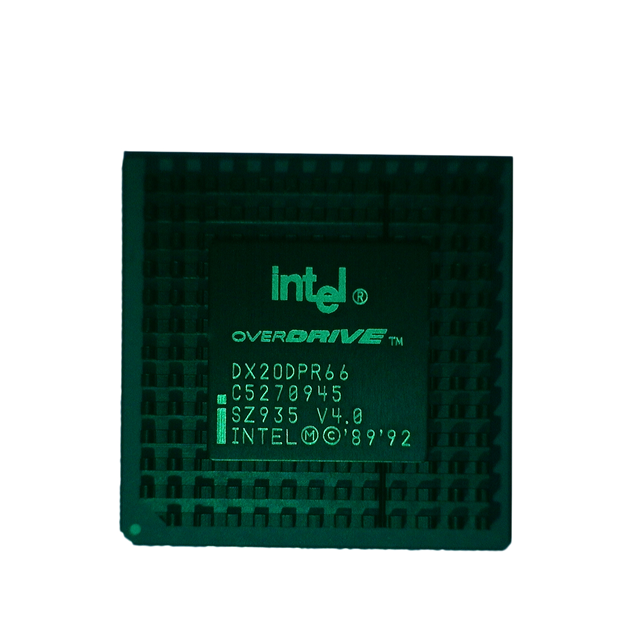
BOXDX2ODPR66
| Part Description |
CPU 486DX266 OVERDRIVE 168PGA |
|---|---|
| Quantity | 209 Available (as of October 8, 2026) |
| Product Category | Microprocessors |
|---|---|
| Part Series | i486 OverDrive |
| Manufacturer | Intel |
| Manufacturing Status | Obsolete |
| Manufacturer Standard Lead Time | Contact Us |
| Datasheet |
Specifications & Environmental
| Co-Processors/DSP | Integrated FPU | Core Processor | 80486DX | Device Package | 168-PGA | ||
|---|---|---|---|---|---|---|---|
| ECCN | 3A991 | Graphics Acceleration | No | HTS Code | 8542.31.0000 | ||
| Moisture Sensitivity Level | Undefined | Mounting Method | Through Hole | Number of Cores/Bus Width | 1 Core, 32-Bit | ||
| Package / Case | 168-PGA | REACH Compliance | N/A | RoHS Compliance | N/A | ||
| Speed | 66 MHz | Voltage – I/O | 5 V |
Overview of BOXDX2ODPR66 – CPU 486DX266 OVERDRIVE 168PGA
The BOXDX2ODPR66 is an Intel i486 OverDrive microprocessor IC featuring an 80486DX core running at 66 MHz. Designed for embedded applications, it provides a 32-bit single-core architecture with an integrated floating-point unit and 5 V I/O signaling.
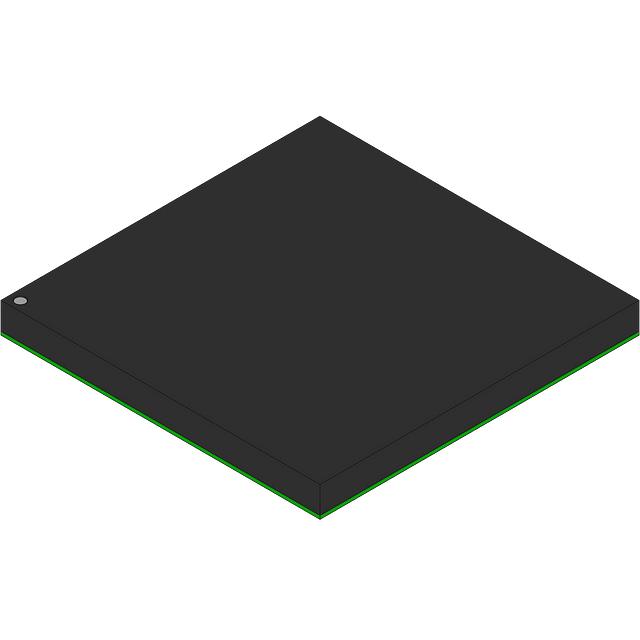
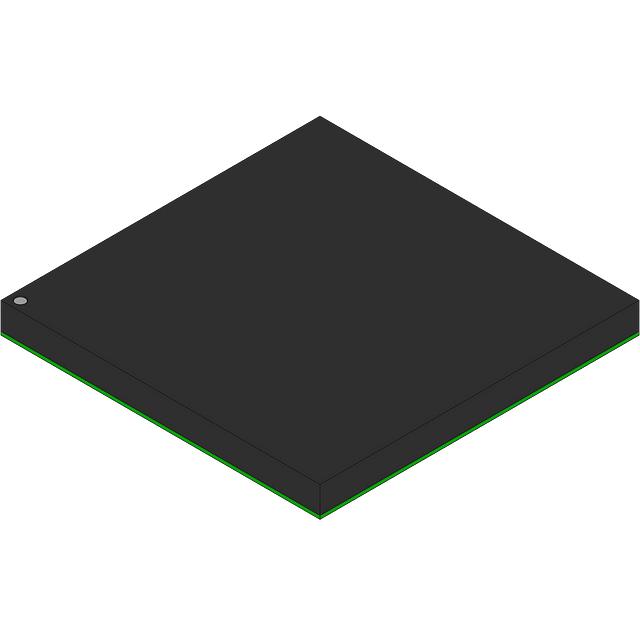
This device is supplied in a 168-PGA package intended for through-hole mounting and is RoHS compliant.
Key Features
- Core Architecture 80486DX core providing a 32-bit single-core processing architecture for legacy and embedded microprocessor needs.
- Operating Speed 66 MHz clock rate for deterministic processing performance in time-sensitive applications.
- Integrated FPU Built-in floating-point unit to accelerate floating-point calculations without an external coprocessor.
- I/O Voltage 5 V I/O compatibility for designs that require standard TTL/CMOS voltage levels.
- Package & Mounting 168-PGA supplier device package and package case, provided for through-hole mounting on printed circuit boards.
- Graphics Acceleration No graphics acceleration—focused compute functionality without integrated graphics engines.
- Environmental Compliance RoHS compliant to meet lead-free assembly requirements.
Typical Applications
- Embedded Systems Used as a 32-bit microprocessor core in embedded applications that require an 80486DX-class processor with an integrated FPU.
- Through-Hole Board Designs Suited for board-level designs and assemblies that utilize through-hole 168-PGA components for mechanical retention or serviceability.
- Prototyping and Development Appropriate for development boards and prototypes that target classic 80486DX functionality and 5 V I/O environments.
Unique Advantages
- Integrated Floating-Point Unit: Reduces the need for an external coprocessor by providing on-chip FPU capabilities for floating-point operations.
- 32-Bit Processing at 66 MHz: Delivers 32-bit computational throughput at a 66 MHz clock speed for predictable performance in embedded workloads.
- Standard 5 V I/O: Simplifies interfacing with legacy peripherals and controllers that operate at 5 V logic levels.
- Through-Hole 168-PGA Package: Provides robust mechanical mounting and straightforward replacement or handling during assembly and testing.
- RoHS Compliance: Meets environmental requirements for lead-free assembly processes.
- Intel i486 OverDrive Series: Part of the Intel i486 OverDrive series, offering a defined set of characteristics tied to that product family.
Why Choose BOXDX2ODPR66?
BOXDX2ODPR66 combines the 80486DX core architecture with a 66 MHz operating speed and an integrated FPU in a through-hole 168-PGA package, making it suitable for embedded and board-level designs that require 32-bit processing and 5 V I/O compatibility. Its RoHS compliance supports lead-free assembly requirements.
This part fits designs that need the specific 80486DX feature set and package style, offering a clear specification set from a recognized manufacturer, Intel.
Request a quote or submit a purchase inquiry to receive pricing and availability for BOXDX2ODPR66.














Date Founded: 1968
Headquarters: Santa Clara, California, USA
Employees: 130,000+
Revenue: $54.23 Billion
Certifications and Memberships: ISO9001:2015, ISO14001:2015, ISO17025:2017, ISO27001:2022, ISO45001:2018, ISO50001:2018


