
LFXP2-5E-7FTN256C
| Part Description |
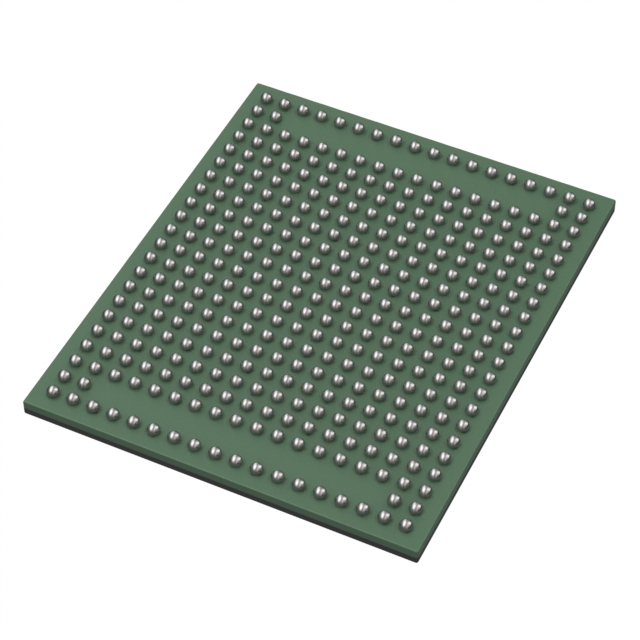
XP2 Field Programmable Gate Array (FPGA) IC 172 169984 5000 256-LBGA |
|---|---|
| Quantity | 130 Available (as of October 8, 2026) |

| Product Category | Field Programmable Gate Array (FPGA) |
|---|---|
| Manufacturer | Lattice Semiconductor Corporation |
| Manufacturing Status | Active |
| Manufacturer Standard Lead Time | 20 Weeks |
| Datasheet |
Specifications & Environmental
| Device Package | 256-FTBGA (17x17) | Grade | Commercial | Operating Temperature | 0°C – 85°C | ||
|---|---|---|---|---|---|---|---|
| Package / Case | 256-LBGA | Number of I/O | 172 | Voltage | 1.14 V - 1.26 V | ||
| Mounting Method | Surface Mount | RoHS Compliance | ROHS3 Compliant | REACH Compliance | REACH Unaffected | ||
| Moisture Sensitivity Level | 3 (168 Hours) | Number of LABs/CLBs | 625 | Number of Logic Elements/Cells | 5000 | ||
| Number of Gates | N/A | ECCN | EAR99 | HTS Code | 8542.39.0001 | ||
| Qualification | N/A | Total RAM Bits | 169984 |
Overview of LFXP2-5E-7FTN256C – XP2 FPGA, 5,000 Logic Elements, 172 I/O, 256-LBGA
The LFXP2-5E-7FTN256C is a LatticeXP2 family field programmable gate array (FPGA) combining a LUT-based FPGA fabric with non-volatile flash in a flexiFLASH architecture. This commercial-grade, surface-mount device delivers 5,000 logic elements, 172 I/Os and approximately 169,984 bits of on-chip RAM for embedded logic, interface bridging and display/memory interface applications.
Built for systems that require instant-on configuration, secure updates and integrated DSP and memory resources, the device is suited to applications where compact footprint, flexible I/O and reconfigurability are required. It operates from a 1.14 V to 1.26 V supply and supports standard commercial temperature operation (0 °C to 85 °C).
Key Features
- flexiFLASH architecture — Instant-on, infinitely reconfigurable single-chip architecture with FlashBAK and Serial TAG memory to store configuration and provide design security.
- Live Update and security — TransFR live update support with secure updates using 128‑bit AES encryption and dual-boot capability with external SPI.
- Logic resources — 5,000 logic elements to implement mid-density FPGA designs.
- Embedded memory — Approximately 169,984 bits of on-chip RAM for embedded and distributed storage to support control and buffering functions.
- sysDSP and multipliers — Family-level sysDSP blocks and dedicated multipliers for high-performance multiply-accumulate operations (series documentation lists sysDSP blocks and 18×18 multiplier resources for XP2 devices).
- Clocking — On-chip PLL resources for clock multiplication, division and phase shifting (family documentation indicates device-level PLL support).
- Flexible I/O — 172 I/Os with broad I/O standards supported by the family (includes LVDS and source-synchronous interfaces suitable for display and high-speed links as described in the series documentation).
- Memory and interface support — Pre-engineered source-synchronous interfaces including DDR/DDR2 support up to 200 MHz and 7:1 LVDS for display applications (per family documentation).
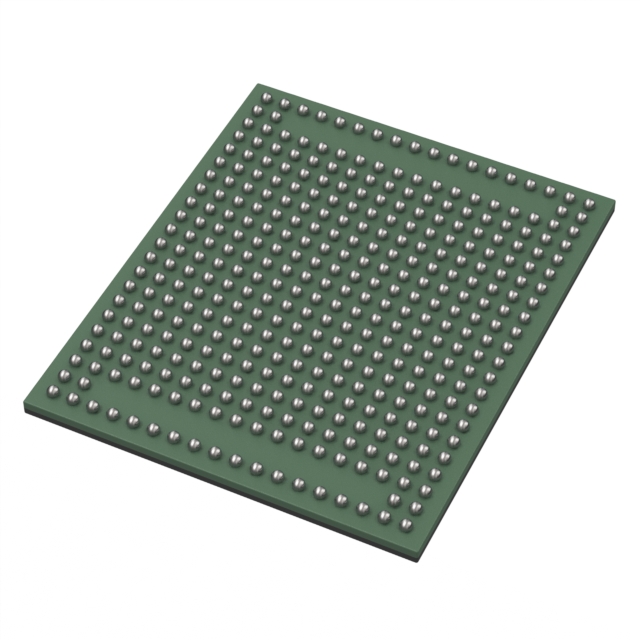
- Package and mounting — 256-ball LBGA (supplier designation 256-FTBGA, 17 × 17 mm) in a surface-mount package for compact board integration.
- Commercial temperature and supply — Rated for 0 °C to 85 °C operation with a supply range of 1.14 V to 1.26 V (nominal 1.2 V).
- RoHS compliant — Meets RoHS environmental requirements.
Typical Applications
- Display and video interfaces — Use the device’s LVDS and pre-engineered 7:1 interfaces to implement display bridging, timing control and video interface logic.
- Memory interface controllers — Implement DDR/DDR2 interfacing and buffering logic, leveraging the device’s source-synchronous support and on-chip memory.
- Embedded control and signal processing — Leverage the logic resources, sysDSP blocks and multiplier arrays for motor control, sensor preprocessing and other embedded DSP tasks.
- Secure field upgrades — Use TransFR live update and 128‑bit AES encryption for secure remote firmware updates and dual-boot image deployment.
Unique Advantages
- Instant-on non-volatile configuration: flexiFLASH architecture provides immediate FPGA functionality after power-up without external configuration flash.
- Integrated security and update path: Built-in secure update mechanisms (128‑bit AES, TransFR, dual-boot) simplify firmware management and increase system robustness.
- Balanced mid-range integration: 5,000 logic elements with substantial on-chip RAM and DSP resources reduce external components and simplify board-level design.
- Compact package: 256-LBGA (17 × 17 mm) surface-mount package offers a small footprint for space-constrained designs.
- Flexible I/O and memory interfaces: Broad I/O capabilities and pre-engineered DDR/DDR2 and LVDS interfaces accelerate time-to-market for high-speed link and display applications.
- Commercial temperature operation: Rated 0 °C to 85 °C for mainstream embedded and consumer applications.
Why Choose LFXP2-5E-7FTN256C?
The LFXP2-5E-7FTN256C positions itself as a compact, flash-based FPGA option for mid-density designs that require instant-on configuration, secure update paths and integrated DSP/memory resources. With 5,000 logic elements, approximately 169,984 bits of embedded RAM, 172 I/Os and a 256-LBGA footprint, it offers a balanced mix of integration and I/O capability for embedded control, interface bridging, display and memory interface applications.
Designed for teams that need reconfigurability with built-in security and a compact package, this device benefits from the LatticeXP2 family architecture and system-level features documented for the series.
If you would like pricing or availability information, request a quote or submit an inquiry and our team will respond with a formal quote and lead-time details.
















Date Founded: 1983
Headquarters: Hillsboro, Oregon, USA
Employees: 1,000+
Revenue: $627.7 Million
Certifications and Memberships: ISO9001:2015, ISO14001:2015, IATF16949:2016


