RNG90-MAVDA-T
| Part Description |
Authentication Chip 8-UDFN (2x3) |
|---|---|
| Quantity | 564 Available (as of October 8, 2026) |
| Product Category | Microprocessors |
|---|---|
| Part Series | RNG90 |
| Manufacturer | Microchip Technology |
| Manufacturing Status | Active |
| Manufacturer Standard Lead Time | 9 Weeks |
| Datasheet |
Specifications & Environmental
| Device Package | 8-UDFN (2x3) | ECCN | N/A | Grade | Industrial | ||
|---|---|---|---|---|---|---|---|
| Graphics Acceleration | No | HTS Code | N/A | Moisture Sensitivity Level | N/A | ||
| Mounting Method | Surface Mount | Operating Temperature | -40 °C – 105 °C (TA) | Package / Case | 8-UFDFN Exposed Pad | ||
| REACH Compliance | REACH Unaffected | RoHS Compliance | ROHS3 Compliant | Speed | 400 kHz | ||
| Voltage – I/O | 1.65 V – 5.5 V |
Overview of RNG90-MAVDA-T - Microchip RNG90 Secure Random Number Generator 8-Pad UDFN
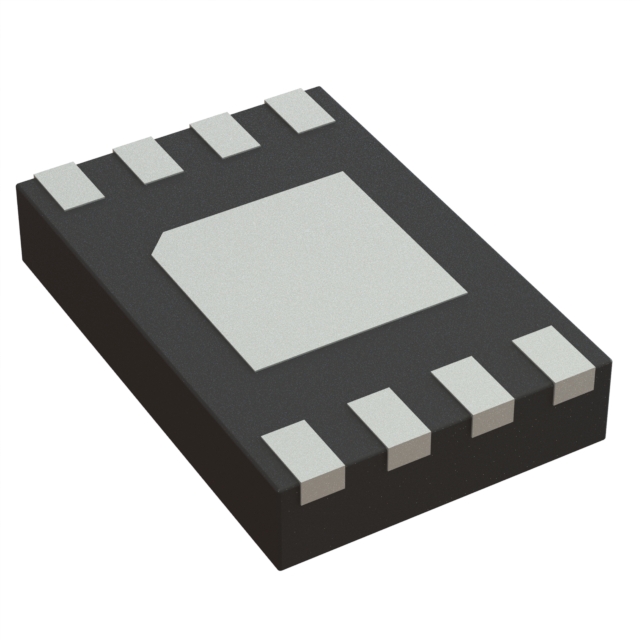
The RNG90-MAVDA-T is Microchip's RNG90 hardware random number generator in the tiny 8-pad UDFN package, a 2 x 3mm footprint for space-constrained secure designs. Part of the CryptoAuthentication family, it pairs a physical non-deterministic noise source with a NIST-standard deterministic random bit generator, returning a 256-bit random number with 128 bits of security strength on each Random command. It talks to a host over I2C and runs across a wide 1.65V to 5.5V supply, over the -40°C to 105°C extended-industrial range.
Key Features
- True hardware entropy - an internal physical noise source seeds a SHA-256 Hash_DRBG, producing a 256-bit result with 128-bit security strength per call.
- NIST SP 800-90 alignment - designed to the SP 800-90A, 800-90B, and 800-90C methods, with the Hash_DRBG certified under the NIST CAVP program.
- FIPS-oriented health testing - built-in entropy health tests and self-tests designed for FIPS 140-3 CMVP Entropy Source Validation.
- I2C interface - a standard Fast-Mode I2C port up to 400 kHz for simple attachment to any host microcontroller.
- Very low power - a sleep current of roughly 130 nA suits battery and always-on devices.
- Physical security - active shield circuitry, glitch protection, and voltage and temperature tamper detection guard the device.
- Integrity checks - firmware integrity tests run at power-up and wake, and a health-test failure returns a defined error status for FIPS-certified systems.
- Library support - works with Microchip's CryptoAuthentication software to simplify host integration.
Typical Applications
- Compact IoT and wearables - the 2 x 3mm UDFN fits key-generation and session-nonce roles where board space is scarce.
- Secure key and nonce generation - supplying high-quality entropy for cryptographic protocols and secure boot.
- FIPS-targeted systems - designs pursuing entropy-source validation for certified products.
Unique Advantages
- Smallest-footprint option - the UDFN package is the choice when the same RNG90 die has to fit a dense or miniature board that cannot spare SOIC area.
- Standards-grade entropy in hardware - a certified Hash_DRBG plus a physical noise source removes the risk of weak software randomness.
- Wide supply and temperature - 1.65V to 5.5V operation to 105°C lets one part serve many rails and environments.
Why Choose RNG90-MAVDA-T?
The RNG90-MAVDA-T is the pick when a design needs certified-grade hardware entropy in the smallest possible package. Its physical noise source, SHA-256 Hash_DRBG, FIPS-oriented health tests, and tamper protections deliver trustworthy randomness over a simple I2C link, all in an 8-pad UDFN that drops into compact, power-sensitive secure products. A 256-bit output at 128-bit security strength and roughly 130 nA sleep current make it well matched to battery-powered IoT endpoints.
Reach out for pricing, availability, and lead time on the RNG90-MAVDA-T, and ask about the SOIC version if you need an easier-to-handle footprint.














Date Founded: 1989
Headquarters: Chandler, Arizona, USA
Employees: 22,000+
Revenue: $8.349 Billion
Certifications and Memberships: ISO9001:2015, IATF16949:2016, AS 9100D