Posts by Mun KH

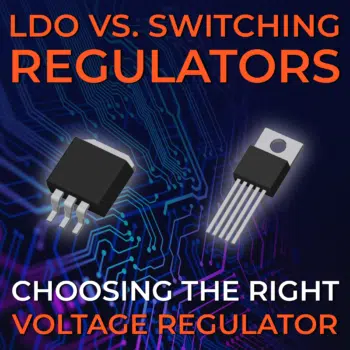
LDO vs. Switching Regulator: Choosing the Right Voltage Regulator

By Dr. KH MunSelecting between an LDO vs. switching regulator comes down to a trade-off between simplicity/noise and efficiency. LDOs (a type of linear regulator) are quieter and simpler but dissipate more power as heat when the input-to-output voltage difference is large; switching regulators are more efficient but add complexity and switching noise[1]. LDO: Lower…
Read More
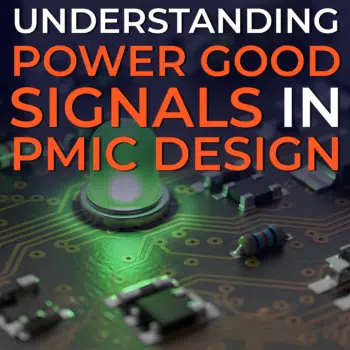
Understanding Power Good Signals in PMIC Design

By Dr. KH MunA power good signal (often labeled PGOOD, PG, or PWRGD on datasheets, and PWR_OK in PC power supplies) is an output from a voltage regulator or power management IC (PMIC) that indicates when its output voltage is within a specified range and is safe to use[1][5]. This diagnostic PG signal serves as…
Read More

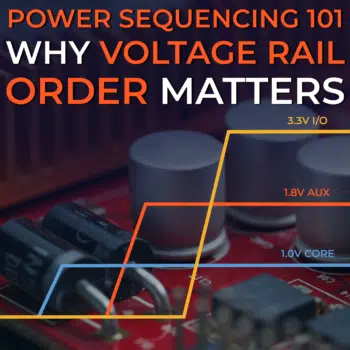
Power Sequencing 101: Why Voltage Rail Order Matters

By Dr. KH MunPower sequencing is the process of turning multiple voltage rails on (and off) in a specific, controlled order so a multi-rail system powers up safely.Managing modern multi-rail architectures requires strict coordination across distinct voltage boundaries. Complex system-on-chip (SoC) devices, field-programmable gate arrays (FPGAs), microcontrollers (MCUs), and microprocessors rely on separate power rails…
Read More

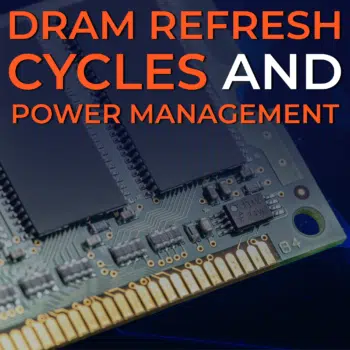
DRAM Refresh Cycles and Power Management: What Engineers Overlook

By Dr. KH MunDRAM refresh is the mandatory background operation of periodically recharging the internal storage capacitors within dynamic random-access memory cells to prevent data loss due to charge leakage. Because DRAM specifications only guarantee that cells hold their charge for tens of milliseconds (DDR4 requires every cell to be refreshed at least every 64…
Read More

Obsolete Memory ICs: Why They Go End-of-Life and How to Source Replacements

By Dr. KH MunManaging obsolete memory chips requires balancing immediate inventory needs with technical verification. When a manufacturer discontinues a critical memory IC, engineers and procurement teams must evaluate Last-Time-Buy opportunities, identify Form-Fit-Function equivalents, or plan board redesigns. Sourcing verified replacements through vetted independent channels helps prevent production line shutdowns while preserving design integrity. The…
Read More

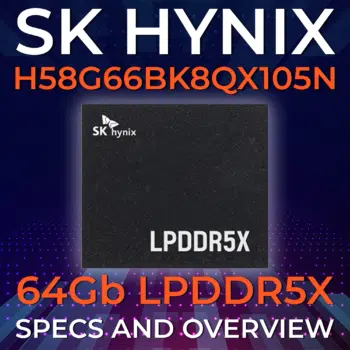
Product Highlight: SK hynix H58G66BK8QX105N LPDDR5X

By Dr. KH MunHigh-performance computing, advanced driver-assistance systems (ADAS), and edge AI processing require high memory bandwidth and low power consumption. The SK hynix H58G66BK8QX105N is an 8GB (64Gb) LPDDR5X SDRAM built for these demanding targets, with an extended -40°C to +105°C operating range for automotive and other harsh environments[1]. It delivers up to 8533…
Read More

Memory IC Types Explained

By Dr. KH MunHardware engineers and embedded system designers face complex decisions when selecting memory integrated circuits (ICs). Choosing the wrong type of memory can lead to excessive power draw, sub-optimal processing bandwidth, pin-count bottlenecks, or unnecessary printed circuit board (PCB) footprint expansion. Understanding the fundamental trade-offs between memory IC types is essential to optimizing…
Read More

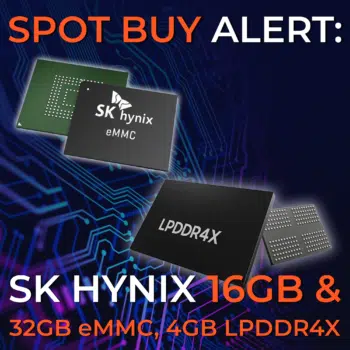
Spot Buy: SK Hynix 16GB & 32GB eMMC, 4GB LPDDR4x In Stock

By Dr. KH MunAn exclusive inventory spot buy of brand-new SK Hynix memory components offers quick relief for hardware teams dealing with long lead times and component shortages. This specific release features 160,000 units of 16GB eMMC, 107,000 units of 32GB eMMC, and 140,000 units of 4GB (32Gb) LPDDR4x SDRAM, all carrying 2025 production date…
Read More

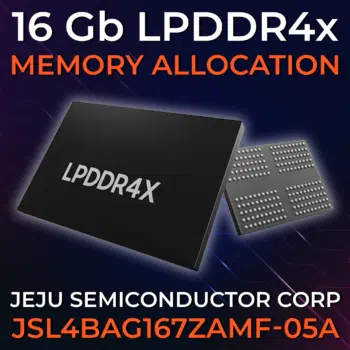
16Gb LPDDR4x Memory Allocation: JSC JSL4BAG167ZAMF-05A

By Dr. KH MunWhen designing high-performance embedded systems, industrial platforms, or advanced portable devices, choosing the right volatile memory means balancing power efficiency against data throughput. System architects also face a second problem that has nothing to do with silicon: securing a reliable allocation without compromising on the part they specified. To help teams work…
Read More

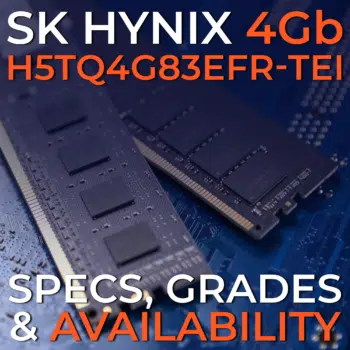
SK Hynix 4Gb H5TQ4G83EFR-TEI: Specs, Grades & Availability

By Dr. KH MunThe worldwide semiconductor market advances quickly, yet mature DRAM architectures still support essential hardware worldwide. As high-performance computing facilities and mobile environments adopt cutting-edge DDR5 and LPDDR5x standards, DDR3 remains a key component for industrial, embedded, medical, and telecommunications devices. Maintaining a stable, predictable supply chain for legacy volatile memory has become…
Read More

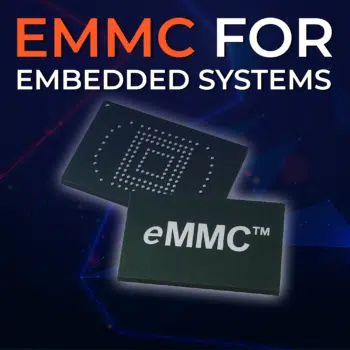
eMMC for Embedded Systems: Choosing the Right 4GB & 8GB Solution

By Dr. KH MunIn the fast-changing field of hardware design, choosing the right non-volatile storage is a key architectural choice that affects system reliability, BOM cost, and device lifespan. While modern consumer devices often require hundreds of gigabytes of fast NVMe SSDs, industrial, medical, and automotive systems face very different constraints. For these embedded systems,…
Read More

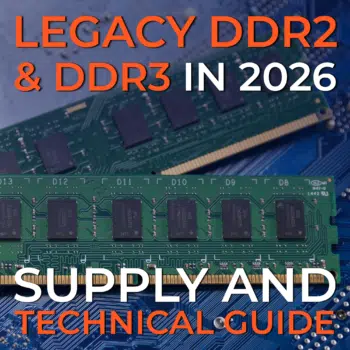
Sourcing Legacy DDR2 & DDR3 Memory in 2026: Supply & Technical Guide

By Dr. KH MunIn 2026, the global semiconductor market is experiencing a subtle yet disruptive structural change. While the media prominently highlights next-generation architectures and generative AI, hardware designers and procurement experts working on long-term industrial, networking, and medical platforms encounter a different challenge: a significant shortage in legacy DRAM supply. Standard dynamic random-access memory…
Read More
keyboard_arrow_up