
LCMXO2-2000ZE-2TG144C
| Part Description |
MachXO2 Field Programmable Gate Array (FPGA) IC 111 75776 2112 144-LQFP |
|---|---|
| Quantity | 1,616 Available (as of October 8, 2026) |

| Product Category | Field Programmable Gate Array (FPGA) |
|---|---|
| Manufacturer | Lattice Semiconductor Corporation |
| Manufacturing Status | Active |
| Manufacturer Standard Lead Time | 20 Weeks |
| Datasheet |
Specifications & Environmental
| Device Package | 144-TQFP (20x20) | Grade | Commercial | Operating Temperature | 0°C – 85°C | ||
|---|---|---|---|---|---|---|---|
| Package / Case | 144-LQFP | Number of I/O | 111 | Voltage | 1.14 V - 1.26 V | ||
| Mounting Method | Surface Mount | RoHS Compliance | ROHS3 Compliant | REACH Compliance | REACH Unaffected | ||
| Moisture Sensitivity Level | 3 (168 Hours) | Number of LABs/CLBs | 264 | Number of Logic Elements/Cells | 2112 | ||
| Number of Gates | N/A | ECCN | EAR99 | HTS Code | 8542.39.0001 | ||
| Qualification | N/A | Total RAM Bits | 75776 |
Overview of LCMXO2-2000ZE-2TG144C – MachXO2 Field Programmable Gate Array (FPGA), 144-LQFP
The LCMXO2-2000ZE-2TG144C is a MachXO2 family FPGA offering a flexible, low-power logic fabric optimized for system control, interface bridging and display/memory interfacing. With 2,112 logic elements and a broad on-chip feature set, it targets commercial designs that require instant-on, in-field reconfiguration and integrated peripheral support.
Key Features
- Core Logic — 2,112 logic elements and 264 CLBs provide a compact, flexible fabric for glue logic, peripheral control and finite-state applications.
- Embedded Memory — Approximately 75,776 bits (about 74 kbits) of embedded SRAM (EBR) for buffering and small data structures; family devices include additional distributed RAM options.
- On‑Chip User Flash — Family supports on-chip user flash memory for non-volatile configuration and storage; the XO2-2000 device option provides 80 kbits of UFM and supports up to 100,000 write cycles and background programming.
- I/O Density and Flexibility — 111 I/Os with programmable sysIO buffer support across a wide range of interfaces and signaling standards, enabling diverse peripheral and display connections.
- Low Voltage Operation — Single core supply range from 1.14 V to 1.26 V for the device core, enabling low-power system designs.
- Low Power Options — Family-level low-power architecture with standby modes (family documentation cites standby power as low as 22 μW) and programmable power-saving options.
- Clocking and PLLs — Eight primary clocks and up to two analog PLLs per device (family capability) with fractional‑n synthesis for flexible clock generation.
- High‑Level System Support — Instant-on, single-chip non-volatile reconfigurability with JTAG, SPI and I²C programming interfaces, TransFR in-field reconfiguration and optional dual-boot with external SPI memory.
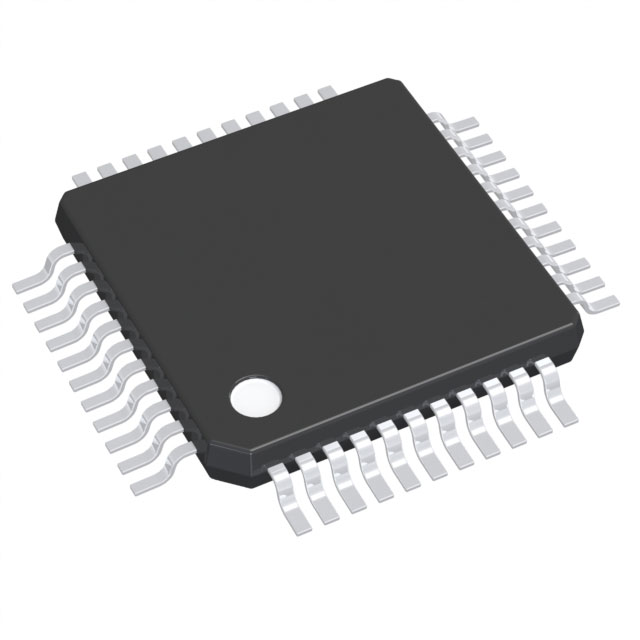
- Package and Mounting — Surface-mount 144-pin package (144-LQFP / 144-TQFP, 20 × 20 mm) suitable for compact board layouts.
- Commercial Grade — Rated for operation from 0 °C to 85 °C for commercial applications; RoHS compliant.
Typical Applications
- Display and Video Interfaces — Pre‑engineered source-synchronous I/O and dedicated gearing support display interface implementations and timing-critical signaling.
- Memory Interface Control — Family-level DDR/DDR2/LPDDR support and dedicated FIFO control logic enable use as a memory interface bridge or buffering element.
- System Glue Logic — Compact logic density and rich I/O enable peripheral aggregation, protocol translation and board-level signal management.
- Peripheral and Sensor Control — Hardened functions (SPI, I²C, timers) and programmable I/Os simplify integration of sensors and external devices.
Unique Advantages
- Instant-on, Non-Volatile Operation: Single-chip, flash-based configuration enables immediate start-up and simplified system boot behavior.
- In-Field Reconfiguration: TransFR and background programming support allow safe, in-system logic updates without full system downtime.
- Integrated Peripheral Support: On-chip SPI, I²C and timers reduce external component count and simplify firmware and hardware integration.
- Flexible I/O Signaling: Programmable sysIO buffers and wide protocol support let a single device interface with a broad set of external standards.
- Low-Power Operation: Narrow core supply range and family power-saving modes enable low standby consumption for energy-conscious designs.
- Compact Packaging: 144-pin surface-mount package provides a balance of I/O count and small PCB footprint for space-constrained applications.
Why Choose LCMXO2-2000ZE-2TG144C?
The LCMXO2-2000ZE-2TG144C combines a mid-range logic capacity (2,112 logic elements and 264 CLBs) with a rich set of on-chip resources—embedded SRAM, user flash, flexible clocking and programmable I/O—to address interface glue logic, memory bridging and control tasks in commercial systems. Its low-voltage core and family-level low-power features make it suitable for designs that need instant-on behavior and in-field update capability.
This part is well suited for engineers building compact, reconfigurable control and interface subsystems who require reliable vendor-supported silicon with integrated peripheral functions and flexible I/O options. The combination of non-volatile configuration, programmable interfaces and modest logic density provides long-term design scalability within the MachXO2 family.
Request a quote or submit an RFQ today to check pricing and availability for the LCMXO2-2000ZE-2TG144C.
















Date Founded: 1983
Headquarters: Hillsboro, Oregon, USA
Employees: 1,000+
Revenue: $627.7 Million
Certifications and Memberships: ISO9001:2015, ISO14001:2015, IATF16949:2016


