
MCIMX7U5DVP08SC
| Part Description |
I.MX7ULP1 14X14 |
|---|---|
| Quantity | 923 Available (as of October 8, 2026) |

| Product Category | Microprocessors |
|---|---|
| Part Series | i.MX 7U |
| Manufacturer | NXP USA Inc. |
| Manufacturing Status | Obsolete |
| Manufacturer Standard Lead Time | Contact Us |
| Datasheet |
Specifications & Environmental
| Co-Processors/DSP | ARM® Cortex®-M4 | Core Processor | ARM® Cortex®-A7 | Display & Interface Controllers | MIPI-DSI | ||
|---|---|---|---|---|---|---|---|
| ECCN | OBSOLETE | Graphics Acceleration | Yes | HTS Code | N/A | ||
| Moisture Sensitivity Level | 3 (168 Hours) | Mounting Method | Surface Mount | Operating Temperature | – | ||
| RAM Controllers | LPDDR2, LPDDR3 | REACH Compliance | REACH Unaffected | RoHS Compliance | ROHS3 Compliant | ||
| USB | USB 2.0 (2) |
Overview of MCIMX7U5DVP08SC – I.MX7ULP1 14X14
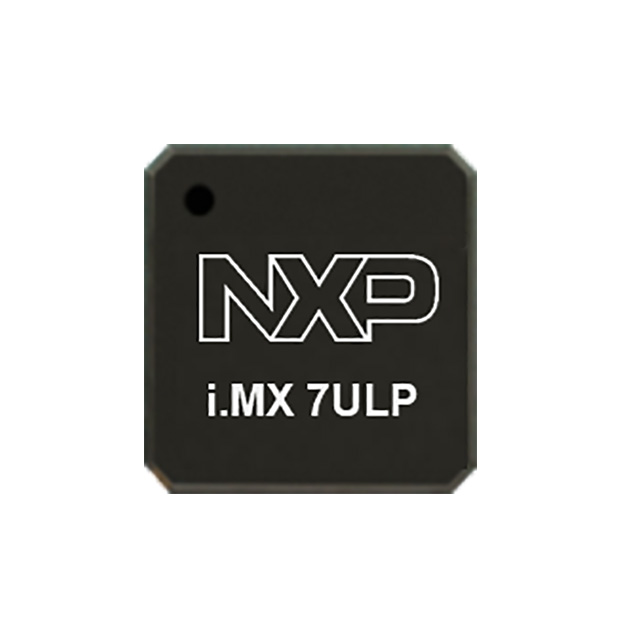
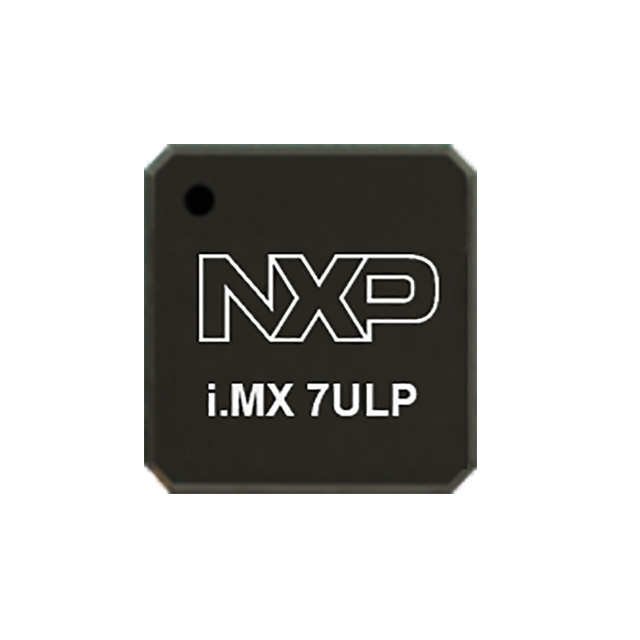
The MCIMX7U5DVP08SC is an i.MX 7ULP series applications processor optimized for power-sensitive embedded and consumer products. It implements a heterogeneous multicore architecture with a high-performance application domain based on an ARM® Cortex®-A7 and a real-time domain based on an ARM® Cortex®-M4 to balance rich OS capabilities with deterministic low-power processing.
Designed for compact systems, the device streamlines pin count and integration while providing a broad set of peripherals, security features, and display and memory interfaces for modern connected and battery-operated designs.
Key Features
- Heterogeneous CPU Domains – Application domain: ARM® Cortex®-A7 with NEON SIMD and FPU (nominal RUN 500 MHz, overdrive 720 MHz, VLPR 48 MHz); Real-time domain: ARM® Cortex®-M4 (maximum 200 MHz, VLPR 48 MHz).
- On-Chip Memory & Caches – 256 KB of on-chip RAM, 256 KB L2 cache, and 32 KB instruction/data caches to accelerate application workloads and reduce external memory dependence.
- Memory Interfaces – 16/32-bit LPDDR2/LPDDR3 controller (supporting up to 380 MHz), serial flash interface (x4/x8), and eMMC 5.0 interface for flexible storage and system memory choices.
- Graphics & Display – Graphics acceleration available with a GC7000 NanoULTRA-class engine and MIPI-DSI display controller for advanced user interfaces and graphics output.
- Connectivity – USB 2.0 (two ports), SD 3.0/MMC 5.0, dual USB host capability, multiple UARTs, I2C (four ports), LPSPI (two ports), and FlexIO for diverse peripheral integration.
- Analog & Mixed-Signal – Integrated analog features including 2 × 12-bit ADCs and 2 × 12-bit DACs suitable for sensor interfacing and analog control tasks.
- Security – Secure boot, Crypto/TRNG, secure fuse/eFuses/OTP and secure boot support to enable hardware-rooted device security and trusted system start-up.
- Timers and System – Multiple 32-bit general-purpose timers, 64-bit timers, and watchdog timers in both domains to support real-time control and system supervision.
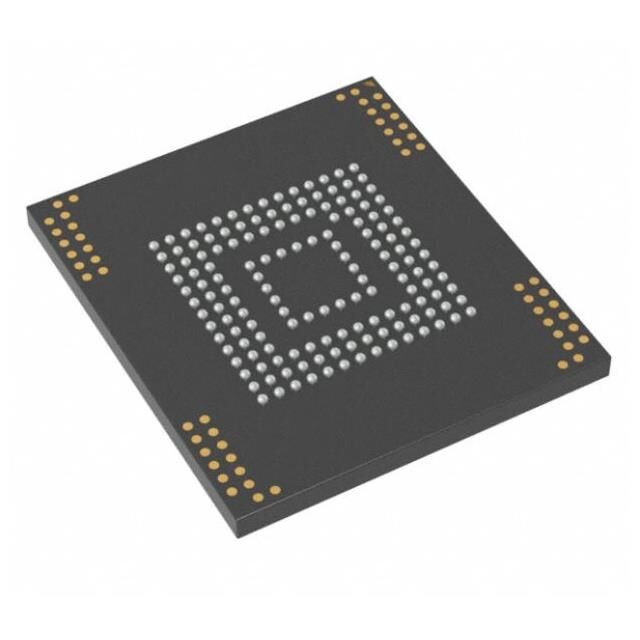
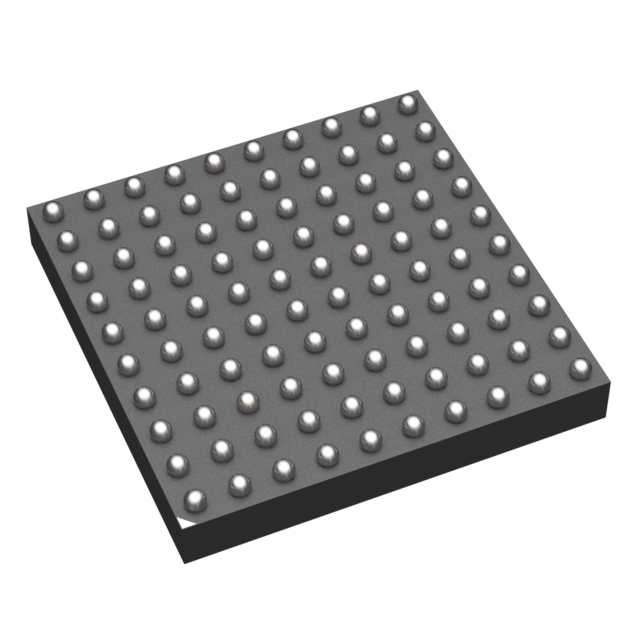
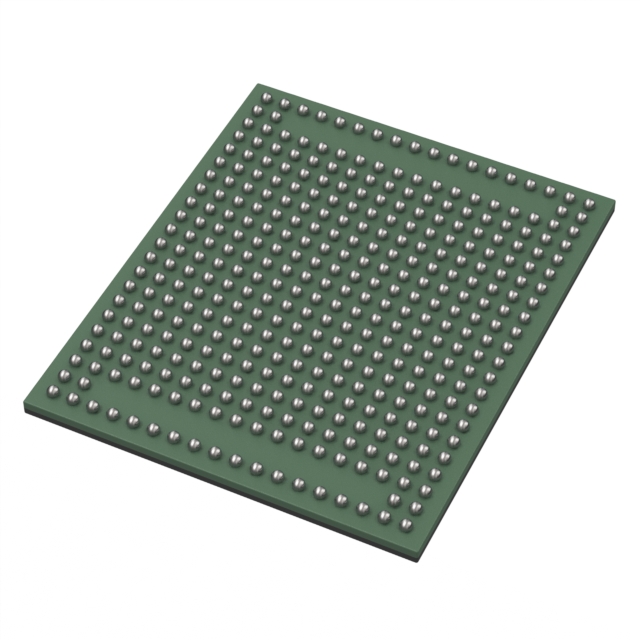
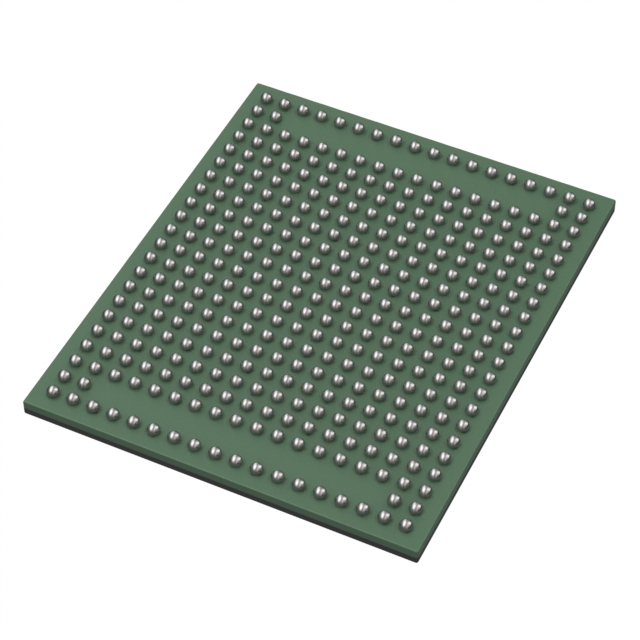
- Package and Mounting – Available in compact plastic BGA packages including 14 × 14 mm, 0.5 mm pitch; surface-mount mounting type to support small form-factor designs.
- RoHS Compliance – Device is RoHS compliant for environmental requirements.
Typical Applications
- Consumer Products – Rich OS applications and low-power real-time tasks in battery-operated consumer devices where graphics and secure boot are required.
- IoT Endpoints & Gateways – Edge devices that need a balance of application-level processing and deterministic sensor/control handling with integrated connectivity and security.
- Human-Machine Interfaces – Touchscreens and compact displays leveraging the MIPI-DSI controller and graphics acceleration for responsive GUIs.
- Industrial and Embedded Control – Low-leakage real-time processing for control loops, timing-critical functions, and analog sensor integration using ADC/DAC resources.
Unique Advantages
- Balanced Heterogeneous Architecture: Dual domains (Cortex-A7 and Cortex-M4) provide separation of rich OS workloads and deterministic real-time tasks to simplify system partitioning.
- Low-Power Optimization: Multiple run modes and VLPR operation, plus a low-leakage real-time domain, help reduce overall system power in battery-operated designs.
- Integrated Security Building Blocks: On-chip Crypto/TRNG, secure boot, and eFuses/OTP enable hardware-assisted platform security without extensive external components.
- Flexible Memory & Storage Options: Support for LPDDR2/LPDDR3, eMMC 5.0, and serial flash gives designers multiple memory choices for performance and cost trade-offs.
- Compact Integration: Streamlined pin count and BGA 14×14 packaging support small PCB footprints and simplified system integration.
- Rich Peripheral Set: Multiple UARTs, I2C, SPI, SD/eMMC, USB 2.0 and display interfaces reduce BOM and accelerate time-to-market for connected embedded systems.
Why Choose MCIMX7U5DVP08SC?
The MCIMX7U5DVP08SC offers a practical combination of application-level performance and low-power real-time processing through its heterogeneous Cortex-A7 and Cortex-M4 domains. Its integrated memory interfaces, graphics acceleration, broad peripheral set, and hardware security features make it well suited for compact, power-sensitive embedded designs that require both rich user interfaces and deterministic control.
This device is ideal for designers targeting consumer and embedded systems where reduced board complexity, secure boot capability, and efficient power usage are priorities. The combination of on-chip memory, display support, and multiple connectivity options provides a scalable platform for a range of product designs.
Request a quote or submit a request for pricing and availability to evaluate the MCIMX7U5DVP08SC for your next embedded design.













Date Founded: 2006
Headquarters: Eindhoven, North Brabant, Netherlands
Employees: 38,000+
Revenue: $10.53 Billion
Certifications and Memberships: ISO9001:2015, IATF16949:2016


