
LCMXO2-7000ZE-1FTG256C
| Part Description |
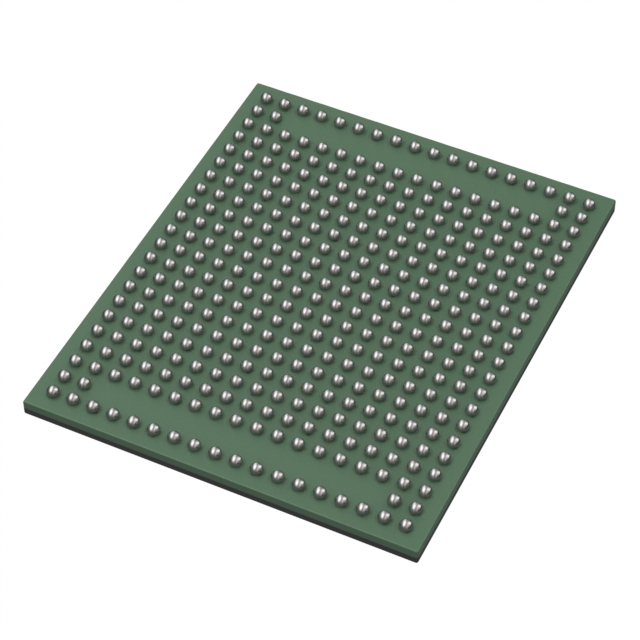
MachXO2 Field Programmable Gate Array (FPGA) IC 206 245760 6864 256-LBGA |
|---|---|
| Quantity | 1,505 Available (as of October 8, 2026) |

| Product Category | Field Programmable Gate Array (FPGA) |
|---|---|
| Manufacturer | Lattice Semiconductor Corporation |
| Manufacturing Status | Active |
| Manufacturer Standard Lead Time | 20 Weeks |
| Datasheet |
Specifications & Environmental
| Device Package | 256-FTBGA (17x17) | Grade | Commercial | Operating Temperature | 0°C – 85°C | ||
|---|---|---|---|---|---|---|---|
| Package / Case | 256-LBGA | Number of I/O | 206 | Voltage | 1.14 V - 1.26 V | ||
| Mounting Method | Surface Mount | RoHS Compliance | ROHS3 Compliant | REACH Compliance | REACH Unaffected | ||
| Moisture Sensitivity Level | 3 (168 Hours) | Number of LABs/CLBs | 858 | Number of Logic Elements/Cells | 6864 | ||
| Number of Gates | N/A | ECCN | 3A991D | HTS Code | 8542.39.0001 | ||
| Qualification | N/A | Total RAM Bits | 245760 |
Overview of LCMXO2-7000ZE-1FTG256C – MachXO2 Field Programmable Gate Array (FPGA), 6864 logic elements, 256-LBGA
The LCMXO2-7000ZE-1FTG256C is a MachXO2 family FPGA IC from Lattice Semiconductor designed for low-power, non-volatile reconfigurable logic. It combines a flexible LUT-based architecture with embedded memory and a high-density I/O fabric to support system control, interface bridging and display/memory interface tasks.
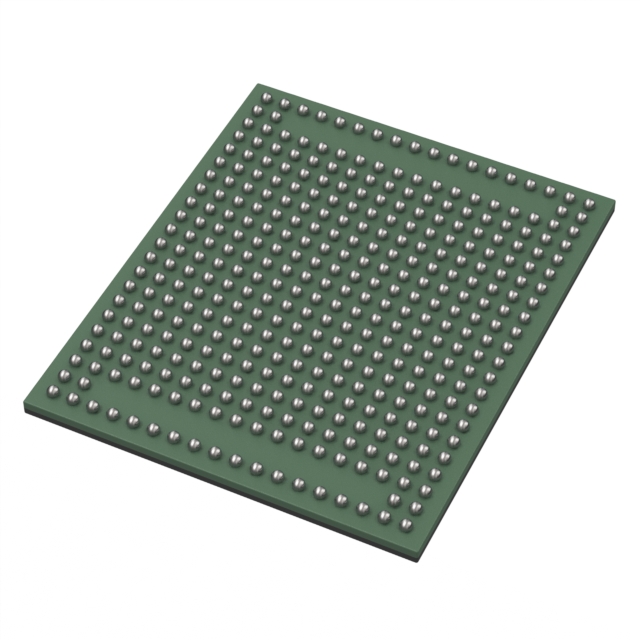
Built for instant-on operation and in-field reconfiguration, this commercial-grade device offers 6,864 logic elements, approximately 245.8 kbits of embedded RAM, and 206 I/Os in a 256-ball LBGA package, making it well suited to applications that require compact, power-efficient programmable logic with rich I/O and on-chip flash.
Key Features
- Logic Core
6,864 logic elements provide ample LUT4-based resources for glue logic, state machines and small-to-medium FPGA functions. - Embedded Memory
Approximately 245,760 bits of on-chip RAM (sysMEM and distributed RAM) for buffering, FIFOs and small data storage needs. - On-Chip Non-Volatile Flash
Up to 256 kbits of user flash memory with 100,000 write cycles; programmable through JTAG, SPI and I2C for secure, single-chip configuration and background programming. - High I/O Count & Flexible Interfaces
206 I/Os with programmable sysIO™ buffer support for LVCMOS, LVTTL and a range of differential standards; features include programmable pull-ups/pull-downs and on-chip differential termination. - Pre-Engineered Source-Synchronous I/O
DDR registers in I/O cells, dedicated gearing logic and display gearing (7:1) plus support for generic DDR, DDRX2 and DDRX4 interfaces and dedicated DDR/DDR2/LPDDR with DQS support. - Low Power & Instant-On
Built on an advanced 65 nm low-power process with standby power as low as 22 μW and instant-on, non-volatile operation for fast system availability. - Clocking & PLLs
Multiple on-chip clocks (eight primary clocks) and up to two analog PLLs with fractional-N synthesis and a wide input frequency range for flexible clock management. - Package & Operating Range
256-LBGA (supplier: 256-FTBGA, 17×17) surface-mount package; commercial grade operation from 0 °C to 85 °C and single-supply operation from 1.14 V to 1.26 V. - System-Level Functions
On-chip hardened functions including SPI, I2C, timer/counter, on-chip oscillator, IEEE 1149.1 boundary scan and IEEE 1532 in-system programming; features for security and traceability such as TraceID and optional OTP mode.
Typical Applications
- Display and Video Interfaces
Programmable gearing and DDR I/O support make the device suitable for driving and adapting display interfaces where display timing and data alignment are required. - Memory Interface and Buffering
Dedicated DDR/DDR2/LPDDR support with DQS and embedded RAM allow use as an interface bridge or buffering element between processors and external memory subsystems. - In-Field Logic Updates
TransFR reconfiguration and background programming enable safe in-field logic updates and dual-boot configurations for systems that require live firmware or logic evolution. - Interface Bridging and Glue Logic
High I/O count and programmable sysIO buffers support protocol adaptation, signal translation and board-level glue functions across a wide range of interfaces.
Unique Advantages
- Highly Integrated Logic and I/O
6,864 logic elements combined with 206 I/Os reduce external components and simplify PCB routing for compact designs. - Non-Volatile, Instant-On Operation
On-chip user flash and instant-on capability eliminate the need for external configuration memory while enabling fast system start-up. - Robust On-Chip Memory
Approximately 245.8 kbits of embedded RAM plus distributed RAM and dedicated FIFO logic support low-latency buffering and deterministic data flows. - Low-Power Standby
Advanced low-power process technology and standby currents as low as 22 μW reduce system power consumption in idle states. - Flexible Clocking and PLLs
Multiple primary clocks and up to two analog PLLs provide versatile frequency synthesis and clock distribution for heterogeneous system requirements. - Commercial Temperature and Single-Supply Operation
Designed for 0 °C to 85 °C operation with a single supply range of 1.14 V to 1.26 V to match many modern system power rails.
Why Choose LCMXO2-7000ZE-1FTG256C?
The LCMXO2-7000ZE-1FTG256C positions itself as a compact, low-power, non-volatile FPGA option within the MachXO2 family, offering a balance of logic density, embedded memory and extensive I/O in a 256-ball LBGA package. Its family-level features—instant-on, in-field reconfiguration, hardened peripherals and flexible I/O—make it well suited for designers who need reliable, reprogrammable logic with minimal external components.
Choose this device when you require a scalable MachXO2-family solution that supports density migration, on-chip system functions (SPI, I2C, timers, oscillator), and proven configuration options for secure and maintainable designs.
Request a quote or submit a procurement inquiry to begin pricing and availability for the LCMXO2-7000ZE-1FTG256C.
















Date Founded: 1983
Headquarters: Hillsboro, Oregon, USA
Employees: 1,000+
Revenue: $627.7 Million
Certifications and Memberships: ISO9001:2015, ISO14001:2015, IATF16949:2016


