
LCMXO2280C-3B256C
| Part Description |
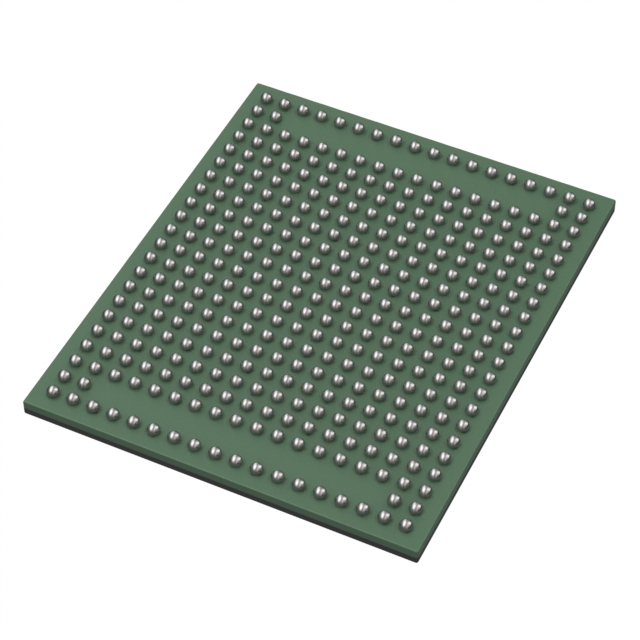
MachXO Field Programmable Gate Array (FPGA) IC 211 28262 2280 256-LFBGA, CSPBGA |
|---|---|
| Quantity | 1,870 Available (as of October 8, 2026) |

| Product Category | Field Programmable Gate Array (FPGA) |
|---|---|
| Manufacturer | Lattice Semiconductor Corporation |
| Manufacturing Status | Obsolete |
| Manufacturer Standard Lead Time | Contact Us |
| Datasheet |
Specifications & Environmental
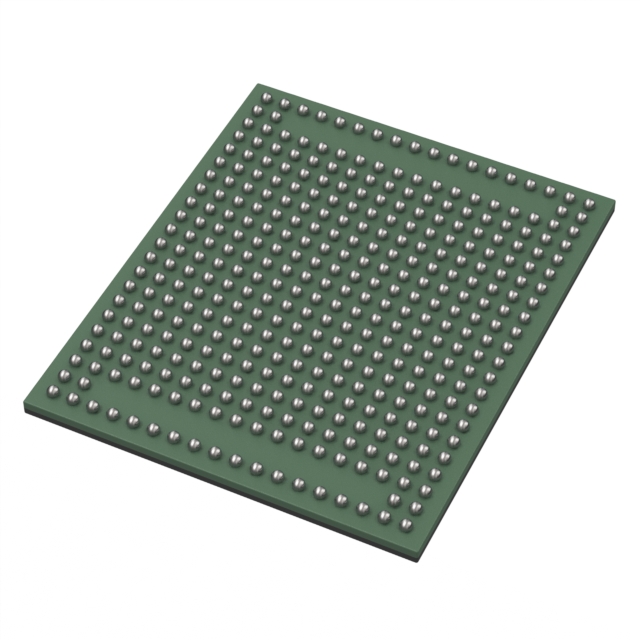
| Device Package | 256-CABGA (14x14) | Grade | Commercial | Operating Temperature | 0°C – 85°C | ||
|---|---|---|---|---|---|---|---|
| Package / Case | 256-LFBGA, CSPBGA | Number of I/O | 211 | Voltage | 1.71 V - 3.465 V | ||
| Mounting Method | Surface Mount | RoHS Compliance | RoHS non-compliant | REACH Compliance | REACH Unaffected | ||
| Moisture Sensitivity Level | 3 (168 Hours) | Number of LABs/CLBs | 285 | Number of Logic Elements/Cells | 2280 | ||
| Number of Gates | N/A | ECCN | 3A991D | HTS Code | 8542.39.0001 | ||
| Qualification | N/A | Total RAM Bits | 28262 |
Overview of LCMXO2280C-3B256C – MachXO Field Programmable Gate Array (FPGA)
The LCMXO2280C-3B256C is a MachXO family FPGA optimized for glue logic, bus interfacing, control and power-up sequencing tasks. It pairs non-volatile, instant-on architecture with FPGA-style resources to deliver flexible, reconfigurable logic in a single surface-mount device.
With 2,280 logic elements, approximately 28.3 Kbits of on-chip RAM and 211 I/Os, this device is intended for commercial-grade embedded designs that require high I/O-to-logic density, background reprogramming and multi-voltage I/O support.
Key Features
- Core Logic: 2,280 logic elements for implementing control and glue logic functions with the flexibility of LUT-based FPGA architecture.
- Embedded Memory: Approximately 28.3 Kbits of on-chip RAM to support distributed and block memory needs within the design.
- I/O Capacity & Flexibility: 211 I/O pins with programmable sysIO buffer support for LVCMOS (3.3/2.5/1.8/1.5/1.2), LVTTL, PCI, LVDS, Bus-LVDS, LVPECL and RSDS signaling.
- Non-Volatile, Instant-On Operation: Single-chip non-volatile architecture requiring no external configuration memory; device powers up quickly and supports secure in-field reconfiguration.
- Reconfiguration & Power Management: TransFR™ reconfiguration for in-field logic updates, background programming of non-volatile memory and a sleep mode that enables substantial static current reduction.
- Clocking: Up to two analog PLLs for clock multiplication, division and phase shifting (family capability).
- Voltage & Mounting: Operates from 1.71 V to 3.465 V and is supplied in a 256-ball LFBGA (caBGA) surface-mount package (14×14 mm).
- Commercial Temperature Grade & Compliance: Rated for 0 °C to 85 °C operating temperature and RoHS compliant.
- System-Level Support: IEEE 1149.1 boundary-scan, JTAG programmability and IEEE 1532 in-system programming support (family-level features).
Typical Applications
- Glue Logic and Board-Level Control: Implement complex interconnects and timing control between ICs where instant-on and single-chip non-volatile configuration reduce system complexity.
- Bus Bridging and Interfacing: High I/O count and flexible I/O standards make this device suitable for converting and bridging between different bus voltages and signaling types.
- Power-Up Sequencing and System Control: Non-volatile configuration and rapid start-up behavior enable reliable power-up control and sequencing in embedded systems.
- Field Upgradeable Logic: In-field TransFR reconfiguration supports system updates without taking the entire system offline.
Unique Advantages
- Single-Chip Non-Volatile Design: Eliminates the need for external configuration memory, simplifying BOM and improving security by removing external bitstreams.
- High I/O-to-Logic Density: 211 I/Os paired with 2,280 logic elements allow complex interfacing and glue logic on a compact package.
- Flexible I/O Standards: Programmable sysIO buffers support a wide range of signaling standards, reducing the need for external level translators.
- In-Field Reconfiguration: Background programming and TransFR capabilities enable non-disruptive updates and iterative firmware/logic development in deployed systems.
- Power Reduction Modes: Sleep mode provides significant static current reduction for power-sensitive applications.
- Design Tool Support: Family-level support in ispLEVER design tools facilitates synthesis, placement and timing closure for embedded and glue-logic designs.
Why Choose LCMXO2280C-3B256C?
The LCMXO2280C-3B256C brings together non-volatile instant-on behavior and FPGA-style logic resources in a single, commercial-grade surface-mount package. Its mix of 2,280 logic elements, substantial on-chip memory and 211 flexible I/Os makes it well suited for board-level control, bus interfacing and in-field upgradable logic in embedded systems requiring rapid start-up and secure configuration.
Supported by MachXO family capabilities—such as in-system programming, PLL-based clock management and design-tool integration—this device provides a scalable option for designers looking to reduce BOM, simplify system architecture and maintain updateability throughout product life.
Request a quote or submit an inquiry to obtain pricing, availability and lead-time information for the LCMXO2280C-3B256C.
















Date Founded: 1983
Headquarters: Hillsboro, Oregon, USA
Employees: 1,000+
Revenue: $627.7 Million
Certifications and Memberships: ISO9001:2015, ISO14001:2015, IATF16949:2016


