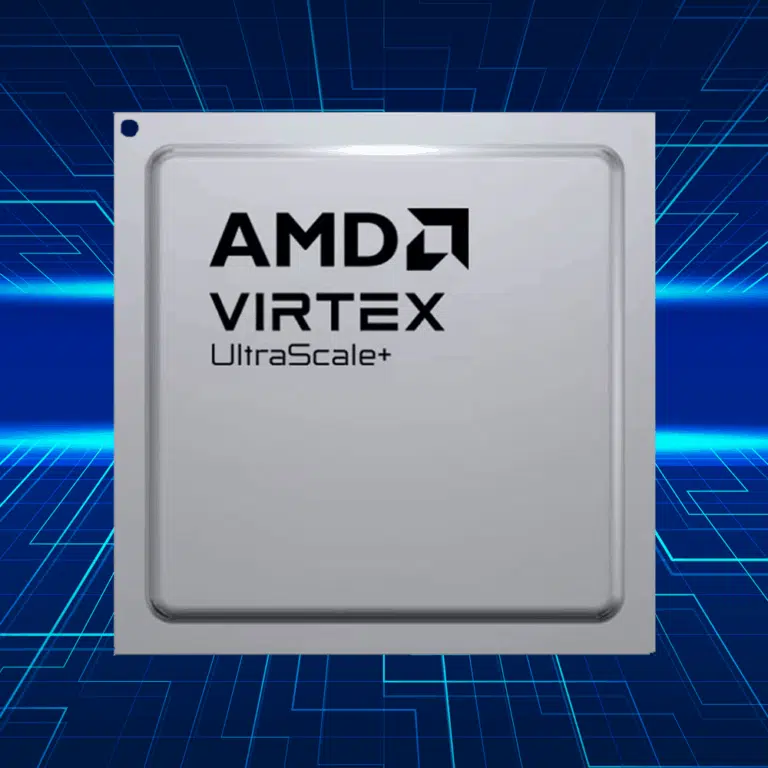
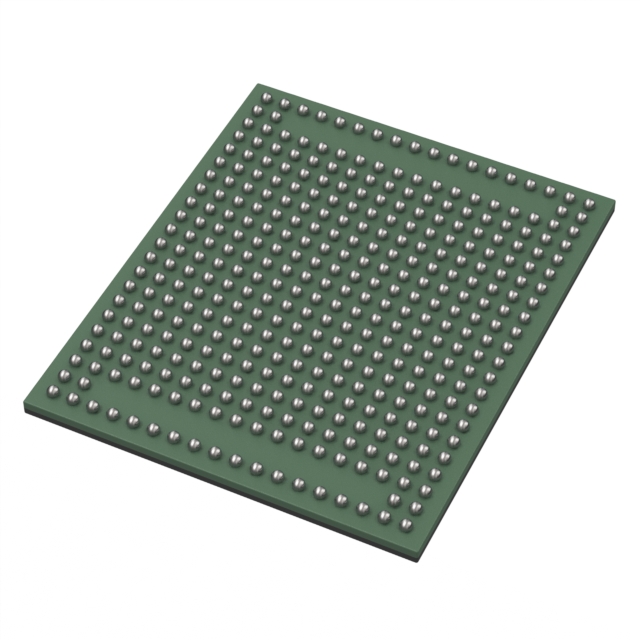
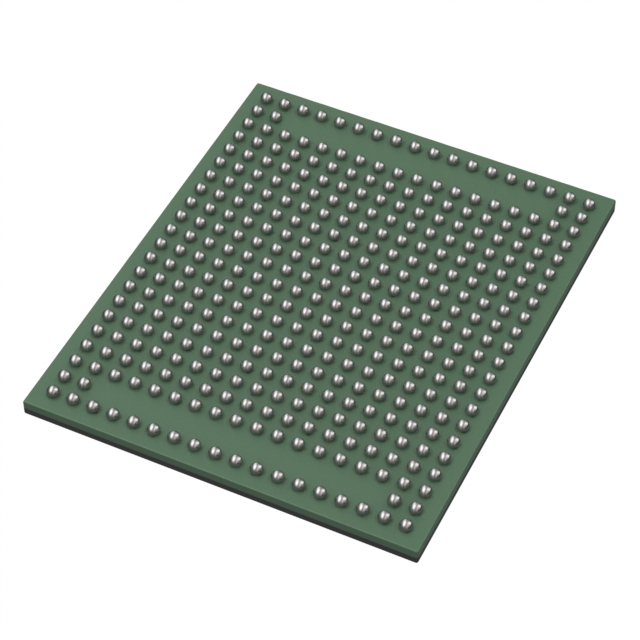
XCV150-6FG256C
| Part Description |
Virtex® Field Programmable Gate Array (FPGA) IC 176 49152 3888 256-BGA |
|---|---|
| Quantity | 1,150 Available (as of October 8, 2026) |

| Product Category | Field Programmable Gate Array (FPGA) |
|---|---|
| Manufacturer | AMD |
| Manufacturing Status | Obsolete |
| Manufacturer Standard Lead Time | Contact Us |
| Datasheet |
Specifications & Environmental
| Device Package | 256-FBGA (17x17) | Grade | Commercial | Operating Temperature | 0°C – 85°C | ||
|---|---|---|---|---|---|---|---|
| Package / Case | 256-BGA | Number of I/O | 176 | Voltage | 2.375 V - 2.625 V | ||
| Mounting Method | Surface Mount | RoHS Compliance | RoHS non-compliant | REACH Compliance | REACH Unaffected | ||
| Moisture Sensitivity Level | 3 (168 Hours) | Number of LABs/CLBs | 864 | Number of Logic Elements/Cells | 3888 | ||
| Number of Gates | 164674 | ECCN | EAR99 | HTS Code | 8542.39.0001 | ||
| Qualification | N/A | Total RAM Bits | 49152 |
Overview of XCV150-6FG256C – Virtex® Field Programmable Gate Array (FPGA) IC 176 49152 3888 256-BGA
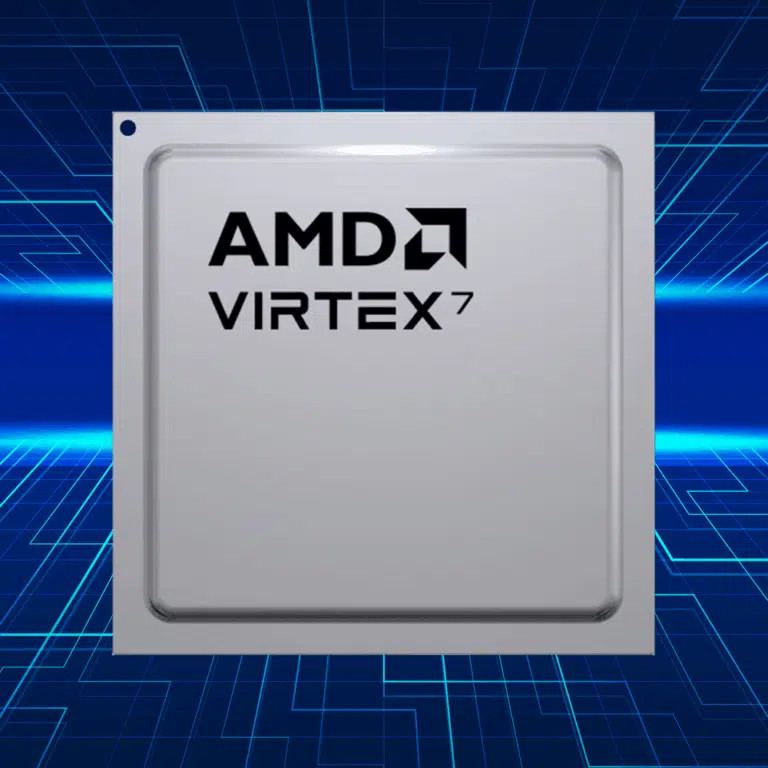
The XCV150-6FG256C is a Virtex® SRAM-based Field Programmable Gate Array delivering a high-capacity, configurable logic fabric for demanding programmable-logic designs. Built on a 0.22 μm, 5-layer-metal process, the device combines a regular CLB-based architecture, abundant on-chip memory and flexible I/O to support complex system functions and rapid in-system reprogrammability.
This device is suited for system designers requiring high-performance programmable logic where integration, reprogrammability and established development support are important—offering a compact 256-BGA package and features targeted at high-speed interfaces and hierarchical memory architectures.
Key Features
- Core logic capacity — Approximately 3,888 logic cells (CLB architecture) with a system gate count of 164,674 to implement medium-to-large custom logic functions.
- On-chip memory — Total of 49,152 bits of embedded RAM organized for configurable LUT RAM and dedicated block RAM use, plus SelectRAM+ support as described by the Virtex family.
- I/O and interface capability — 176 I/O pins with multi-standard SelectIO interfaces, supporting a wide range of high-performance signaling standards and direct connections to compatible external memory devices.
- Clock and timing — Built-in clock-management with four dedicated delay-locked loops (DLLs), four primary low-skew global clock nets and multiple local clock nets for advanced clock control.
- Arithmetic and logic support — Dedicated carry logic and multiplier support plus cascade chains for wide-input functions to accelerate arithmetic and DSP-type operations.
- Configuration and development — SRAM-based in-system configuration enabling unlimited re-programmability with multiple programming modes; supported by the Virtex development ecosystem.
- Package and electrical — 256-ball FBGA (17 × 17) surface-mount package; voltage supply range 2.375 V to 2.625 V.
- Operating conditions — Commercial temperature grade with an operating range of 0 °C to 85 °C; RoHS compliant.
- System-level features — IEEE 1149.1 boundary-scan, die-temperature sensor diode, and internal 3-state bussing for system testability and design flexibility.
Typical Applications
- PCI and system I/O controllers — Implements custom logic and protocol handling in 66-MHz PCI-compliant designs and related peripheral interfaces.
- Compact PCI and hot-swappable modules — Supports hot-swappable Compact PCI implementations where in-system reconfiguration and board-level interchangeability are required.
- High-performance system glue logic — Acts as a programmable backbone for complex boards requiring fast interfaces to external high-performance RAM and custom control logic.
- Prototyping and upgradable designs — SRAM-based configuration enables rapid prototyping and field updates for evolving hardware requirements.
Unique Advantages
- Reconfigurable, field-upgradeable platform: SRAM-based architecture allows unlimited re-programmability to iterate designs or deploy updates without hardware changes.
- Integrated clock management: Multiple DLLs and global/local clock resources simplify timing architecture for multi-clock systems.
- Balanced logic and memory: Combination of nearly 3,888 logic cells and ~49Kbits of on-chip RAM lets designers allocate resources between logic, LUT RAM and block RAM efficiently.
- Robust interface support: 176 I/O with multi-standard SelectIO capability facilitates direct connectivity to a variety of external devices and memory types.
- Compact, surface-mount packaging: 256-FBGA (17×17) provides a small board footprint while supporting dense I/O and signal routing.
- Standards and testability: IEEE 1149.1 boundary-scan and built-in test features help streamline manufacturing test and system integration.
Why Choose XCV150-6FG256C?
The XCV150-6FG256C combines a proven Virtex architecture with a mid-range logic and memory footprint to deliver a flexible, re-programmable solution for system designers. Its mix of logic capacity, embedded RAM and extensive I/O in a compact 256-FBGA package makes it suitable for applications that require on-board programmability, fast external memory interfaces and robust clock management.
Supported by the Virtex development ecosystem and featuring industry-focused system features like boundary-scan and multiple configuration modes, the device provides long-term design flexibility and integration benefits for projects prioritizing reconfigurability and rapid time-to-market.
Request a quote or submit a pricing inquiry to explore availability and lead times for the XCV150-6FG256C. Our team can provide technical details and support tailored to your project requirements.
















Date Founded: 1969
Headquarters: Santa Clara, California, USA
Employees: 25,000+
Revenue: $22.68 Billion
Certifications and Memberships: ISO9001:2015, RoHS, REACH