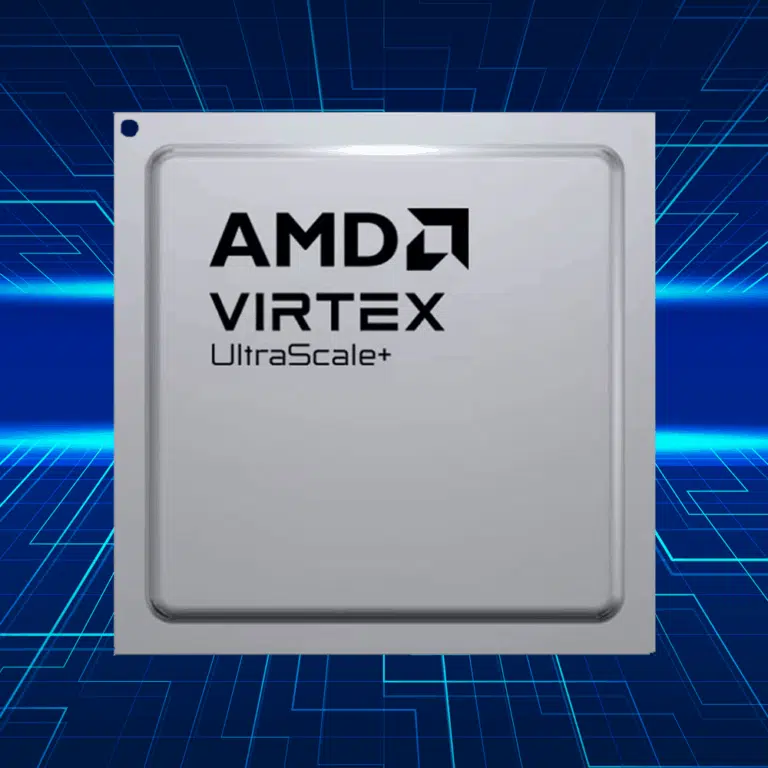
XCV100-5PQ240C
| Part Description |
Virtex® Field Programmable Gate Array (FPGA) IC 166 40960 2700 240-BFQFP |
|---|---|
| Quantity | 848 Available (as of October 8, 2026) |

| Product Category | Field Programmable Gate Array (FPGA) |
|---|---|
| Manufacturer | AMD |
| Manufacturing Status | Obsolete |
| Manufacturer Standard Lead Time | Contact Us |
| Datasheet |
Specifications & Environmental
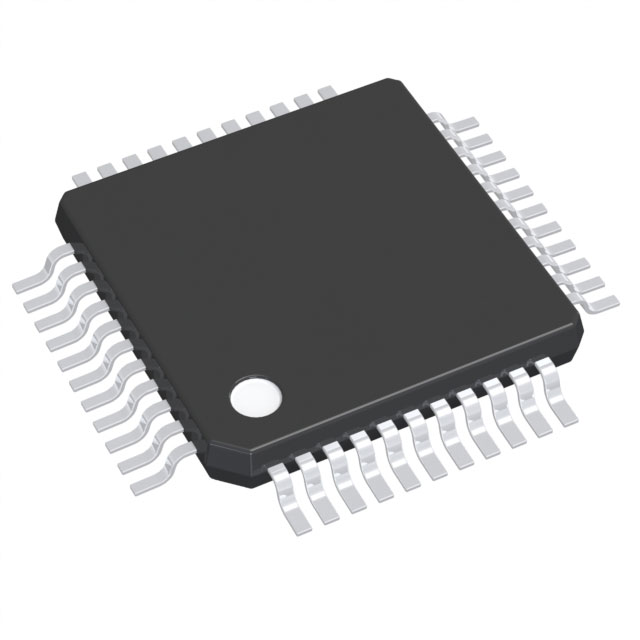
| Device Package | 240-PQFP (32x32) | Grade | Commercial | Operating Temperature | 0°C – 85°C | ||
|---|---|---|---|---|---|---|---|
| Package / Case | 240-BFQFP | Number of I/O | 166 | Voltage | 2.375 V - 2.625 V | ||
| Mounting Method | Surface Mount | RoHS Compliance | RoHS non-compliant | REACH Compliance | REACH Unaffected | ||
| Moisture Sensitivity Level | 3 (168 Hours) | Number of LABs/CLBs | 600 | Number of Logic Elements/Cells | 2700 | ||
| Number of Gates | 108904 | ECCN | EAR99 | HTS Code | 8542.39.0001 | ||
| Qualification | N/A | Total RAM Bits | 40960 |
Overview of XCV100-5PQ240C – Virtex® Field Programmable Gate Array (FPGA) IC 166 40960 2700 240-BFQFP
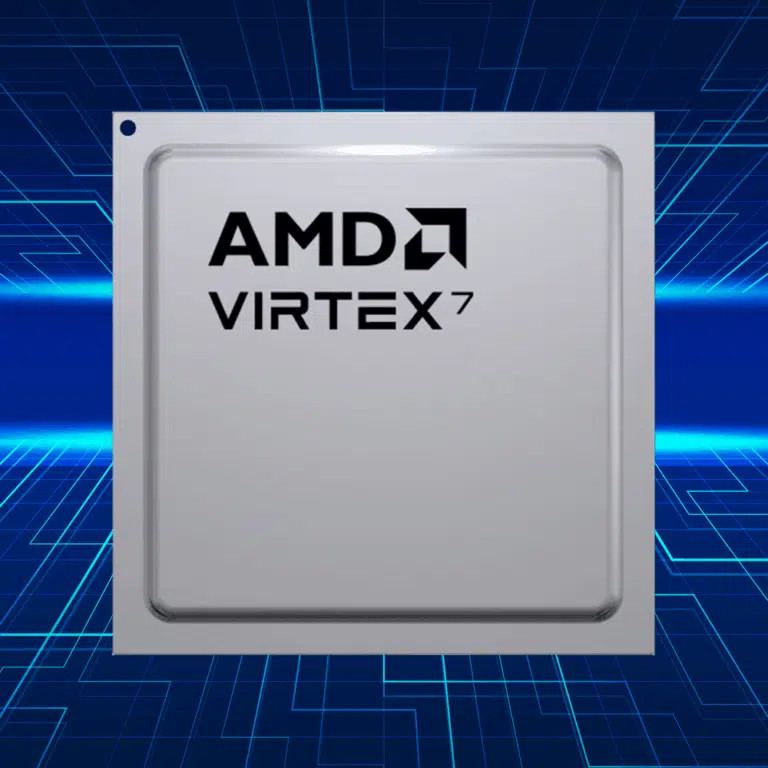
The XCV100-5PQ240C is an AMD Virtex® SRAM-based FPGA offering moderate logic capacity and on-chip memory in a 240-pin PQFP package. Built on the Virtex architecture, it combines a regular CLB/IO array and hierarchical routing to support reprogrammable logic implementations and system-level glue logic.
Targeted at designs that require reprogrammability, multi-standard I/O and integrated clock management, the device provides 2,700 logic cells, 40,960 bits of embedded RAM, and 166 general-purpose I/O in a surface-mount 240-BFQFP package with commercial-grade temperature and RoHS compliance.
Key Features
- Logic resources — 2,700 logic cells (corresponding to the device’s CLB array) and approximately 108,904 system gates provide medium-density programmable logic capacity for glue logic, protocol bridging, and custom datapath functions.
- Embedded memory — 40,960 bits of on-chip block RAM, with LUTs configurable as RAM or shift registers to support FIFOs, buffering and small data stores.
- I/O and interface flexibility — 166 user I/O pins and multi-standard SelectIO™ support for a range of interface requirements; the family-level documentation lists 16 high-performance interface standards.
- Clocking and timing — Four dedicated delay-locked loops (DLLs), four primary low-skew global clock distribution nets and 24 secondary local clock nets provide flexible clock-management options for synchronized designs.
- Arithmetic and logic support — Dedicated carry logic and multiplier support enable efficient implementation of arithmetic-intensive functions and wide-input logic via cascade chaining.
- Configuration and re-programmability — SRAM-based in-system configuration with unlimited re-programmability and four programming modes for flexible deployment and iterative development.
- Package and supply — Supplied in a 240-BFQFP / 240-PQFP (32×32) surface-mount package; nominal core supply range 2.375 V to 2.625 V.
- Environmental and test — Commercial grade operation from 0 °C to 85 °C, RoHS compliant, and 100% factory tested per the product specification.
- System features — IEEE 1149.1 boundary-scan, die-temperature sensor diode, and hierarchical routing resources to accommodate complex designs.
Typical Applications
- PCI and CompactPCI systems — The Virtex family documentation includes PCI-compliant operation and support for hot-swappable CompactPCI, making the device suitable for PCI-based expansion and interface functions.
- Prototyping and in-system reconfiguration — SRAM-based architecture and unlimited re-programmability support iterative hardware development, algorithm validation and field updates.
- Custom logic and glue logic for embedded systems — Medium-density logic and abundant I/O make the device suitable for implementing custom interfaces, protocol bridges and control logic in embedded applications.
Unique Advantages
- Balanced logic and memory density: 2,700 logic cells combined with 40,960 bits of embedded RAM enable mixed logic and small-data storage implementations without external memory for many use cases.
- Flexible clock management: Four DLLs and multiple global/local clock nets simplify timing design for synchronized, multi-clock-domain applications.
- Multi-standard I/O capability: 166 user I/Os and SelectIO™ support help interface directly to a variety of external devices and standards at the family level.
- Re-programmable development flow: SRAM configuration with four programming modes allows rapid iteration, field updates and design customization throughout the product lifecycle.
- Proven silicon and test coverage: 0.22 μm 5-layer metal process with 100% factory testing for consistent device quality and predictable integration.
Why Choose XCV100-5PQ240C?
The XCV100-5PQ240C positions itself as a medium-density Virtex FPGA delivering a practical balance of logic cells, embedded memory and I/O in a commercial-grade 240-pin surface-mount package. Its on-chip clock management, selectable IO standards and reprogrammable SRAM architecture make it a suitable choice for teams needing iterative development, protocol bridging, and in-system configurability.
Backed by Virtex family design support and documented system features such as boundary-scan and temperature sensing, this device is appropriate for designers seeking reliable, reconfigurable logic with clear electrical and environmental specifications for commercial applications.
Request a quote or submit a procurement inquiry to check availability, lead times and pricing for the XCV100-5PQ240C. Provide your quantity and delivery requirements to receive an expedited response.















Date Founded: 1969
Headquarters: Santa Clara, California, USA
Employees: 25,000+
Revenue: $22.68 Billion
Certifications and Memberships: ISO9001:2015, RoHS, REACH